A $1 box of baking soda outperforms half the specialty cleaners under your sink, and the reason is chemistry, not marketing. A baking soda paste for stains works because sodium bicarbonate is a mild abrasive and a natural alkaline degreaser at the same time, so it scrubs away grime while dissolving the oils that hold stains in place. From grout lines to cooked-on pans to carpet spills, one pantry staple handles jobs people pay real money to fix.
The catch is using the right consistency and dwell time for each surface. Too thin and it runs off; too thick and it dries before it works. Here are the exact methods I use.
The Basic Paste Recipe
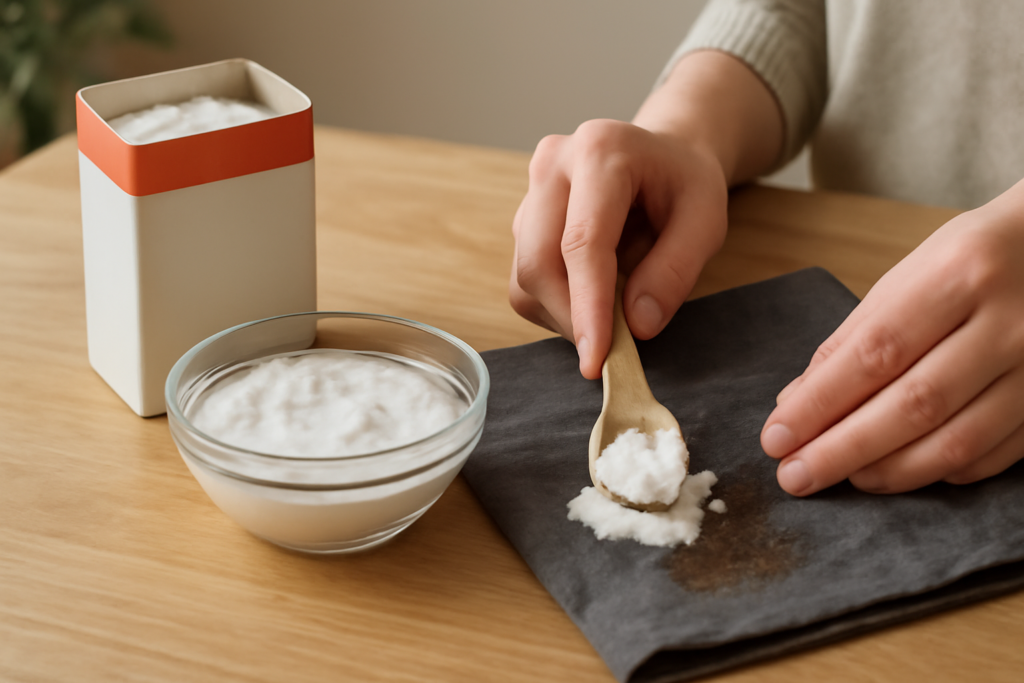
Start with a 3-to-1 ratio and adjust from there:
- 3 parts baking soda
- 1 part water
Stir until it reaches a spreadable, toothpaste-like consistency. For tougher grease, swap the water for hydrogen peroxide or a squirt of dish soap, which boosts the degreasing power. Mix small batches, since the paste dries out and loses effectiveness once it hardens.


Grout and Tile Stains
Dingy grout is where this paste earns its reputation. Spread a thick layer over the grout lines, then spray lightly with a 50/50 white vinegar and water mix. It’ll fizz as the acid and base react, which lifts embedded dirt. Let it sit two to three minutes, scrub with a stiff grout brush or an old toothbrush, and rinse. For badly stained grout, use hydrogen peroxide instead of vinegar in the paste itself and let it dwell 10 minutes before scrubbing. Do not seal grout until it’s fully clean and dry.
Greasy Stovetops and Cookware
Cooked-on grease is alkaline soap’s specialty. For a glass stovetop, sprinkle baking soda, lay a hot damp cloth over it for 15 minutes, then scrub in circles and wipe clean. For burnt pots and pans, make a thicker paste, coat the scorched area, add a little water, and let it sit 30 minutes before scrubbing. Stainless steel and enameled cookware handle this well. Skip it on nonstick coatings, where any abrasive can scratch the surface.
Carpet and Upholstery Stains
For fresh spills, blot up as much liquid as you can first. Then apply the method that fits:
- For a wet stain, sprinkle dry baking soda directly to absorb liquid and odor, wait 15 minutes, then vacuum.
- For a set-in stain, make a paste with water, work it in gently, let it dry completely (a few hours), then vacuum the residue.
- For stubborn or greasy carpet stains, mix the paste with a little dish soap, dab it on, wait 20 minutes, and blot with a damp cloth.
Always test an inconspicuous corner first, especially on wool or delicate upholstery, since some fibers don’t like alkaline cleaners.
Bathroom Surfaces
A baking soda paste tackles most bathroom grime without harsh chemicals. Use it on:
- Tub and shower scum: Coat, wait 15 minutes, scrub with a non-scratch pad, rinse.
- Sink and faucet buildup: The mild abrasion polishes chrome without scratching.
- Toilet bowl rings: Sprinkle in, add a splash of vinegar, scrub with the brush.
- Grimy caulk: Peroxide-based paste, dwell 20 minutes, then scrub the mildew away.
What NOT to Use It On
Baking soda is gentle but still abrasive, so keep it off these surfaces:
- Natural stone like marble, granite, and quartz countertops, where repeated scrubbing dulls the polish
- Aluminum pans and trays, which can discolor and react with it
- Nonstick cookware coatings that scratch easily
- Glossy or lacquered wood finishes that abrade
- Antique or delicate fabrics without spot-testing
Boosting the Paste for Tough Jobs
When plain paste isn’t enough, upgrade the liquid. Hydrogen peroxide adds mild bleaching and whitening power, ideal for grout and fabric. Dish soap adds serious degreasing muscle for stovetops and oven racks. Lemon juice adds a fresh scent and a little extra acidity, though avoid it on stone. For laundry stains, a peroxide-baking soda paste worked into the fabric before washing lifts armpit yellowing and food marks that detergent alone leaves behind.
Why It Works and Why It’s Worth It
Sodium bicarbonate sits at a pH around 8, alkaline enough to break down acidic and greasy stains but mild enough that it won’t burn skin or off-gas fumes like bleach. That balance makes it safe around kids, pets, and food-prep areas. And at roughly a dollar for a 1-pound box, it’s the cheapest effective cleaner you can buy.
Keep a box in the kitchen and one in the bathroom, mix a fresh paste whenever a stain shows up, and you’ll reach for expensive specialty cleaners far less often. A baking soda paste for stains isn’t a gimmick, it’s the same chemistry professionals rely on, packaged for a dollar.
Baking Soda for Laundry Stains
The kitchen and bathroom aren’t the only places this paste earns its keep. For laundry, a peroxide-and-baking-soda paste worked into fabric before washing lifts stains detergent alone leaves behind. It’s especially effective on:
- Underarm yellowing on white shirts, where sweat and antiperspirant react over time
- Grease and oil spots from cooking, which the alkaline paste breaks down
- Food and drink stains like coffee, wine, and tomato sauce
- Set-in dirt on collars and cuffs
Apply the paste, let it dwell 20 to 30 minutes, then wash as usual. For extra brightening, add a half cup of baking soda directly to the wash drum with your detergent.
Deodorizing With Baking Soda
Beyond stains, baking soda neutralizes odors because it chemically reacts with the acids that cause smells rather than just masking them. Sprinkle it dry on carpets and upholstery, let it sit 15 minutes, and vacuum to pull out pet and musty odors. An open box in the fridge absorbs food smells for about 30 days. For smelly shoes or gym bags, a light dusting overnight works wonders. This dual action, cleaning and deodorizing at once, is exactly why baking soda has stayed in kitchens for a century while pricier products come and go.