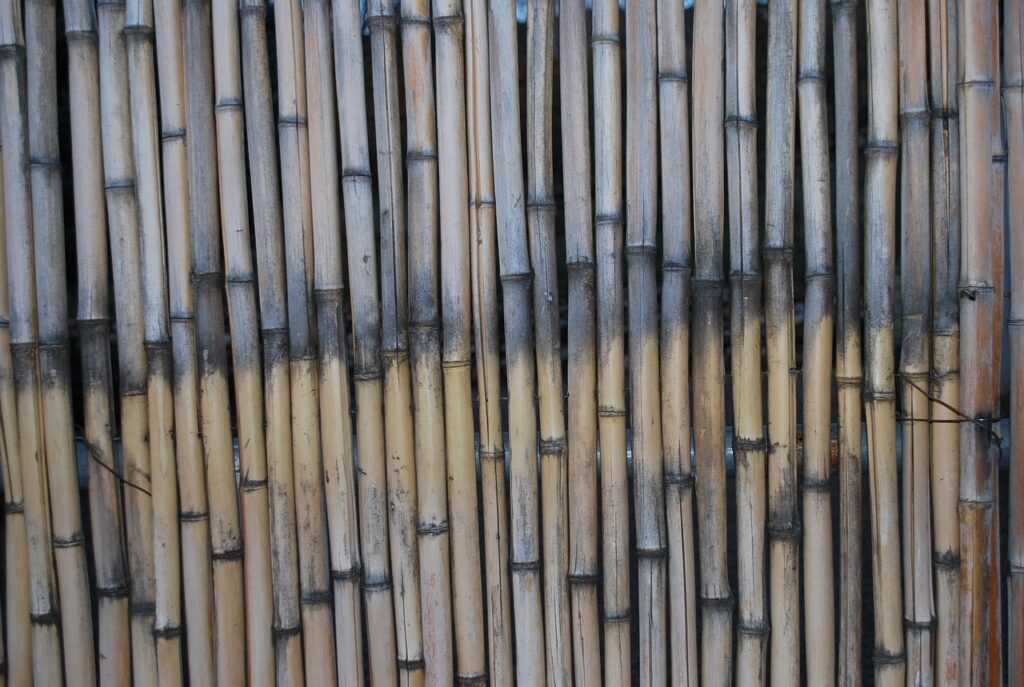
Steel tomato cages buckle by August, plastic netting tangles itself into a knot, and cedar lattice runs $40 a panel before screws. Bamboo solves all three problems at once. A bundle of 6-foot stakes costs $12 to $18 at most garden centers, lashes together in under an hour without a single power tool, and weathers to a soft tawny gray that disappears into the garden. The best bamboo trellis ideas work with the plant’s natural growth pattern rather than fighting it — vertical for peas and pole beans, A-frame for cucumbers, teepee for ornamental vines, and grid panels for indeterminate tomatoes.
Eight configurations cover almost every climbing or sprawling crop a home gardener grows.
- Choosing the Right Bamboo
- The Classic Three-Pole Teepee
- A-Frame Cucumber Tunnel
- Grid Panel for Indeterminate Tomatoes
- Brand Spotlight: Lashing Materials That Hold
- Decorative Obelisk for Ornamental Vines
- Step-by-Step: Building a Pea Fence That Lasts
- Treating Bamboo for Longer Life
- Sourcing on a Tight Budget
Choosing the Right Bamboo
Not all bamboo behaves the same in a trellis. Three species dominate the garden-supply market.
- Tonkin cane (Pseudosasa amabilis): The gold standard. Straight, dense, 3 to 8 year lifespan outdoors. $1.50 to $3 per 6-foot stake.
- Moso (Phyllostachys edulis): Thicker walls, slightly thicker diameter. Best for heavy crops. $2 to $4 per stake.
- Guadua (split): Imported from South America. Pre-split flat strips ideal for grid trellises. $8 to $12 per bundle.
Avoid cheap “natural bamboo” garden stakes from craft stores. They are kiln-dried, split-prone, and snap at the first windstorm. Buy from a garden center or a bamboo specialty supplier like Bamboo Garden in Oregon or Stark Brothers online.
The Classic Three-Pole Teepee
Three 8-foot stakes, one ball of jute twine, ten minutes of work. The teepee is the original DIY trellis and still the most efficient design for pole beans, snap peas, morning glories, and hyacinth bean vine.
Set the three stakes in a 24-inch-diameter triangle, push each 8 inches into prepared soil, and gather the tops together at about 6 inches from the tips. Lash with three wraps of twine in a triangular pattern, then loop the twine vertically through each pair of stakes for stability. The structure shrugs off 40 mph wind once roots and vines fill in.
A-Frame Cucumber Tunnel
Sprawling cucumber vines on the ground end up powdery-mildewed by July. An A-frame lifts them 6 feet off the soil, dries the leaves faster, and produces straighter fruit. Build two 6 by 4 foot bamboo rectangles, each framed with four perimeter canes lashed at the corners and crossed with four interior canes spaced 12 inches apart. Lean the two panels together at the top to form a tent, and tie the apex with twine.
Plant cucumbers in two rows just inside the legs and train the vines outward. The interior becomes a shaded tunnel — useful for growing a second crop of lettuce or arugula in the cooler space underneath.
Grid Panel for Indeterminate Tomatoes
Indeterminate tomatoes (Cherokee Purple, Brandywine, Sungold, San Marzano) grow 6 to 10 feet tall and need real structural support. Build a flat 4 by 6 foot panel with two 6-foot vertical bamboo posts driven 12 inches into the ground, two horizontal canes lashed across the top and bottom, and four interior verticals spaced 12 inches apart. Lash every intersection with jute or natural sisal.
Train each tomato vine up a single vertical cane, pinching suckers as they form. One panel supports four tomato plants for the entire season. Two panels in parallel create a walkable tomato row with airflow on both sides.
Brand Spotlight: Lashing Materials That Hold
The trellis lives or dies on the lashing. Three options each have a place:
- Jute twine, 3-ply: Decomposes in one season. Cheapest. $4 for 200 feet at hardware stores.
- Sisal natural fiber, 1/4 inch: Lasts two seasons. Holds tighter knots. $8 to $12 per spool.
- Polypropylene black garden twine: Multi-year. Less attractive but practical. $6 to $10 per spool.
For permanent garden structures, switch to galvanized wire ties or stainless steel cable ties. Quick Tip from the trades: wrap the lashing wet — soak natural fibers for 10 minutes before tying, and they tighten as they dry, producing a joint that does not loosen.
Decorative Obelisk for Ornamental Vines
Move past vegetables and the bamboo trellis becomes garden sculpture. A four-sided obelisk with crossed horizontal bands at three levels supports clematis, climbing roses, sweet peas, or honeysuckle while adding vertical interest to a perennial bed.
Cut four 7-foot stakes and gather them at the top into a point bound with a 3-inch wrap of twine. Set the bottoms in a 30-inch-square footprint. Lash four horizontal canes at each of three levels — 18 inches, 36 inches, and 54 inches from the ground — to create the bands. The structure echoes the Edwardian wrought-iron obelisks at half the cost and three times the ease of assembly.
Step-by-Step: Building a Pea Fence That Lasts
Snap peas in particular love a lightweight bamboo fence. Build one in 45 minutes:
- Drive eight 5-foot stakes into prepared soil along a 12-foot row, spaced 18 inches apart, 8 inches deep.
- Lash a horizontal cane across the tops of all eight stakes at the 4-foot mark, then a second at the 18-inch mark.
- Run a vertical zigzag of jute twine between the top and bottom horizontals, creating diamond-shaped openings about 6 inches per side.
- Pre-soak the twine, lash with three wraps per intersection, and tie off with a square knot.
- Plant peas in a double row, 3 inches in from each side of the fence, 1 inch apart.
The structure carries the weight of two harvests, breaks down in 20 minutes after the season, and the bamboo composts into the soil within two years.
Treating Bamboo for Longer Life
Outdoor bamboo left untreated rots from the cut ends first. Two simple treatments triple its life. First, seal each cut end with melted beeswax or a thin coat of exterior-grade polyurethane. This prevents water wicking into the hollow cores. Second, apply a borate-based wood preservative like Tim-bor (sodium octaborate tetrahydrate, $25 for a 1.5 lb bag, mixed with water) by brush. The borate penetrates the surface and prevents both fungal decay and insect attack.
A treated bamboo stake stored vertically in a dry shed lasts 6 to 8 years through repeated seasonal use. Untreated stakes left outdoors year-round generally last 2 to 3 years before they snap.
Sourcing on a Tight Budget
Garden centers mark bamboo stakes up 200 to 300 percent over wholesale. Three cheaper sources:
- Asian grocery stores — full 8-foot stakes at $0.75 to $1.50 each
- Local bamboo grove owners — many give away the annual culm thinnings for free
- Online specialty suppliers like Bamboo Garden — bulk 50-stake bundles for $80 to $120
One bundle of fifty 8-foot stakes builds every trellis design above with material left over for next year’s repairs. The garden looks intentional, the structures stand up to weather, and the total project cost stays under $40.