The home bar is the one place in the house where I tell clients to take the design risk. Kitchens are big, permanent, and expensive to regret; a bar or butler’s pantry is typically six to ten linear feet of counter and wall — a contained stage where a bold move costs a few hundred dollars instead of a few thousand. The bar backsplash is the centerpiece of that stage. It sits at eye level, gets lit deliberately, frames your glassware and bottles, and takes far less splash abuse than a range wall, which opens the material palette to things I’d never put behind a cooktop. Here’s how to think about it, zone by zone, material by material.
- Why Bar Backsplashes Play by Different Rules
- The Material Shortlist
- Mirror and antique mirror
- Zellige and handmade tile
- Slab stone and stone-look porcelain
- Metal, penny rounds, and pattern players
- Glass, cork, and wood
- Palettes That Work: The Moody Bar Formula
- The Details That Make It: Lighting, Shelves, Termination
- Budget Reality
Why Bar Backsplashes Play by Different Rules
Three practical differences from kitchen backsplashes change the calculus entirely. First, duty is light: a bar wall catches the occasional cocktail splash and bottle drip — no grease aerosol, no 400-degree spatter — so delicate and high-maintenance materials that are kitchen liabilities are perfectly serviceable here. Second, the viewing distance is intimate: people stand at a bar and look directly at the wall behind it, often for hours, so texture and detail earn their money in a way they don’t above a distant kitchen counter. Third, lighting is part of the install: most bars get under-cabinet or shelf lighting, and the backsplash you choose should be chosen with its lighting, because a material that’s flat under ambient light can be spectacular grazed by LEDs — and vice versa.
Bars also skew dark by tradition and for good reason: deep, moody walls make glass, bottles, and metal shimmer by contrast. Where kitchen design defaults light and bright, bar design earns its drama in the shadows.
The Material Shortlist
Mirror and antique mirror
The classic bar move, borrowed from actual bars, where mirrored backbars have doubled the sparkle of the bottle display for two centuries. Plain mirror reads sleek but shows every fingerprint and drip; antiqued mirror — with smoky veining and deliberate patina — is the version I spec, because it gives the depth without the maintenance neurosis and flatters everything in front of it. Available as custom-cut panels ($25–$60/sq ft installed) or as mirrored subway and beveled tiles ($15–$40/sq ft). One rule: mirror behind open shelving means you’re looking at the backs of bottles, so keep the shelf styling deliberate.
Zellige and handmade tile
The undulating, glaze-pooled surface of hand-cut zellige ($15–$50/sq ft) is made for raking bar light — every tile catches the LEDs differently and the wall genuinely glimmers. Deep colors that feel risky in kitchens are the sweet spot here: emerald, bottle green, ink blue, charcoal, oxblood. This is the single most-requested bar wall in current design, and in a 25-square-foot bar zone, even the expensive stuff totals $500–$1,200 in material — the definition of affordable drama.
Slab stone and stone-look porcelain
Running the counter material up the wall — quartz, quartzite, marble, or a dramatic granite — makes the bar read built-in and expensive, with zero grout to maintain. Book-matched veined slabs behind a bar are a legitimate showpiece. Real marble is fine here (the acid-etching risk from a lime wedge is real but trivial in a low-duty zone), and heavily veined porcelain slabs deliver the look at $40–$80/sq ft installed versus $80–$150+ for exotic stone.
Metal, penny rounds, and pattern players
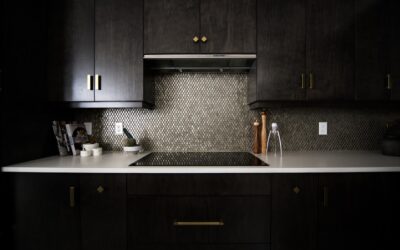
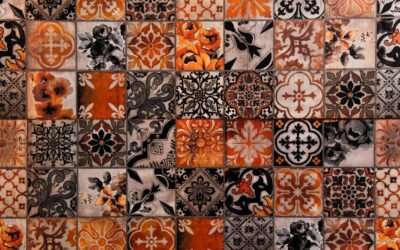
Pressed-tin-style panels and metallic tile lean speakeasy; copper and brass sheet develops living patina behind a wet bar. Penny round and hex mosaics in dark grout give vintage-soda-fountain charm ($10–$25/sq ft). Patterned cement or encaustic-look porcelain tile — too busy for many kitchens — works beautifully in a bar’s contained footprint, especially in butler’s pantries visible from a dining room, where the pattern becomes a framed vignette.
Glass, cork, and wood
Back-painted glass panels in deep colors are seamless, wipeable, and modern ($30–$60/sq ft). And because a bar wall takes so little abuse, even sealed wood slats or cork panels are viable, bringing warmth and acoustic softness to a lounge-adjacent bar.
Palettes That Work: The Moody Bar Formula
| Direction | Backsplash | Pairs With |
|---|---|---|
| Classic cocktail lounge | Antique mirror or mirrored subway | Dark cabinetry, brass rail shelves, stone counter |
| Modern moody | Ink-blue or emerald zellige, matte black grout accents | Navy/green cabinets, brass or black hardware, walnut shelves |
| Speakeasy / vintage | Pressed tin, penny rounds, oxblood tile | Fluted glass cabinet doors, aged bronze, leather stools |
| Quiet luxury | Book-matched slab or full-height quartzite | Rift oak cabinetry, integrated lighting, minimal hardware |
| Bright butler’s pantry | Patterned tile or warm-white zellige | Painted cabinets one shade off the kitchen, open shelves |
The reliable formula underneath all of these: one shining surface, one deep color, one warm metal. A bar wall needs something that catches light (mirror, glaze, polished stone), a darker envelope that makes it glow, and brass, bronze, or copper somewhere in the frame. Miss all three and the bar reads like a leftover kitchen run; hit them and six feet of cabinetry reads like a destination.
The Details That Make It: Lighting, Shelves, Termination
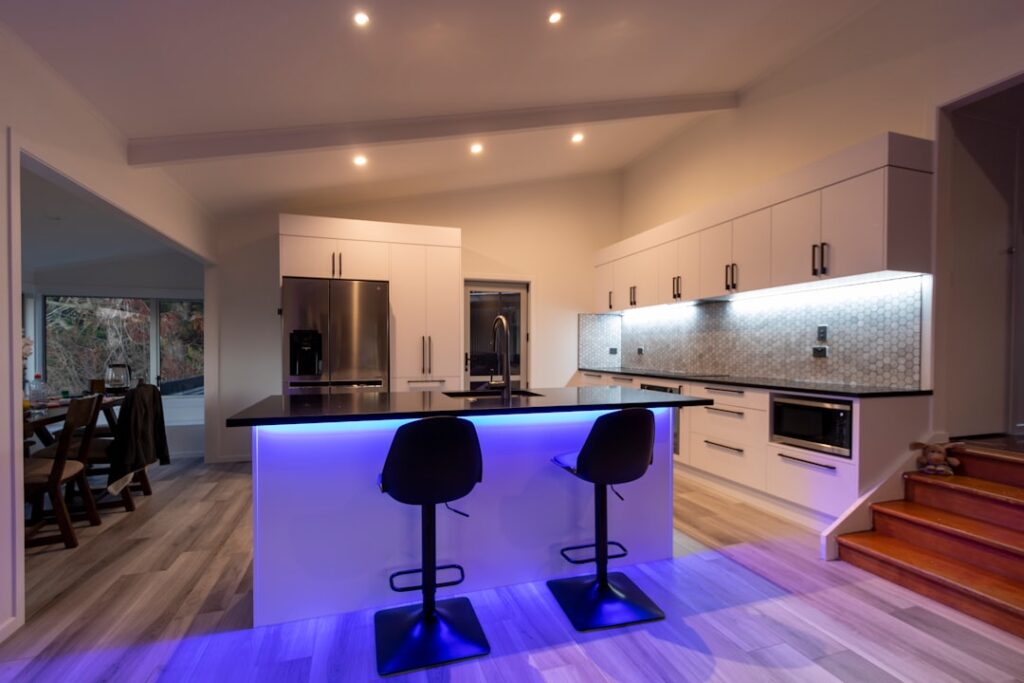
- Light the wall, not the counter. Mount LED strips at the front edge of upper cabinets or shelves, aimed back toward the splash, so the light grazes the tile texture and rims the bottles. Warm temperature — 2700K, dimmable — always; a bar lit at cool 4000K feels like a lab. Budget $100–$400 for quality strips and a driver.
- Plan around floating shelves. If open shelving crosses the backsplash, tile the full wall first, then mount shelves through the tile with proper anchors — brackets sitting on top of tile look afterthought. Two shelves maximum in most bars; the tile deserves to breathe.
- Take it to the ceiling if the run is short. On a bar alcove, stopping the splash at 18 inches looks unfinished; full-height turns the whole niche into a composed object. The extra material on a small wall usually costs less than $400.
- Mind the wet zone. If there’s a bar sink, standard rules return for that stretch: sealed grout, wipeable surface, caulked counter joint. Antique mirror directly behind a faucet will spot; shift the mirror to the display zone and run stone or tile at the sink.
- Terminate edges cleanly. Small runs magnify sloppy ends — use metal edge profiles (Schluter-style, $15–$30 per length) or pencil trim rather than caulked raw tile edges.
Budget Reality
A typical home bar backsplash covers 15–30 square feet, which is the entire reason to be brave. At those areas: ceramic or penny mosaics land at $300–$900 installed; zellige, antique mirror tile, or quality patterned tile at $700–$2,000; slab stone or porcelain panels at $1,200–$3,000 with fabrication. Professional tile labor runs $15–$30/sq ft on small fussy jobs (minimum charges of $500–$800 are common, worth knowing if you’re pricing a tiny run), and handmade materials and mirror work punish inexperienced installers — this is a place to hire someone whose portfolio shows this exact material.
A quick word on the butler’s pantry specifically, since it splits the difference between bar and kitchen: if the pantry does real prep work — coffee machine, toaster, blender — treat the zone behind those appliances to kitchen-grade rules (wipeable glazed tile, sealed grout) and save the delicate showpiece material for the display wall above. And if the pantry is visible from the dining room through a doorway, design the backsplash to be read from that sightline: the framed view is what guests actually see, and centering the pattern or mirror on that axis is a free upgrade most installers won’t think to suggest.
If you’re staring at a builder-basic bar niche right now, here’s the encouraging math: the wall behind it is probably 20 square feet, and 20 square feet is the cheapest transformation in residential design. Pick the material you’d never risk in the kitchen — the emerald zellige, the antique mirror, the oxblood penny round — light it warm, shelve it in brass or walnut, and the least considered corner of the house becomes the room everyone gravitates to at 9 p.m. Save the restraint for the kitchen; the bar is where the house gets to have some fun.