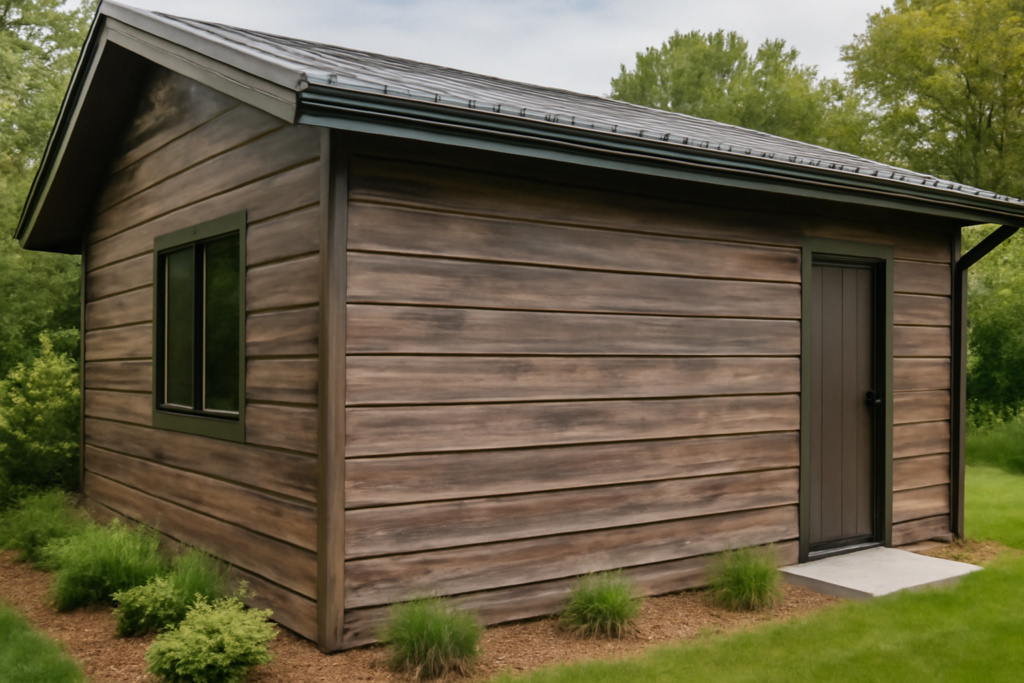
Reclaimed barnwood is gorgeous, scarce, expensive, and — let’s be honest — a buffet for insects and a fire marshal’s headache. The siding industry noticed, and the result is one of the fastest-growing niches in metal cladding. Barnwood metal siding is steel panel printed with high-resolution woodgrain imagery — weathered gray barn boards, rustic cedar, charred-timber blacks — fused under a clear protective topcoat. From ten feet away, good panels are genuinely hard to distinguish from aged lumber, yet they carry steel’s 40-plus-year lifespan, Class A fire rating, and zero appetite among termites. Here is how the products work, what they cost, and where the illusion holds up or falls apart.
How Wood-Look Metal Is Made
Manufacturers start with 26- or 24-gauge galvanized or Galvalume steel coil and apply the woodgrain via one of two processes. The better systems print the grain pattern onto a base coat and seal it beneath a clear or tinted topcoat in a coil-coating line — essentially the same technology as high-end printed laminate flooring, but with exterior-grade PVDF or polyester resins. Cheaper products use a simpler film laminate. The distinctions that matter on a sample board: pattern repeat length (premium lines repeat every several feet so adjacent panels do not visibly twin), print resolution, and whether the topcoat carries a real film warranty — look for 25 to 40 years against peel and excessive fade. Brands to shop include TruLog, Quality Edge (TruCedar), Bridger Steel, and several regional roll-formers offering weathered-wood print programs.
Profiles mirror standard siding types: board-and-batten, 6- to 8-inch lap and dutch-lap, shiplap-look flush panels, and log-profile steel for cabin builds. Most residential systems are concealed-fastener, which keeps screw heads from breaking the wood illusion.
What It Costs
Printed woodgrain commands a premium over solid-color metal but undercuts the materials it imitates:
- Panel material: $3 to $6 per sq ft for most woodgrain steel lines; log-profile systems $4 to $7
- Installed: $7 to $13 per sq ft typical, driven by trim complexity and region
- Compare: real reclaimed barnwood at $8 to $20-plus per sq ft installed (when you can source it), cedar at $8 to $14, fiber cement woodgrain at $6 to $12, and premium vinyl at $4 to $8
On a 2,000-square-foot exterior, expect $14,000 to $26,000 installed. The lifetime math is where steel pulls ahead: no restaining every 3 to 5 years (cedar’s ongoing tax of $2,000-plus per cycle), no board replacement, and insurance advantages in wildfire zones where some carriers surcharge or refuse combustible cladding.
Where the Look Convinces — and Where It Doesn’t
Print technology has gotten remarkably good at the weathered-gray and rustic-brown palette this category is named for, because irregular aged wood hides pattern repetition far better than pristine clear-coat cedar does. Board-and-batten and lap profiles with embossed texture (physical grain pressed into the steel, not just printed) read most convincingly. The tells show up close: perfectly uniform sheen in raking light, repeated knots if you stand back and scan a long wall clad in a short-repeat product, and trim corners where folded steel edges reveal the material. Practical advice from installs I have seen: order full-size samples of at least two panels, hold them in outdoor light at your actual viewing distance, and check the repeat by laying panels side by side. On a house viewed from a 30-foot setback, quality product passes effortlessly; on a porch wall you brush against daily, expect the secret to be an open one — and decide whether that bothers you.
Performance Beyond Looks
Underneath the print, this is standard high-grade steel siding. That means Class A fire performance, immunity to rot, carpenter ants, termites, and woodpeckers, snow-country durability, and wind ratings that satisfy coastal and plains building codes when installed per manufacturer specs. Weight is trivial (under 1.5 pounds per square foot), so it hangs on any sound wall, including over existing sheathing in a re-side. The usual metal caveats apply: dents are possible from serious hail or an errant ladder (26 gauge minimum, 24 gauge in hail alley), scratches through the print layer show silver and need touch-up paint or pens from the manufacturer, and cut edges deserve coating. Thermal movement is handled by the concealed-fastener clips — follow the spacing chart rather than screwing panels rigid.
Interior Accent Walls: The Gateway Project
A surprising share of woodgrain steel sells for interiors — restaurant walls, office features, and home accent walls behind stoves and TVs — and it is the perfect low-stakes way to audition the material before committing a whole exterior. A 10-by-12 accent wall takes one or two panels’ worth of material ($150 to $400), installs over drywall with furring strips or construction adhesive plus trim screws, and needs no weather detailing at all. Indoors, the print’s advantages compound: no fading concern, no dent exposure, Class A flame spread that satisfies commercial codes where real reclaimed barnwood often cannot pass without treatment, and none of the insect hitchhikers and lead-paint questions genuine salvaged boards carry into a house. Kitchens are the sneaky-good application — a wood look behind a range that wipes clean and cannot char. If the wall convinces you at arm’s length in your own lighting, the exterior version will convince the street.
Installation Notes
Wood-look steel installs like its solid-color siblings: housewrap over sheathing, matching trim system (corners, J-channel, sills, and starter strips are printed to match — buy them from the same line and dye lot), panels clipped or fastened per profile. Two woodgrain-specific disciplines pay off. First, mix panels from multiple bundles as you hang them, exactly like hardwood flooring, so any subtle print-lot variation distributes across the wall instead of banding. Second, plan cut locations at the least conspicuous corners since a field cut interrupts the printed board pattern mid-plank. A competent siding crew needs no special training, but showing them the manufacturer’s install manual matters — clip spacing and expansion gaps differ between brands, and warranty claims get denied over exactly those details. DIY-capable builders can handle lap and board-and-batten systems with shears, a brake for small flashings, and patience at openings.
Comparing It to the Other Wood Fakers
Printed steel is not the only material chasing the barnwood look, so place it against its real rivals. Fiber cement with woodgrain embossing (James Hardie and peers) costs similar money installed, takes paint in any color, and feels more traditional — but it is heavy, requires repainting every 12 to 15 years, and its texture is molded rather than printed, so it reads “painted siding,” never “weathered barn boards.” Vinyl shake and rustic-profile vinyl runs cheaper at $4 to $8 installed but cannot convincingly do the silvered-gray reclaimed look, and dark vinyl carries heat-distortion risk metal simply does not have. Engineered wood (LP SmartSide) gives real wood texture at $5 to $10 installed, yet it remains combustible and warranty-dependent on perfect edge sealing. Thermally modified and shou-sugi-ban real woods are gorgeous and genuinely low-maintenance for wood — but at $8 to $15-plus installed they cost standing-seam money and still carry fire ratings that wildfire-zone insurers dislike. Steel’s unique hand is the combination nobody else offers: the aged-wood image, Class A fire performance, sub-2-pound wall weight, and a finish measured in decades. Its unique weakness is repairability of appearance — a deep scratch in printed grain never disappears the way a sanded spot on real wood does.
Who Should Choose Barnwood Metal Siding
The product’s natural home: barndominiums and shouses chasing warmth without wood upkeep, wildfire-zone rebuilds where codes push noncombustible cladding, mountain and lake properties where woodpeckers and carpenter bees destroy real wood, rental and vacation homes where restaining will never realistically happen, and accent walls, gables, and wainscots mixing with solid-color metal. It is a weaker choice where budget rules (solid-color rib panel does the durability job for half the price), or where an authentic historic restoration demands real material up close. And if you love how cedar silvers and don’t mind maintaining it, real wood remains its own reward. For everyone else, printed-steel barnwood has quietly become the way to keep the aesthetic and retire the maintenance schedule — a weathered-wood wall that will look exactly this weathered, and no more, in 2055.