
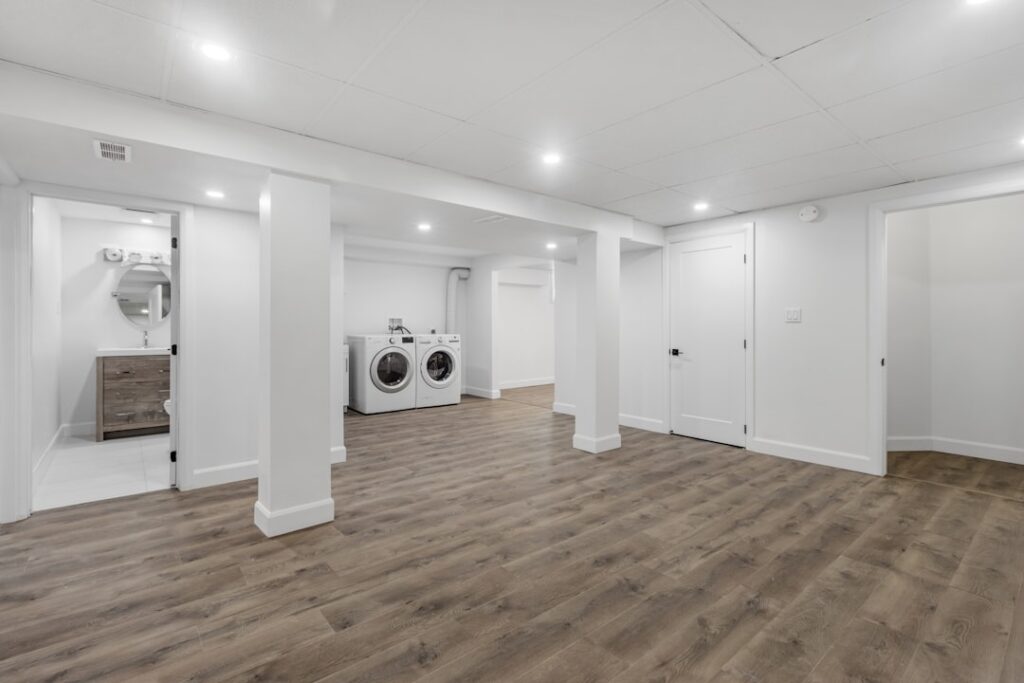
The layer you never see is the one that decides whether your basement floor feels warm and lasts, or turns cold, damp, and moldy within a year. Basement floor underlayment is the thin material that goes between your concrete slab and your finished flooring, and in a below-grade space it does far more than it would upstairs. It has to manage moisture rising through the concrete, add a bit of insulation against the cold slab, cushion the flooring, and sometimes quiet footstep noise. Choosing the wrong one, or skipping it, is one of the most common and costly mistakes in a basement remodel.
Part of our Epoxy, Concrete & Garage Floors guide — explore the full guide →
Why Basements Need Special Underlayment
Concrete slabs are porous and sit against damp soil, so they constantly wick moisture upward through a process called vapor transmission, even when the surface looks bone dry. That moisture is the enemy of most flooring: it warps wood, breeds mold under carpet, and can loosen adhesives. A basement is also colder than the rooms above because the slab pulls heat away from your feet. The right underlayment tackles both problems, blocking or managing vapor while adding a thermal break. This is why you cannot simply use the same foam pad you would put under upstairs laminate.
The Moisture Question Comes First
Before choosing any underlayment, test your slab for moisture. Tape a 2-foot square of clear plastic to the concrete, seal all edges, and leave it 24 to 72 hours. If condensation forms underneath or the slab darkens, you have active moisture and must prioritize a vapor barrier. Many basement underlayments include an integrated vapor barrier or moisture film; if yours does not, you will need to add 6-mil polyethylene sheeting first. Skipping this step is the number one cause of failed basement floors, so never treat it as optional.
Types of Basement Underlayment
Several materials work below grade, each with strengths:
- Foam underlayment with a vapor barrier: Common under laminate and engineered wood. Look for a version specifically rated for concrete with an attached moisture film.
- Cork: Naturally mold-resistant, insulating, and sound-dampening. Excellent under many floors, but pair it with a vapor barrier over concrete since cork alone does not block moisture.
- Rubber: Durable, moisture-tolerant, and great for sound and cushion, often used in gyms and rec rooms.
- Dimpled plastic membrane (air-gap membrane): Rigid sheets with raised dimples that create an air channel between the slab and the floor, letting moisture escape while insulating. Ideal for problem-prone basements.
- Insulated subfloor panels: Tongue-and-groove panels with foam or a dimpled base that raise the floor off the slab, adding warmth and a drainage gap. A premium, highly effective option.
Understanding R-Value and Warmth
Because the slab is cold, thermal resistance matters. Underlayment R-values are modest, but every bit helps a basement feel livable. Insulated subfloor panels and thicker foam or cork add the most warmth, while a thin film adds almost none. If comfort underfoot is a priority, choose an insulating underlayment or a panel system rather than the cheapest available film. Combined with a floor that tolerates the environment, good underlayment is what keeps a finished basement from feeling like a cave.
Matching Underlayment to Your Flooring
The finished floor you plan to install narrows the choice:
- Laminate and engineered wood: Need foam or cork underlayment with a vapor barrier for cushioning and moisture control.
- Luxury vinyl plank (LVP/SPC): Often needs only a thin, dense underlayment or none if the plank has attached backing, but still benefits from a vapor barrier over concrete.
- Carpet: Requires a moisture-resistant pad rated for below-grade use; standard carpet pad traps moisture and molds.
- Tile: Generally goes over an uncoupling membrane or backer board rather than soft underlayment.
Always check your flooring manufacturer’s requirements, since installing the wrong underlayment can void the floor’s warranty.
Installation Basics
Proper installation is as important as the right product. Start by cleaning and leveling the slab; grind down high spots and fill low spots with self-leveling compound so the floor sits flat. If your underlayment lacks a vapor barrier, roll out 6-mil poly first, overlapping seams by 6 to 8 inches and taping them, running it a few inches up the walls. Lay the underlayment with seams butted, not overlapped, and taped per the manufacturer’s directions. For panel or membrane systems, follow the interlocking pattern and leave a small expansion gap at the walls. Let all materials acclimate in the basement for a day or two before installing.
Common Mistakes to Avoid
The biggest error is ignoring moisture and installing a floor directly on a damp slab. Close behind is using an indoor-only underlayment or carpet pad below grade, which traps water. Overlapping underlayment seams instead of butting them creates ridges that telegraph through the finished floor. And failing to level the slab first leads to soft spots and clicking floors later. Take the extra day to test, level, and barrier the slab; it prevents nearly every basement floor failure.
Does It Add Soundproofing?
Beyond moisture and warmth, underlayment also helps with sound, which matters more in a basement than people expect, especially if the space sits below bedrooms or a home office, or if you are finishing it as a media room. Cork and rubber are the standout performers for sound control, absorbing impact noise like footsteps and dampening the hollow echo a bare slab and hard floor can produce. Many foam underlayments carry an IIC (Impact Insulation Class) or STC (Sound Transmission Class) rating, and a higher number means better sound performance.
If a quiet basement is a priority, prioritize an acoustic-rated underlayment or a cork layer over the bare minimum. Keep in mind that in a basement the sound benefit is mostly about comfort within the space rather than stopping noise from traveling to floors above, since there is usually nothing living below the slab. Still, the difference between a cushioned, sound-dampened floor and a hard, echoey one is noticeable the moment you walk in.
Frequently Asked Questions
Do I always need a vapor barrier under basement flooring?
Over a concrete slab, almost always yes, because concrete constantly wicks moisture upward even when it looks dry. Either choose an underlayment with an integrated vapor barrier or lay 6-mil poly first. Skipping it is the top cause of failed basement floors.
Can I use regular carpet padding in a basement?
No. Standard carpet pad absorbs and traps moisture, leading to mold below grade. Use a moisture-resistant pad specifically rated for basement or below-grade use.
How do I know if my slab has a moisture problem?
Tape a 2-foot square of clear plastic to the concrete, seal the edges, and wait 24 to 72 hours. Condensation under the plastic or a darkened slab means active moisture that you must address with a vapor barrier before flooring.
The Bottom Line
Basement floor underlayment is a small part of the budget that protects the entire floor above it. Test the slab for moisture first and add a vapor barrier if needed. Choose an underlayment rated for below-grade use, foam with a moisture film, cork, rubber, or an insulated panel or membrane system for the warmest, driest result, and match it to your finished flooring. Level the slab, install seams correctly, and let everything acclimate. Get the hidden layer right and your basement floor will stay warm, dry, and solid for decades.
Prefer to explore on your own?
See how new flooring looks in your actual room in seconds — free, no signup.
Try the free Floor Studio →

