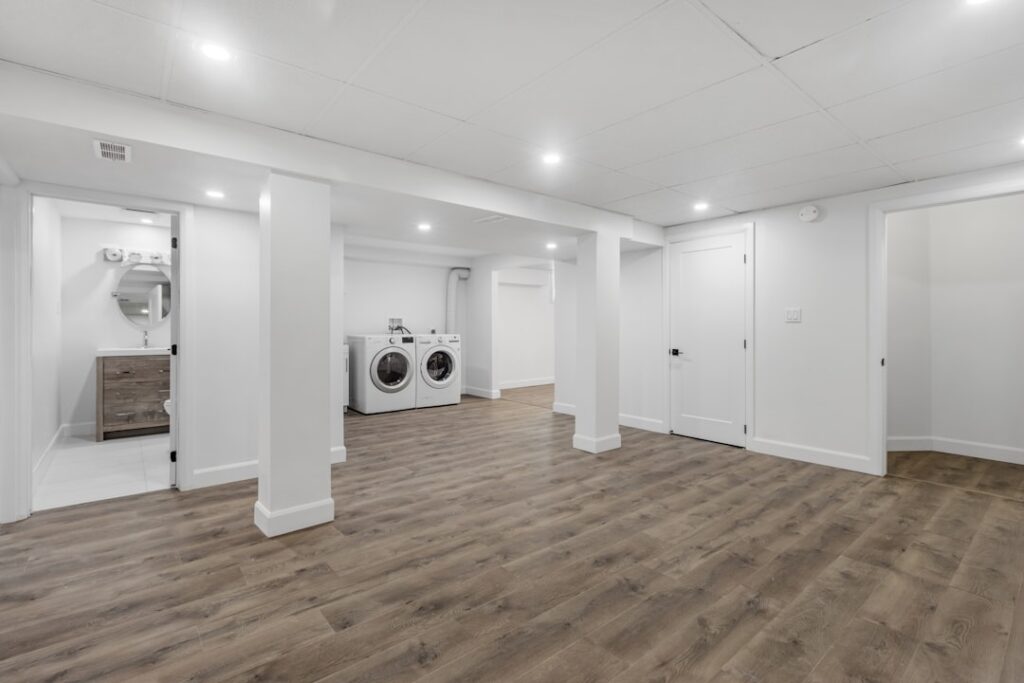
A basement is often the largest underused space in a house, which makes it ideal for a home office, if you handle its particular challenges. Good basement office design is about turning a dim, sometimes damp, often low-ceilinged space into a bright, comfortable, distraction-free place to work. The space has real advantages: it is separate from the household bustle, it is quiet, and it costs far less to convert than building an addition. The trick is solving for light, moisture, temperature, and acoustics so the room feels like a true office, not a finished cellar.
- Tackle Moisture Before Anything Else
- Maximize Light in a Dark Space
- Choose the Right Flooring
- Plan a Functional Layout
- Control Temperature and Comfort
- Manage Acoustics and Sound
- Add Storage and Organization
- Make It Feel Like a Real Room
- Budget Expectations
- Plan Power, Internet, and Cable Management
- Ergonomics and Furniture for Long Days
- The Bottom Line
Tackle Moisture Before Anything Else
Skip this step and everything you build is at risk. Basements are prone to humidity and water intrusion, which warps furniture, ruins electronics, and breeds mold. Before designing, inspect for water stains, musty odors, and dampness, then address the root causes: grade soil away from the foundation, fix downspouts, seal cracks, and run a dehumidifier to keep relative humidity around 50 percent. For finished walls, use moisture-resistant materials and consider a vapor barrier. A dry basement is the non-negotiable foundation of a usable office.
Maximize Light in a Dark Space
The biggest complaint about basement offices is the lack of natural light, which affects mood and productivity. Counter it with a layered lighting plan and a few clever tricks:
- Recessed ceiling lights for even, glare-free general illumination, important when ceilings are low.
- A quality task lamp at the desk to reduce eye strain.
- Daylight-temperature bulbs (around 5000K) to mimic natural light and keep you alert.
- Light, reflective wall colors that bounce light around the room.
- Mirrors positioned to amplify whatever light sources you have.
If you have egress windows or window wells, keep them clear and unobstructed, and consider enlarging a window if your budget and foundation allow. Even one real window transforms the feel of the room.
Choose the Right Flooring
Basement floors are concrete, cold, and prone to moisture from below, so flooring choice matters. The best options handle damp, uneven slabs:
- Luxury vinyl plank (LVP) — waterproof, warm underfoot, and the most popular basement choice at $3 to $7 per square foot installed.
- Tile — durable and moisture-proof, though cold without rugs.
- Engineered flooring or laminate — only over a proper moisture barrier and a dry slab.
- Carpet tiles — warm and replaceable if a section gets damaged.
Add an area rug for warmth and to define the work zone, and consider a subfloor system or underlayment to insulate against the cold, damp concrete.
Plan a Functional Layout
Design the layout around how you actually work. Position the desk to face the room or a window rather than a blank wall when possible, since a wall in your face all day feels confining. Keep your most-used items within arm’s reach and route cables along walls and under the desk to avoid clutter. If the basement serves multiple purposes, use bookshelves, a rug, or a partial wall to clearly separate the office zone from laundry, storage, or a play area, so work feels contained.
Control Temperature and Comfort
Basements run cold in winter and can feel clammy in summer. Make sure the space is properly insulated and tied into your HVAC system, or add a dedicated solution like a ductless mini-split, a baseboard heater, or a portable space heater for cold months. Good airflow keeps the air from feeling stale, so a ceiling fan or a small air purifier helps. Comfortable temperature and fresh air are easy to overlook and make a huge difference in whether you actually want to spend the workday down there.
Manage Acoustics and Sound
Basements can echo off hard concrete and also let household noise filter down through the floor above. Soften the space with rugs, fabric furniture, acoustic panels, and bookshelves, which all absorb sound and improve call and video-meeting quality. If noise from upstairs is an issue, adding insulation to the ceiling or installing acoustic tiles helps. A quiet, well-treated room is one of the basement office’s biggest advantages, lean into it.
Add Storage and Organization
A productive office needs storage that keeps clutter off the desk. Built-in shelving along a wall makes use of the basement’s footprint, while a filing cabinet, closed cabinets, and labeled bins keep supplies and paperwork contained. Floating shelves above the desk hold reference materials within reach. Because basements often double as storage, a clear boundary between office supplies and household storage keeps the workspace from being swallowed by clutter.
Make It Feel Like a Real Room
The difference between a basement and a basement office is in the finishing touches. Finished walls and ceilings (drywall rather than exposed joists), trim, and a fresh coat of light paint instantly elevate the space. Add personality with art, plants that tolerate low light like pothos or snake plants, and comfortable, intentional furniture. The goal is a room you are glad to enter, not a corner of the cellar you tolerate.
Budget Expectations
Costs vary widely with how finished the basement already is. Outfitting an existing finished basement with office furniture, lighting, and decor might run $1,000 to $4,000. Finishing an unfinished basement, framing, drywall, flooring, electrical, and waterproofing, can run $15,000 to $40,000 or more depending on size and condition. Either way, converting existing square footage is far cheaper than building an addition, which is what makes the basement office such a smart use of space.
Plan Power, Internet, and Cable Management
A productive office needs reliable infrastructure, and basements often come up short. Map out your power needs before you set up: most desks need several outlets for a monitor, computer, charger, lamp, and peripherals, so add a surge-protected power strip or have an electrician install additional outlets if the existing ones are sparse. Internet is a common weak spot underground, where the router signal upstairs may not reach; a wired Ethernet run or a mesh Wi-Fi node in the basement solves dropped video calls. Route cables along walls with clips or through a cable tray under the desk so cords stay off the floor, where basement moisture and foot traffic can damage them.
Ergonomics and Furniture for Long Days
You may spend forty hours a week in this room, so comfort is not optional. Invest in an adjustable chair that supports your lower back and a desk at the right height, with your monitor at eye level to avoid neck strain. A sit-stand desk is worth considering for a space where you will log long hours. Choose furniture that tolerates the basement environment, sealed wood, metal, or laminate over raw materials that can absorb humidity. Add a footrest, a quality keyboard and mouse, and good task lighting, and the basement becomes a workspace your body can handle day after day rather than a room you escape from by lunchtime.
The Bottom Line
Strong basement office design starts underground: control moisture before you build anything, then solve for light with layered, daylight-temperature fixtures and reflective colors. Choose waterproof flooring, plan a layout that faces the room, manage temperature and acoustics, and add real storage and finishing touches. Handle those fundamentals and your basement becomes a quiet, bright, productive workspace, the kind of separate, distraction-free office most homes simply do not have room for anywhere else.