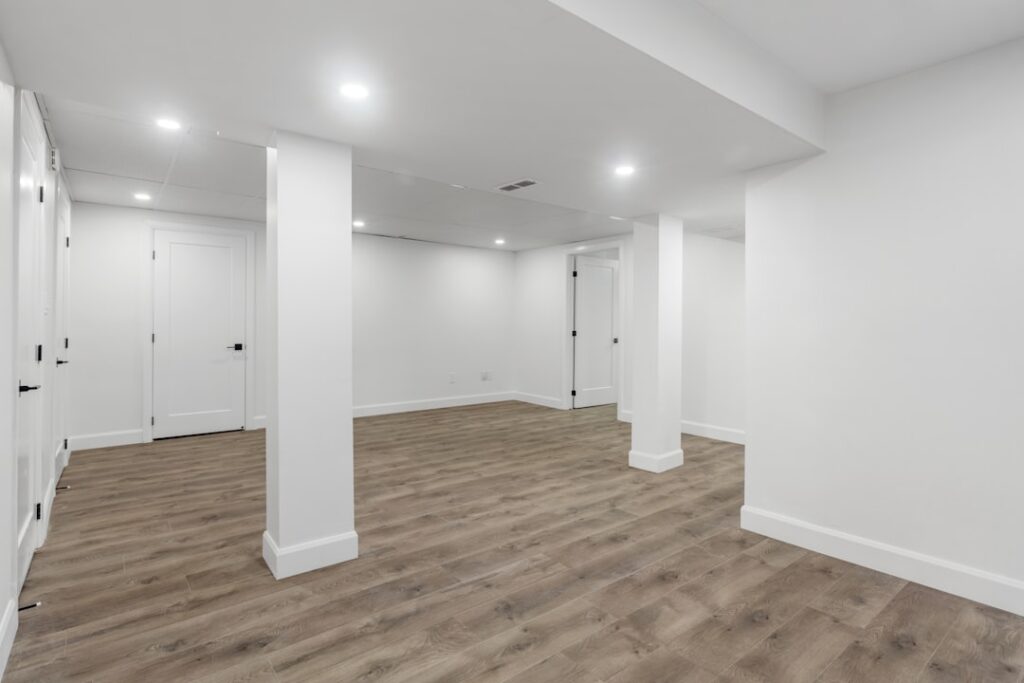
An unfinished basement represents the single largest untapped living space in most American homes. Basement renovations add 500 to 1,500 square feet of usable space at roughly half the cost per square foot of building an addition — $25 to $50 per square foot for a basic finish versus $100 to $200 for above-grade construction. The catch is that basements come with unique challenges: moisture, low ceilings, limited natural light, and building codes that differ from the rest of your house.
Planning and Permits
Most municipalities require a building permit for basement renovations that include framing walls, adding electrical circuits, or installing plumbing. Permit fees typically run $200 to $1,500 depending on the scope of work and your local jurisdiction. Skipping permits saves money upfront but creates serious problems at resale — unpermitted finished space cannot legally count toward your home’s square footage, and buyers’ inspectors flag the work.
Start planning by measuring your basement’s ceiling height. Building codes generally require a minimum of 7 feet of finished ceiling height for habitable rooms (6 feet 8 inches under beams and ductwork). If your basement falls short, options include digging out the floor (bench underpinning at $50 to $100 per square foot) or using a thinner ceiling system like direct-mount drywall instead of a dropped ceiling.
Waterproofing Comes First
No amount of beautiful finishing survives a wet basement. Address moisture issues before spending a dollar on framing or flooring. Interior waterproofing methods include applying hydraulic cement to cracks ($10 to $20 per linear foot), installing a vapor barrier on foundation walls ($0.50 to $1.50 per square foot), and adding a sump pump system ($800 to $2,500 installed).
Exterior waterproofing — excavating around the foundation and applying a waterproof membrane — costs $5,000 to $15,000 but provides the most reliable long-term protection. At minimum, ensure your gutters discharge water at least 6 feet from the foundation, and grade the soil around your house so it slopes away at 1 inch per foot for the first 6 feet.
Framing and Insulation
Basement walls need insulation between the concrete foundation and the finished wall surface. Rigid foam insulation (XPS or polyiso) applied directly to the concrete provides the best moisture resistance. Use 1.5 to 2 inches of rigid foam (R-7.5 to R-13) before framing a 2×4 stud wall in front of it. This approach keeps the warm side of the insulation away from the cold concrete, preventing condensation.
Avoid fiberglass batts directly against concrete walls — they absorb moisture and become a mold incubator. If you prefer batt insulation, install it between studs with the rigid foam behind, creating a continuous vapor break. Spray foam insulation ($1.50 to $3 per square foot installed) does both jobs at once but costs significantly more than the rigid-foam-plus-batts approach.
Flooring Options for Basements
Basement floors must handle potential moisture from below. Concrete slabs transmit water vapor upward even when they appear dry — tape a 2×2-foot piece of plastic sheeting to the floor for 48 hours and check for condensation underneath before choosing flooring.
- Luxury vinyl plank (LVP): $2 to $5 per square foot, 100% waterproof, installs over minor imperfections, the most popular basement choice
- Engineered hardwood: $4 to $10 per square foot, looks like real wood, handles moderate moisture with a proper subfloor system
- Ceramic/porcelain tile: $3 to $8 per square foot installed, fully waterproof, cold underfoot without radiant heat
- Epoxy coating: $3 to $7 per square foot, durable and waterproof, industrial look suits workshops and gyms
- Carpet tiles: $1 to $4 per square foot, warm and soft, individual tiles are replaceable if water damage occurs
Electrical and Lighting
Basement renovations typically require new electrical circuits. Plan for one 20-amp circuit per 500 square feet of general living space, plus dedicated circuits for any kitchen appliances, bathroom exhaust fans, or HVAC equipment. Recessed LED lights (6-inch cans) work best in low-ceiling basements since they add zero inches to ceiling height compared to pendant or flush-mount fixtures.
Space recessed lights 4 to 6 feet apart for even illumination. A 600-square-foot basement needs approximately 10 to 12 recessed cans. LED models ($8 to $25 each) use 75% less energy than incandescent equivalents and last 25,000+ hours. Wire them on dimmer switches ($15 to $30 each) so you can adjust ambiance for different activities.
Popular Basement Uses
The most common basement renovations create multi-purpose spaces. A family room or media room with comfortable seating and a large TV is the classic choice. Home offices gained popularity since 2020 and add clear value. Guest suites with a bathroom and egress window create rentable space for Airbnb income.
Home gyms need rubber flooring ($1 to $3 per square foot) and adequate ventilation. Basement bars and kitchenettes require plumbing rough-in ($1,000 to $3,000) and a dedicated 20-amp circuit for the refrigerator. Whatever the use, include at least one egress window or door — most codes require it for any room used as a bedroom, and it doubles as emergency escape access.
Total Cost Breakdown
A 1,000-square-foot basement renovation breaks down approximately as follows for a mid-range finish:
- Waterproofing: $2,000-$5,000
- Framing and insulation: $3,000-$6,000
- Electrical: $2,500-$5,000
- Drywall and painting: $3,000-$5,000
- Flooring: $3,000-$7,000
- Bathroom addition: $5,000-$15,000
- Permits and inspections: $500-$1,500
Total mid-range cost for basement renovations lands between $25,000 and $50,000 for a 1,000-square-foot space with one bathroom. DIY-friendly components like painting, flooring installation, and trim work can reduce costs by $5,000 to $10,000 if you have the skills and time. Hire licensed professionals for electrical, plumbing, and structural work — the safety and code compliance risks are not worth the savings.