A bathroom is the easiest room to repaint and the easiest room to repaint badly. Steam, splashes, and constant temperature swings punish the wrong paint within a year. Studying real bathroom painting ideas photos across magazines and design blogs reveals a pattern: the rooms that age well share the same handful of color families, paint sheens, and prep techniques. Picking the right combination of these three factors matters more than any specific color trend.
Part of our Bathroom Remodeling & Flooring guide — explore the full guide →
The Right Paint Finish for Bathrooms
Flat and matte finishes look beautiful in showroom photos but fail in real bathrooms because they cannot be wiped clean or scrubbed without burnishing the surface. Eggshell, satin, and semi-gloss are the only finishes that belong in bathrooms with regular shower use.
Satin is the modern default. It hides minor wall imperfections better than semi-gloss, wipes clean easily, and resists mildew when paired with a bathroom-rated paint formulation. Sherwin Williams Emerald in Satin and Benjamin Moore Aura Bath and Spa Matte (a unique formulation that performs like satin) are the trade favorites. A gallon runs $80 to $100 and covers 350 to 400 square feet.
Semi-gloss reserves itself for trim, doors, and high-splash areas. The reflective sheen looks dated on full walls in most bathrooms today, but it remains the right pick for window sashes, door casings, and baseboards.
Top Wall Color Categories
Five color families consistently appear in successful bathroom designs. Each category includes proven shades that have stood the test of design seasons.
Warm whites: Sherwin Williams Alabaster SW 7008, Benjamin Moore White Dove OC-17, Sherwin Williams Pure White SW 7005. These read crisp without going cold, work in every bathroom size, and pair with any tile.
Soft greens: Sherwin Williams Sea Salt SW 6204, Benjamin Moore Saybrook Sage HC-114, Farrow and Ball Green Smoke No. 47. Greens read calm and spa-like, especially in north-facing bathrooms with limited natural light.
Soft blues: Benjamin Moore Palladian Blue HC-144, Sherwin Williams Rainwashed SW 6211, Sherwin Williams Sleepy Blue SW 6225. Pale blues lift small bathrooms visually and pair beautifully with white subway tile.
Warm grays: Benjamin Moore Revere Pewter HC-172, Sherwin Williams Repose Gray SW 7015, Benjamin Moore Edgecomb Gray HC-173. Warm grays anchor more sophisticated designs without going cold.
Deep moody colors: Benjamin Moore Hale Navy HC-154, Farrow and Ball De Nimes No. 299, Sherwin Williams Iron Ore SW 7069. Dark colors work especially well in powder rooms and large primary bathrooms with good lighting.
Color Selection by Bathroom Size
Small bathrooms (under 50 square feet) generally do better with lighter colors that maximize perceived space. Warm whites, soft greens, and pale blues read as expansive. Avoid trying to make a small bathroom dramatic with dark colors unless you have abundant light and confidence in the design.
Medium bathrooms (50 to 100 square feet) handle the full range of colors well. This size category gives you the most flexibility to choose based on personal preference rather than constraint.
Large bathrooms (over 100 square feet) benefit from richer, more saturated colors that ground the space. Deep navy, forest green, charcoal, and rich earthy terracottas all work in larger rooms where light-colored walls can feel cold and institutional.
Two-Tone and Accent Wall Strategies
Two-tone walls add architectural interest without requiring construction. The standard approach uses a darker color on the bottom half (capped by a chair rail or picture rail at 36 to 42 inches off the floor) and a lighter color above. This treatment reads as traditional and appears in many older homes as original detail.
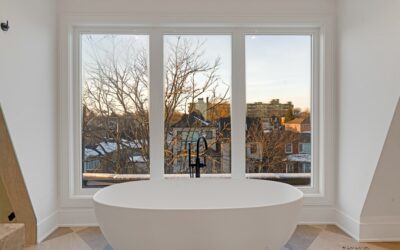
Modern two-tone treatments paint just the wall behind the vanity or the wall behind the freestanding tub in a contrasting color. The accent wall becomes the focal point and lets the rest of the bathroom remain bright. Tape with FrogTape Multi-Surface Painters Tape for crisp lines, and pull the tape while the paint is still slightly tacky (about 30 minutes after the second coat) for the cleanest edge.
Prep Work That Determines Longevity
The prep work matters more than the paint brand. Skip steps and the paint peels within 18 months in a humid bathroom.
Start by washing all surfaces with TSP substitute (trisodium phosphate alternative) from Krud Kutter at $10 per quart, mixed per label. The cleaner removes soap residue, body oils, and hair product overspray that prevent paint adhesion. Rinse thoroughly and let dry for 24 hours.
Patch any nail holes, screw anchors, or wall damage with DAP DryDex Spackling Compound at $5 per pint. Sand smooth with 220-grit sandpaper. Lightly sand the entire wall surface to give the existing paint some tooth. Wipe with a damp microfiber cloth and let dry.
Prime any patched areas and any walls that have never been painted before with Zinsser Bulls Eye 1-2-3 Primer at $35 per gallon. For bathrooms with mildew history, use Zinsser Perma-White Mildew-Proof Bathroom Paint Primer at $30 per gallon. This step doubles the lifespan of the finish coat in steam-heavy bathrooms.
Brand Spotlight: Sherwin Williams and Benjamin Moore
Sherwin Williams Emerald and Benjamin Moore Aura Bath and Spa are the two paints that consistently outperform competitors in real-world bathroom conditions. Both formulations include mildewcide that prevents the spotty mildew growth common in unventilated bathrooms.
Emerald in Satin at $90 per gallon covers 350 to 400 square feet. The paint levels exceptionally well, hiding brush and roller marks. Aura Bath and Spa Matte at $95 per gallon delivers a unique soft sheen that reads as flat but wipes clean like satin. Both brands offer their full color libraries in these formulations.
Avoid using contractor-grade paint or basic interior latex in bathrooms with regular shower use. The savings of $40 per gallon now translates to repainting in two years instead of seven.
Ceiling Treatment
Bathroom ceilings benefit from the same mildew-resistant paint as walls, not the flat ceiling paint used elsewhere in the home. Zinsser Perma-White Bathroom Paint in Matte at $32 per gallon resists mildew for at least five years even in heavily steamed bathrooms.
Color the ceiling slightly lighter than the walls (around 20 to 25 percent tint reduction) for a cohesive look. Pure white ceilings against colored walls create a visual ceiling line that emphasizes ceiling height in small bathrooms.
Common Mistakes to Avoid
Three frequent errors ruin bathroom paint jobs. First, painting over mildew or active mold without killing it first. Treat any spots with a mix of one cup bleach per gallon of water, let dwell for 10 minutes, and rinse before priming. Second, choosing flat paint because the showroom photos look beautiful. Flat finishes cannot survive bathroom conditions. Third, skipping ventilation during and after painting. Run the exhaust fan continuously for 48 hours after the final coat to cure the paint properly.
Done right, a bathroom paint job lasts seven to ten years and looks intentional rather than utilitarian throughout that span.