A bathroom refurbishment sits in the sweet spot between a cosmetic refresh and a gut renovation. You update the fixtures, surfaces, and fittings that homeowners actually see and touch, while leaving the plumbing rough-in and layout largely in place. Done well, it delivers most of the visual and functional payoff of a full remodel at a fraction of the cost and disruption.
The trick is knowing what a refurbishment can and can’t achieve, and where the money goes. This guide covers the realistic scope, costs, and sequence so you can decide whether a refurb solves your problem or whether you truly need to open the walls.
Refurbishment Versus Full Remodel
The line between the two comes down to the walls and the plumbing. A refurbishment keeps the toilet, sink, and shower roughly where they are and works with the existing layout. You replace fixtures, retile or resurface, swap the vanity, update lighting, and repaint. A full remodel, by contrast, goes to the studs, relocates plumbing, and reworks the room’s bones.
Choose a refurbishment when the layout works and the plumbing is sound but the room looks dated, worn, or tired. Choose a full remodel when the floor plan is genuinely wrong, the plumbing is failing, or there’s hidden water damage. A refurb typically runs $4,000 to $12,000, while a full remodel starts around $12,000 and climbs from there. If your only complaint is aesthetics, refurbishment is almost always the smarter spend.
What a Refurbishment Typically Includes
A standard refurb touches the surfaces and fittings that define how a bathroom looks and functions day to day. That usually means a new vanity and countertop, an updated faucet and shower fittings, fresh tile or resurfacing, a new toilet, modern lighting, an upgraded exhaust fan, and a repaint. Many refurbishments also add small quality-of-life upgrades like a heated towel rail or a recessed niche.
What it generally avoids is moving the drain lines, relocating fixtures, or altering the room’s footprint. Because the plumbing stays put, you skip the most expensive and inspection-heavy work. That said, a refurbishment is the ideal moment to fix things that are cheap while exposed but costly later, like replacing a worn shower valve cartridge or upgrading a corroded supply line while the vanity is out.
Realistic Costs to Plan Around
Budget depends heavily on which elements you replace and the quality you choose. Here’s where the money typically lands on a mid-range refurbishment:
- Vanity, countertop, and faucet: $800 to $3,000
- Tile or resurfacing plus labor: $1,000 to $4,000
- Toilet: $250 to $900
- Lighting and exhaust fan: $400 to $1,500
- Shower fittings and glass: $500 to $2,500
- Paint and finishing: $300 to $800
Labor is the biggest variable, running 40 to 55 percent of the total. Keeping the plumbing in place holds labor down, which is the whole financial argument for a refurbishment. Set aside a 10 to 15 percent contingency; even a cosmetic project can uncover a soft floor or a hidden leak once the old vanity or tile comes out.
Smart Ways to Cut Costs
Refurbishment rewards clever substitutions. Instead of ripping out sound tile, consider regrouting and resealing, or paint designed for tile, to transform the look for a few hundred dollars. Reglaze a structurally solid but stained tub for $350 to $600 rather than replacing it. Reface or repaint existing cabinets if the boxes are sturdy, saving over a full vanity swap.
Keep the existing layout religiously. The moment you move a toilet or sink even a foot, you’re into plumbing labor and possibly permits, and the budget balloons. Shop mid-range fixtures from major brands, which perform nearly as well as luxury lines. Buy large-format porcelain from a big-box retailer for a high-end look at a third of designer prices. Every dollar saved on materials that don’t touch the plumbing is a dollar you can put toward comfort upgrades.
The Step-by-Step Sequence
Even a refurbishment benefits from following trade order. Start with any demolition, removing the old vanity, tile, or fixtures you’re replacing. Handle any minor plumbing or electrical updates while surfaces are open, such as swapping a shower valve cartridge or adding a GFCI outlet. Then repair and prep the walls and floor.
Next comes waterproofing and tile in any wet area, followed by the vanity, toilet, and fixtures. Paint after the messy work is done but before installing the final trim, mirror, and accessories. This order prevents the classic mistakes of scratching a new tub during tile work or painting before dusty demolition is finished. A tidy sequence keeps a refurbishment on its typically short one-to-two-week schedule.
High-Impact Upgrades Worth Prioritizing
Some refurbishment moves punch far above their cost. Replacing dated brass fixtures with matte black or brushed nickel instantly modernizes a room for a few hundred dollars. Swapping a single overhead light for layered lighting, recessed cans plus mirror sconces, dramatically improves how the space feels and functions. A new, quiet exhaust fan rated at 1.0 sone protects the whole room from moisture.
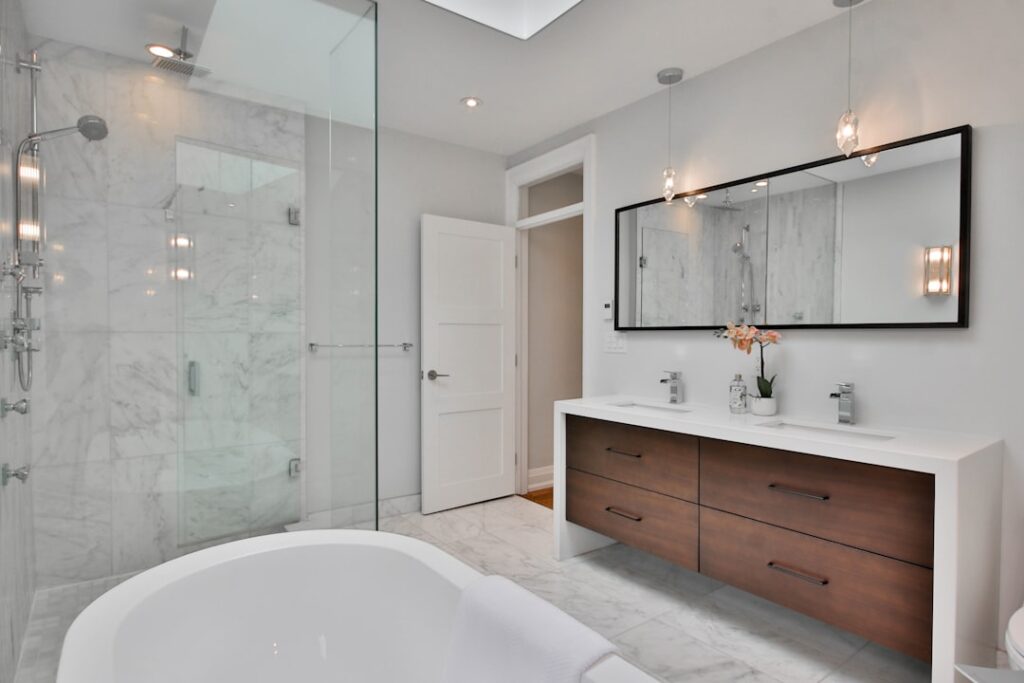
A frameless glass shower panel replacing a cloudy vinyl curtain or an old framed door opens the room visually. A floating vanity lifts the look and exposes more floor. Even a fresh coat of moisture-resistant paint in a clean, current color transforms a tired bathroom. Prioritize the upgrades you see and touch every day, because those are where a refurbishment earns its return in both enjoyment and resale appeal.
Planning the Look and Materials
A refurbishment is your chance to modernize the aesthetic without moving a single pipe, so plan the look deliberately. Start with a tight palette of two or three finishes repeated throughout, since coherence is what separates a designed room from a collection of parts. Pair light, large-format porcelain walls with a warm wood-tone vanity and a single hardware finish like matte black or brushed brass, and the room instantly reads current.
Choose materials that suit a bathroom’s humidity and hard use. Porcelain tile shrugs off moisture and cleans easily, quartz vanity tops never need sealing at $50 to $100 per square foot installed, and moisture-resistant paint in an eggshell or satin sheen wipes down without showing wear. If the existing tile is sound but dated, regrouting in a fresh color and adding a new decorative accent strip refreshes it for a fraction of retiling. Bring in warmth and personality through swappable elements, a framed mirror, a Roman shade, or a piece of art safely away from the shower spray, so you can update the room’s mood later without another renovation.
Hiring Help Versus DIY
A refurbishment is more DIY-friendly than a full remodel because you’re not moving plumbing or opening structural walls. Confident homeowners can handle demolition, painting, installing a vanity and toilet, and even simple tile work, saving substantially on labor. Regrouting, refacing cabinets, and swapping fixtures are well within reach of a weekend warrior.
Leave the trickier tasks to licensed pros: any shower waterproofing, electrical circuit work, and plumbing beyond a simple faucet swap. A common approach is to hire out the wet-area tile and any plumbing changes, then do the cosmetic finishing yourself. Get written quotes that name exact materials and fixtures, verify licensing and insurance, and never pay more than a third up front. Plan the scope carefully, keep the plumbing where it is, and a bathroom refurbishment will give you a fresh, functional room without the cost and chaos of a gut job.
Refurbishment and Resale Value
A bathroom refurbishment is one of the most reliable home improvements for return on investment, because buyers scrutinize bathrooms closely and a dated or worn one drags down a home’s perceived value. A mid-range bathroom update typically recoups 60 to 70 percent of its cost at resale, and more importantly, it helps a home sell faster by removing an objection buyers latch onto. Clean, modern bathrooms photograph well and set the tone for the whole listing.
To maximize resale appeal, keep the refurbishment tasteful and broadly appealing rather than highly personal. Neutral tile, a timeless vanity, quality fixtures in a classic finish, and good lighting please the widest range of buyers. Avoid bold, trend-chasing choices that a future buyer might dislike and factor into a lowball offer. If you’re refurbishing primarily for resale rather than your own enjoyment, focus the budget on the elements buyers notice first, a clean shower or tub, a fresh vanity and counter, updated lighting, and spotless grout, and skip the expensive extras that won’t move the needle on value.