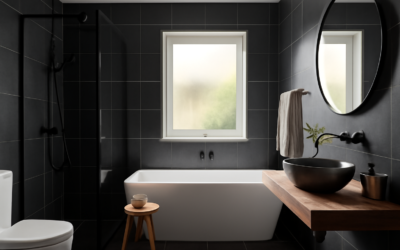
Painting the fifth wall is the move that separates a forgettable bathroom from one people remember. A bathroom with black ceiling adds instant drama, depth, and a high-end, jewel-box feeling that a plain white ceiling simply cannot deliver. It sounds risky, and done carelessly it can feel cave-like, but with the right lighting, proportions, and a moisture-resistant finish, a black ceiling reads as bold and intentional rather than dark and cramped. Here is how to pull it off in a real, working bathroom.
Part of our Bathroom Remodeling & Flooring guide — explore the full guide →
Why a Black Ceiling Works
A dark ceiling does something a wall color cannot. It draws the eye upward, adds a sense of enclosure that feels cozy and luxurious, and creates striking contrast against lighter walls, fixtures, and tile. In a small powder room especially, going dark overhead can make the space feel like an intimate, designed retreat rather than a tight box. The drama comes from the unexpected contrast, which is exactly why it makes such a strong impression.
Mind the Proportions and Ceiling Height
Honesty matters here: a black ceiling behaves differently depending on the room. In a bathroom with very low ceilings, a solid black overhead can feel heavy and press down on the space. It tends to work best where you have a bit of ceiling height to play with, or where you embrace the cozy effect on purpose, such as in a small windowless powder room.
If your ceiling is low, you can soften the look by keeping the walls and floor light and bright, which keeps the eye moving and balances the weight of the dark ceiling. The goal is contrast and balance, not darkness everywhere.
Lighting Is Everything
The single biggest factor in whether a black ceiling succeeds is light. A dark surface absorbs light, so you need to compensate with bright, layered lighting to keep the room functional and inviting. Plan your lighting before you commit to the color.
- Layer your sources: combine overhead fixtures, vanity lighting, and accent lighting rather than relying on one ceiling light.
- Prioritize vanity lighting: sconces or lights at face level keep the mirror area bright for grooming.
- Use light walls and reflective surfaces: mirrors, glossy tile, and pale walls bounce light around.
- Consider warm bulbs: a warm color temperature keeps the dark room feeling cozy rather than stark.
With generous, well-placed lighting, a black ceiling feels rich and dramatic. Without it, the room can feel gloomy, so do not skimp here.
Balance the Rest of the Room
To keep a black ceiling from overwhelming the space, balance it with lighter and brighter elements elsewhere. White or light walls, pale stone or tile floors, and crisp white fixtures all create the contrast that makes the ceiling pop. Metallic accents in brass, gold, or matte black hardware tie into the dark ceiling and add a polished, cohesive feel.
Bringing in greenery, light textiles, and a large mirror keeps the room feeling fresh and prevents the dark ceiling from making everything feel closed in. The black should be the dramatic accent, not the entire mood.
Choose Moisture-Resistant Paint
This is the practical detail many people overlook. Bathrooms are humid, steamy environments, so the paint you put on the ceiling needs to handle moisture without peeling, mildewing, or streaking. Use a paint formulated for bathrooms and high-moisture areas, ideally one with mildew resistance.
A satin or other slightly washable finish stands up to humidity and wipes clean better than flat paint, though some prefer a flatter finish for a more velvety, light-absorbing black. Always prime first for even coverage on a dark color, and ensure your bathroom has a working exhaust fan to manage steam and protect the finish over time.
Pairing the Ceiling With Walls and Tile
The surrounding finishes determine whether a black ceiling feels chic or oppressive. Crisp white subway tile, light marble, or pale plaster walls create the high-contrast, jewel-box effect that makes the dark ceiling sing. If you want a moodier, more enveloping look, you can carry a deep color partway down the walls, but in a small bath that approach works best with strong lighting and a few bright, reflective accents to keep it from closing in.
Flooring matters too. A light stone or patterned tile floor bounces light back up and balances the weight overhead, while a dark floor paired with a dark ceiling can make a small room feel like a box. Aim for contrast somewhere in the vertical stack so the eye has bright surfaces to rest on.
Finishing Touches That Sell the Look
Small details make a black ceiling feel deliberate and luxurious rather than like an odd experiment. A statement light fixture, such as a brass or matte-black pendant, reads beautifully against the dark surface and becomes a focal point. Crown molding painted the same black as the ceiling creates a seamless, dramatic transition, while molding left white adds a crisp frame, so choose based on the mood you want.
- A bold pendant or flush mount pops against the dark ceiling.
- Metallic hardware and mirrors add sparkle and bounce light.
- Greenery and warm textiles soften and warm the space.
- A large mirror visually expands a small dark bathroom.
These accents tie the ceiling into the rest of the room so it feels like a cohesive design decision, not an afterthought.
Try It Before You Commit
A dark ceiling is a bigger leap than a wall, so test before going all in. Paint a sample area and live with it across different times of day and lighting conditions. True black, charcoal, and very deep navy or green all read as dramatic dark ceilings, and a slightly softer near-black can feel a touch more forgiving in a small or low room.
A bathroom with a black ceiling is one of the most rewarding bold design choices you can make. Get the lighting right, balance it with bright surfaces, use the proper moisture-resistant paint, and you will end up with a sophisticated, memorable space that looks far more designed than the effort it took to create.