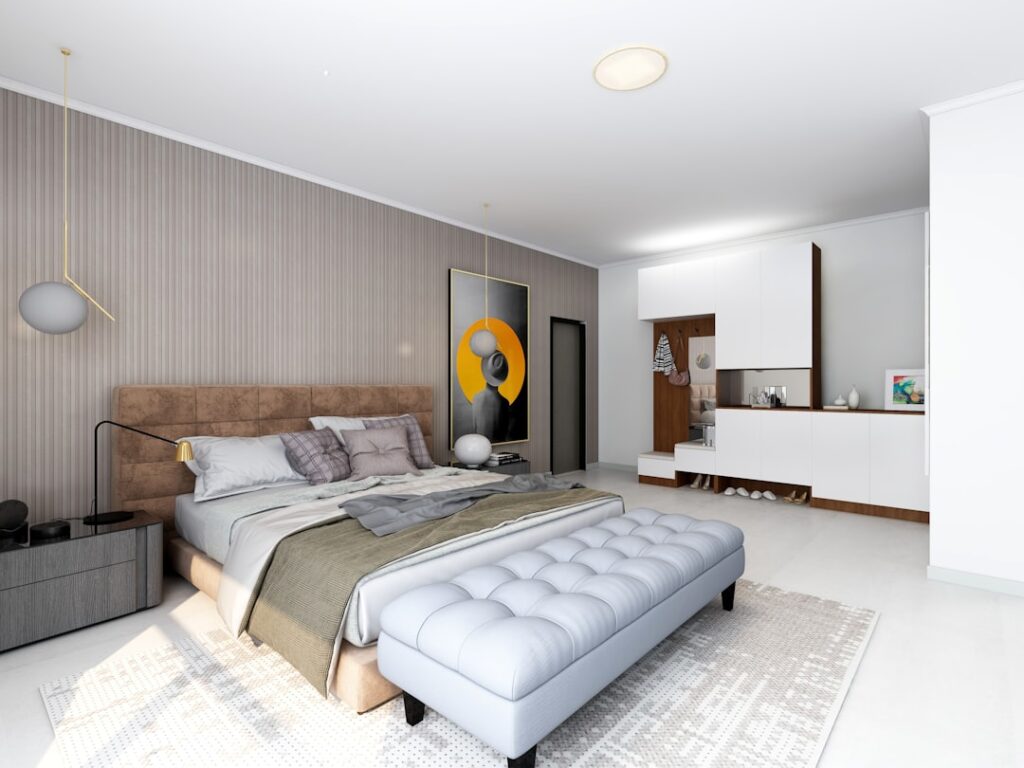
Curtains do more work in a bedroom than in any other room. They block light for sleeping, insulate against temperature swings, absorb sound, and set the visual tone for the entire space. The right bedroom curtain ideas balance all four functions while complementing your furniture, wall color, and personal style. Whether you spend $30 on ready-made panels or $300 on custom drapes, the principles behind a great-looking window treatment stay the same.
Choosing the Right Fabric
Fabric weight determines how curtains hang, how much light they block, and how formal they look. Heavier fabrics like velvet and lined linen create luxurious folds and excellent light blocking. Lightweight fabrics like cotton voile and sheer polyester filter light beautifully but offer minimal privacy after dark.
- Linen: Relaxed texture with a casual drape. Wrinkles naturally, which adds character. $25 to $80 per panel depending on size and quality.
- Velvet: Dense pile blocks light and insulates well. Weighs 3 to 5 times more than cotton, so sturdy rods are essential. $40 to $120 per panel.
- Cotton: Clean lines, easy to wash, works in any style. Line them for better light blocking. $15 to $50 per panel.
- Polyester blends: Wrinkle-resistant and affordable. Modern blends look surprisingly close to natural fibers. $10 to $35 per panel.
- Sheer: Filters harsh sunlight while maintaining daytime privacy. Layer behind blackout panels for versatility. $8 to $30 per panel.
Blackout Curtains for Better Sleep
Light exposure suppresses melatonin production, and even a small amount of street light or early sunrise can fragment sleep cycles. Blackout curtains block 95% to 100% of incoming light using a foam-backed or triple-woven fabric construction. They also reduce outside noise by 10% to 15% and insulate windows, cutting heating costs by up to 25% in winter according to the U.S. Department of Energy.
For the best results, mount blackout curtains at least 3 inches beyond the window frame on each side and 4 inches above the frame. This overlap prevents light leakage around the edges, which is the most common complaint with blackout panels. Wraparound curtain rods that curve toward the wall eliminate side-gap light entirely.
Layered Curtain Combinations
Layering a sheer panel behind a heavier drape gives you two looks in one window. Open the outer drapes during the day for filtered natural light through the sheers. Close both layers at night for privacy and light blocking. This approach works especially well in bedrooms facing east, where morning sun is welcome in small doses but overwhelming at full strength.
Use a double curtain rod ($20 to $50) to hang both layers independently. The sheer panel goes on the rod closest to the window, and the outer drape hangs on the front rod. Choose sheer fabric in a complementary shade rather than matching white for added depth. A warm ivory sheer behind charcoal linen drapes creates visual warmth that pure white sheers miss.
Curtain Length and Hanging Height
Three length options exist, and each sends a different design signal. Floor-length curtains that just touch or hover 1/2 inch above the floor look polished and modern. Curtains that pool 2 to 3 inches on the floor create a romantic, luxurious effect best suited to formal bedrooms. Sill-length curtains work only in kitchens and bathrooms and should be avoided in bedrooms entirely.
Hang curtain rods 4 to 6 inches above the window trim, or at the ceiling line for a dramatic effect that makes standard 8-foot ceilings feel taller. This single trick transforms a room more than any fabric or color choice. For a 54-inch-tall window in a room with 8-foot ceilings, you need 84-inch or 96-inch panels when mounting near the ceiling.
Color and Pattern Selection
Neutral curtains in white, cream, gray, or beige suit the widest range of bedroom designs and are easiest to update around. Bold curtain colors like navy, emerald, or rust make a statement but commit you to a color scheme. Patterned curtains work best as the single focal textile in the room. Pair them with solid bedding and simple pillows to avoid visual competition.
Match curtain warmth to wall warmth. Cool gray walls pair with blue-toned gray or white curtains. Warm beige walls look best with cream, camel, or warm white curtains. The mismatch between warm walls and cool curtains is subtle but creates an unsettled feeling that most people sense without identifying the cause.
Hardware and Rod Styles
Curtain hardware is jewelry for your windows. Matte black rods ($15 to $40) suit modern and industrial bedrooms. Brushed brass or gold rods ($25 to $60) elevate traditional and transitional spaces. Wood rods in natural oak or walnut ($20 to $55) complement bohemian and Scandinavian interiors.
Choose rod diameter based on curtain weight. Lightweight sheers and cotton panels work on 3/4-inch rods. Heavy velvet and lined drapes need 1-inch to 1.5-inch diameter rods with wall-anchored brackets every 36 to 48 inches. Flimsy rods that bow under heavy curtains ruin an otherwise beautiful window treatment.
Budget-Friendly Bedroom Curtain Ideas
IKEA’s Merete cotton panels ($25 per pair) in white, gray, or beige offer exceptional value for the price and take custom hemming well. Target’s Threshold line includes affordable blackout options at $20 to $35 per panel. Amazon Basics blackout curtains run $15 to $25 per panel and perform well in light-blocking tests despite the low price point.
For a custom look without custom pricing, buy extra-long ready-made panels and have them hemmed to your exact length at a local alterations shop for $10 to $20 per panel. Add clip rings instead of using the sewn-in rod pocket for a more tailored, pinch-pleat appearance. These small upgrades cost under $15 per window but make $25 panels look like $100 drapes.