The pale blond floor in every Scandinavian design magazine from 1998 to 2010 was almost always beech — a European hardwood with an even, pinkish-cream tone that photographs like sunlight on paper. Real beech hardwood is expensive, moves aggressively with humidity, and scratches more easily than oak. Beech laminate flooring gives you the visual at one-third the price with none of the moisture drama, which is why it has quietly become the best-selling blond-wood laminate in US and European markets. This guide covers what to look for in a quality beech laminate, where the visual wins, and what to actually pay.
Why Beech Became a Laminate Staple
Beech’s natural color palette sits between cream and pale pink, with a uniformly tight, straight grain that reads calm rather than busy. That uniformity is exactly what laminate manufacturers can reproduce convincingly — unlike oak with its wild medullary rays and dramatic grain swirls, beech prints flatten into a repeatable pattern that holds up across 20 planks in a row without looking tiled.
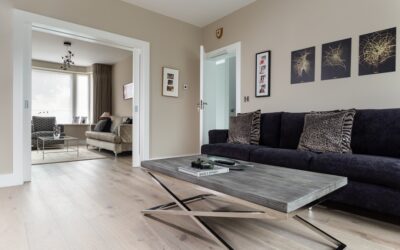
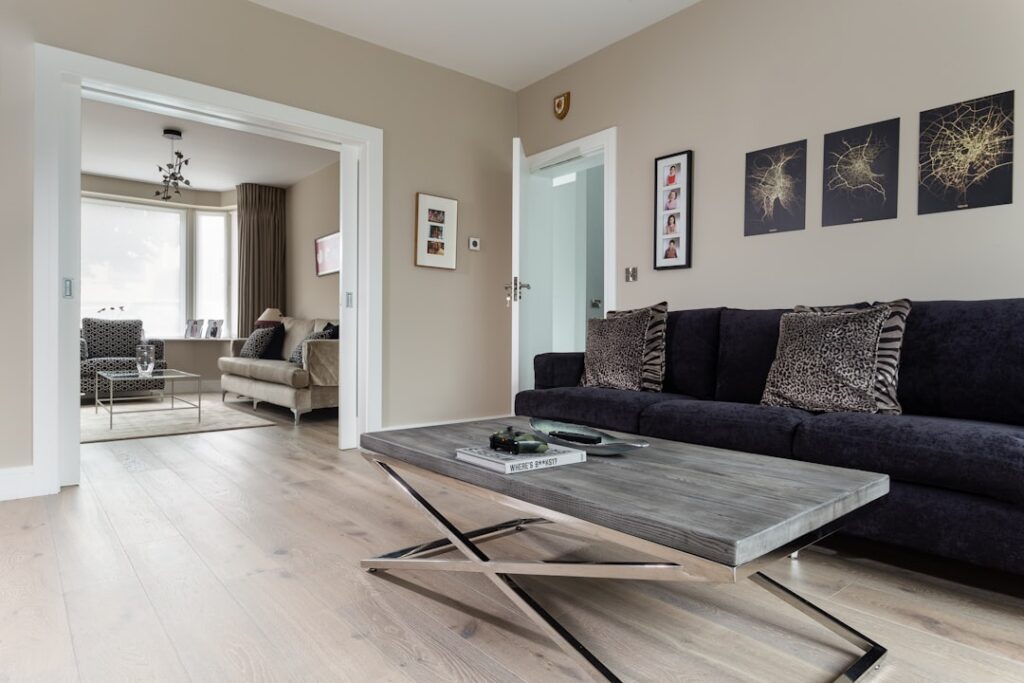
Design-wise, beech works in spaces where oak reads heavy. Small bedrooms, galley kitchens, and north-facing rooms with limited natural light visually expand with a blond floor. It pairs cleanly with white cabinetry and Scandinavian furniture, and it avoids the yellow-orange cast that plagues cheap oak laminate.
Grades and Visual Variations
Beech laminate ships in three distinct visual styles, and picking the wrong one kills the effect:
- Natural beech: pinkish-cream, very pale, no heartwood red — the pure Scandinavian look
- Steamed beech: warmer golden-pink from heat-steaming process, slightly darker
- Select beech: knot-free, uniform boards, reads modern and minimalist
- Rustic beech: occasional small knots and mineral streaks, reads traditional
For a design-forward space, specify natural select beech. For a warmer traditional feel, steamed rustic works better. Avoid boards labeled “beech effect” without the word “natural” or “steamed” — those are often generic blond prints with no real beech reference.
AC Rating and Thickness for Beech Planks
Because beech reads very pale, it telegraphs surface wear faster than darker laminates. Spec up on durability:
- AC3 rating is rental-grade only — skip for owner-occupied homes
- AC4 works for bedrooms, dining rooms, home offices
- AC5 is the right call for kitchens, hallways, and family rooms
- 8 mm thickness is the functional minimum — 10 mm and 12 mm feel noticeably more substantial underfoot
Premium European mills like Quick-Step, Pergo Scandinavia, and Egger offer true beech laminates at 10 to 12 mm with AC5 ratings, which is the combination most buyers should target.
Pros That Earn the Spec
Beech laminate’s advantages go beyond the visual:
Light reflectance is the practical win. A pale beech floor reflects 55 to 65 percent of incident light compared to 15 to 25 percent for dark oak. In a windowless hallway or basement office, that difference is significant — you end up with less artificial lighting needed through the day.
Dust visibility is actually lower than on dark laminates. Counterintuitive but true: dust and pet hair show up dramatically on ebony, walnut, and dark gray laminates. On beech, the blond tone camouflages fine debris between cleanings.
Resale appeal is stronger than buyers assume. Blond floors photograph well on real estate listings because they visually enlarge rooms. Listing agents routinely cite pale laminate as a presentation positive, particularly in small condos and starter homes.
Honest Downsides
A few compromises come with the territory:
Scratches show more on pale laminate than on mid-tone woods. Gray oak and smoked walnut hide micro-scratches by virtue of color confusion. Beech reveals every line. This is a spec-up-on-AC-rating problem, not a dealbreaker, but it is real.
Dirt transitions from “invisible” to “obvious” faster. Gray grime that collects around furniture legs and traffic paths reads quickly on a pale floor. The maintenance cycle ends up tighter than a dark laminate — plan on a damp microfiber mop every 5 to 7 days in a family home.
Yellowing in direct sun is a slow concern. UV exposure over 5 to 10 years will shift a natural beech laminate slightly amber. South-facing rooms with large windows see this effect first. Window film (3M Sun Control, $4 to $8 per square foot installed) prevents it.
Real Pricing Per Square Foot
Beech laminate prices track general laminate tiers but carry a slight premium for the visual:
- Budget beech-look (8 mm, AC3-AC4): $1.20 to $2 per sq ft material
- Mid-range beech (10 mm, AC4): $2.20 to $3.50 per sq ft
- Premium European beech (12 mm, AC5, embossed-in-register): $3.50 to $5.50 per sq ft
- Professional float installation: $2.50 to $4 per sq ft labor
- All-in installed: $4 to $9 per sq ft
Brands worth shortlisting: Quick-Step Largo Natural Beech, Pergo Outlast+ Classic Beech, Egger Pro Classic Northern Beech, Kronotex Robusto Trend Beech.
Install Details That Matter
Beech laminate floats like any other click-lock product, but a few details matter more because of the pale color:
- Use a white or cream expansion gap filler at perimeter — dark caulk reads as a visible line on a blond floor
- Specify matching white or natural beech transition strips rather than generic metal — cheap metal transitions cheapen the whole install
- Clean subfloor dust thoroughly before laying — any debris trapped under a plank eventually telegraphs as a bump on pale laminate
- Run planks parallel to the longest wall in narrow rooms to maximize the visual stretch effect
- Choose a minimum 2 mm foam underlay, or 3 mm cork-rubber for apartments with noise-sensitive neighbors
Best Rooms and Styles for Beech
Beech laminate excels in specific settings and should be avoided in others:
Ideal rooms: small bedrooms, galley kitchens, home offices, north-facing living rooms, condos, small apartments, retail showrooms where products are the focus.
Less ideal: dark-cabinet kitchens where the floor fights the visual weight, large open-plan spaces with strong direct sunlight (uneven UV aging), and farmhouse-style homes where oak reads more appropriate.
Style compatibility is highest with Scandinavian, minimalist, mid-century modern, and Japandi design languages. It reads mediocre under traditional American colonial or heavy dark furniture.
Maintenance Routine
Standard laminate maintenance applies but with slightly tighter intervals because of the pale color:
- Daily: soft-bristle sweep or robot vacuum
- Weekly: damp microfiber mop with pH-neutral cleaner (Bona Laminate Cleaner works well)
- Monthly: check expansion gaps, refasten any loose transition strips
- Never: steam mop (heat and moisture push through click joints), wax polish, or abrasive cleaners
Felt pads on all furniture legs are non-optional. Dog and cat nails will scratch any laminate, beech included — consider nail caps for large dogs.
Final Verdict
Beech laminate flooring is the fastest path to a bright, Scandinavian-styled interior without the cost or fragility of real beech hardwood. Spec 10 mm or 12 mm at AC4 or AC5, stick with European mills for genuine beech visuals rather than generic “blond wood” prints, and budget $5 to $8 per square foot installed. The visual is genuinely transformative in small and low-light rooms, and the maintenance premium over a dark laminate is modest. For the right space, beech remains the most effective light-tone laminate you can buy.
Prefer to explore on your own?
See how new flooring looks in your actual room in seconds — free, no signup.
Try the free Floor Studio →