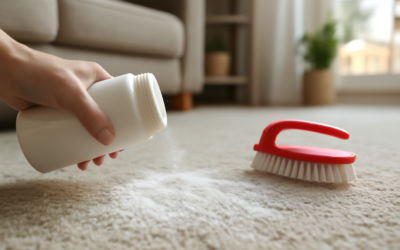
If your living room smells faintly of dog, last night’s dinner, or just years of foot traffic, a sprinkle of the best carpet powder can reset the whole room in about twenty minutes. These dry deodorizing powders sit between vacuuming and a full steam clean, absorbing odors and freshening fibers without soaking the carpet or requiring drying time. The catch is that not all powders are equal, and used wrong, some can leave residue that dulls your carpet or clogs your vacuum. Here is how to pick the right one and use it like a pro.
- How Carpet Powder Actually Works
- What Separates the Best Carpet Powders
- Top Types Worth Buying
- How to Apply Carpet Powder Correctly
- Common Mistakes to Avoid
- Is Carpet Powder Safe for Your Vacuum?
- When Powder Is Not Enough
- How Often Should You Use Carpet Powder?
- Frequently Asked Questions
- The Bottom Line
How Carpet Powder Actually Works
Most carpet powders share a simple core: an absorbent mineral base, usually baking soda (sodium bicarbonate) or a clay-like compound, blended with fragrance and sometimes enzymes. The base pulls moisture and odor molecules out of the fibers while the fragrance masks what is left. Enzyme-based formulas go a step further, breaking down organic odor sources like pet urine and food proteins rather than just covering them.
The powder does its work while it sits, then you vacuum it away along with the trapped odor. Because it is dry, there is no wait for the carpet to cure and no risk of the over-wetting problems that cause mildew in padding.
What Separates the Best Carpet Powders
When I evaluate a powder, four things matter far more than the scent on the label:
- Fine, vacuum-friendly grind: Coarse powders sink deep and are hard to fully extract. A fine, even grind lifts out cleanly.
- Odor elimination, not just masking: Look for baking soda or listed enzymes rather than pure fragrance.
- Residue behavior: The best formulas leave no white film or greasy feel after vacuuming.
- Pet and family safety: If you have animals or kids, choose fragrance-light or pet-formulated options and keep everyone off the carpet until it is vacuumed.
Top Types Worth Buying
Rather than chase a single brand, match the powder type to your problem:
- Classic baking-soda deodorizers (Arm & Hammer style): Cheap, effective for everyday freshening, and gentle on fibers. The reliable default for most homes.
- Enzyme pet powders: Formulated to neutralize urine and dander odors at the source. Worth the premium if you have dogs or cats.
- Fragrance-forward refreshers (lavender, linen, citrus): Great before guests arrive, but confirm they still contain an absorbent base so they do more than perfume.
- Fragrance-free naturals: Best for sensitive noses, asthma, and homes that just want odor gone without a scent trail.
- DIY baking soda: Plain baking soda from the pantry works surprisingly well and costs almost nothing. Add a few drops of essential oil if you want scent.
How to Apply Carpet Powder Correctly
Most people who complain about carpet powder simply used it wrong. Follow these steps and you will get clean, residue-free results every time:
- Vacuum first. Remove loose dirt so the powder reaches the fibers, not the surface debris.
- Sprinkle lightly and evenly. A thin, even dusting beats a heavy pile. Concentrate on high-odor zones like pet spots and entryways.
- Work it in gently with a soft brush or broom so it reaches down into the pile.
- Let it dwell 15 to 30 minutes, or up to a few hours for stubborn odors. Longer is better for tough smells.
- Vacuum thoroughly in multiple directions until no powder lifts. A vacuum with a rotating brush and strong suction pulls it out best.
Common Mistakes to Avoid
Over-application is the number one error. A thick layer buries powder deep in the pad, where your vacuum cannot reach, and that leftover residue attracts dirt and dulls the carpet. Applying to a damp carpet is the second mistake; moisture turns powder into a paste that cakes into the fibers. Finally, skipping the dwell time defeats the purpose, because the absorption is what removes the odor. Give it the full window and vacuum it out completely.
Is Carpet Powder Safe for Your Vacuum?
Fine powders are generally fine for bagged vacuums and most bagless models, but very heavy use can clog filters and, over time, coat the internals of a vacuum motor. Empty the canister and check the filter after deodorizing a large area. If you own a high-end vacuum with sensitive electronics, use powder sparingly and vacuum in slow, overlapping passes rather than dumping the whole canister of powder in one room.
When Powder Is Not Enough
Deodorizing powder is a maintenance tool, not a deep cleaner. It refreshes and controls odor, but it does not remove ground-in dirt, set stains, or the source of a strong pet-urine smell soaked into the padding. For those, you need hot-water extraction (steam cleaning) or professional service. Think of powder as the thing you use every couple of weeks between the deeper cleans you do a few times a year.
How Often Should You Use Carpet Powder?
Frequency depends on your household. For a low-traffic room with no pets, a light deodorizing every two to four weeks keeps things fresh. Homes with dogs, cats, or heavy foot traffic benefit from weekly treatment in the worst zones, entryways, pet beds, and favorite napping spots. The important thing is not to overdo it: powder is meant to be a light, frequent refresh, not a heavy monthly dumping. A thin dusting used regularly outperforms a thick application used rarely, and it keeps residue from building up in the pad over time.
Pair powder with a consistent vacuuming schedule, at least once or twice a week for carpeted rooms, so you are lifting out both the powder and the dirt it has captured. Think of the two as partners: vacuuming removes the grit, and the powder handles the odor that vacuuming alone cannot touch.
Frequently Asked Questions
Is carpet powder safe for pets and children?
Most are, but keep pets and kids off the treated carpet until you have vacuumed it up, since curious animals may lick the powder and fine dust can irritate sensitive airways. Choose a fragrance-free or pet-formulated product if anyone in the home has allergies or asthma, and always vacuum thoroughly afterward.
Will carpet powder ruin my vacuum?
Used in moderation, no. Very heavy or frequent use of fine powder can clog filters and coat internal parts over time, so empty the canister and check the filter after big jobs. Vacuum in slow, overlapping passes so the machine actually picks the powder up rather than blowing it deeper.
Can I just use baking soda instead?
Absolutely. Plain baking soda is the active base in most commercial powders and works nearly as well for everyday odor for a fraction of the cost. Add a few drops of essential oil for scent if you like.
The Bottom Line
The best carpet powder for you depends on your household: a simple baking-soda deodorizer covers everyday freshening, an enzyme pet formula tackles animal odors at the source, and a fragrance-free natural suits sensitive homes. Whatever you choose, apply it thinly to a dry carpet, let it dwell, and vacuum it out completely. Done right, it is one of the cheapest, fastest ways to keep a room smelling clean between deep cleanings, and it takes less time than making a cup of coffee.