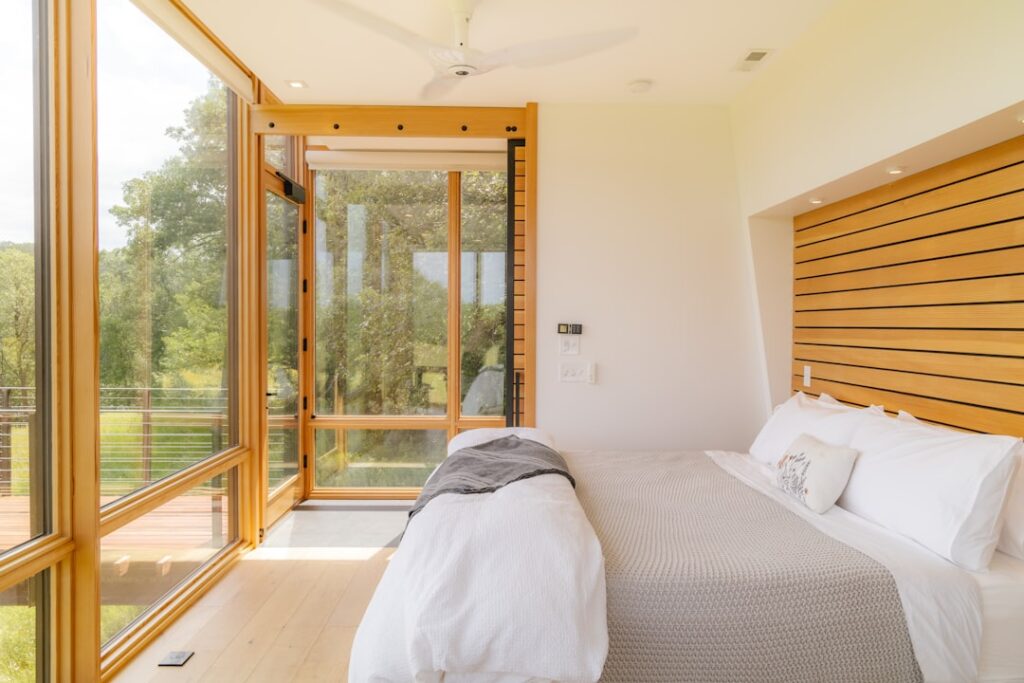
Most fan shoppers focus on the wrong spec. They look at watts, oscillation angle, or remote features when the only number that actually matters is CFM (cubic feet per minute) per dollar at a tolerable noise level. The best fan for your bedroom, living room, or workshop is the one that moves enough air for the space without sounding like a jet engine, and it almost never costs more than $200.
This guide breaks down the fan categories that matter for US homes, real model recommendations with current pricing, and the sizing rules that ensure you do not buy a $129 tower fan to cool a 400 sq ft den it can never handle.
Tower Fans: Best for Bedrooms and Small Living Rooms
Tower fans give you the smallest footprint and the cleanest aesthetics, and modern brushless DC motor models are remarkably quiet. The Dreo Cruiser Pro T1 ($109) puts out about 24 ft of throw distance with a low-speed dB rating around 25, which is genuinely quiet enough to sleep through. Vornado OSCR37 ($149) is the more durable build with a 5-year warranty.
Skip cheap $40 tower fans from big-box stores. The motors are AC-only, the bearings squeal at 6 months, and most of them under-deliver on the airflow they claim. The cost-per-year math is worse than buying a $100 unit that lasts five summers.
Pedestal Fans: Most Air for the Money
If raw airflow is the priority, a pedestal fan beats almost everything in the same price bracket. The Lasko 1843 18-inch ($45 to $55) pushes around 2,500 CFM on high. The Vornado 783 ($149) uses Vornado’s deep-pitch blade and Vortex circulation to move air across an entire 350 sq ft room rather than just blowing on whoever is in front of it.
For a garage, workshop, or open patio, look at the Lasko Max Performance 20-inch high velocity ($89). It is loud — around 65 dB on high — but it pushes serious air. Pair it with a smaller quieter fan for the bedroom and you have most of a house covered for under $150 total.
Ceiling Fans: Whole-Room Solution
A ceiling fan is the only category that creates a whole-room cooling sensation rather than a directional breeze. For an 8 ft ceiling, you want the fan blade tips at 7 to 9 inches below the ceiling and 7 ft above the floor. Choose blade span based on room size:
- Up to 75 sq ft (small bedroom, bath): 29 to 36 inch blades
- 76 to 144 sq ft (standard bedroom): 36 to 42 inch blades
- 145 to 225 sq ft (living/dining): 44 to 50 inch blades
- 226 sq ft and up: 52 to 60 inch blades, or two smaller fans
The Hunter Dempsey 44-inch ($129 to $169) is a solid mid-range pick with a quiet WhisperWind motor. For a great room, the Big Ass Fans Haiku 60-inch ($899 to $1,099) is overpriced for most homeowners but earns it on noise (almost silent) and durability. Minka-Aire Concept II 44-inch ($269) is the design-forward pick that does not give up performance.
Tabletop and Personal Fans
For desks, nightstands, and small spaces, the Vornado Flippi V6 ($35) or Honeywell HT-900 TurboForce ($25) deliver more airflow than their size suggests. Both will rattle a bit after a couple of years, but at that price point, you replace them. The Vornado Pivot 3 ($49) is the upgrade pick — same compact size, smoother motor, will go 10 years.
USB-powered desk fans look appealing for the office but rarely move enough air. If you are running it 6 hours a day, plug into the wall and get something with a real motor.
Bladeless and Bladed: Does It Matter?
Dyson Cool fans look futuristic and sit at $300 to $500. The airflow per dollar is significantly worse than a $100 Vornado, and they are not actually quieter once you push them past medium speed. The case for buying one is design — they look better in a modern living room — and ease of cleaning, since there are no blades to dust. They are not the best fan for raw cooling.
Bladed fans, especially deep-pitch blade designs from Vornado, are still the airflow king. If aesthetics matter less than performance, save the money.
Sizing the Fan to the Room
Use this rough rule for portable fans: target 20 to 30 air changes per hour for cooling comfort. A 12 ft x 14 ft x 8 ft bedroom has 1,344 cubic feet of volume. At 25 ACH, you need a fan rated 560 CFM minimum. Most quality 16-inch oscillating fans hit 1,500 to 2,000 CFM on high, so you have plenty of headroom and can run on medium for noise.
For larger rooms over 250 sq ft, do not try to cover the whole space with a single 12-inch tabletop. You will run it on high constantly, the motor will burn out, and you still will not feel cool. Two well-placed mid-size fans always beat one oversized fan running flat-out.
Noise: The Spec That Actually Decides It
Look for dB ratings, not just speed settings. Anything under 40 dB on low speed is fine for sleep. 50 to 55 dB is conversational. Above 60 dB and you cannot watch TV without raising the volume. Brushless DC motor fans (Dreo, newer Vornado, Lasko Wind Curve XT) are quieter than AC motor fans across the board, and they sip about 30 percent less power.
For sleep specifically, a slightly louder fan running on low can be better than a quieter fan you have to run on high. White noise is a feature when you want it, a problem when you do not. Test before committing to one model for the bedroom.
Quick Picks Summary
If you want one recommendation per category, here it is. Bedroom: Dreo Cruiser Pro T1 tower fan ($109). Living room: Vornado 783 pedestal ($149). Garage or workshop: Lasko Max Performance 20-inch ($89). Ceiling: Hunter Dempsey 44-inch ($149). Desk: Vornado Pivot 3 ($49). That covers the average US home for under $450 total, and every one of these fans will run cleanly for 5 to 10 years.