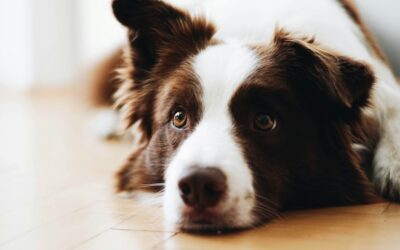
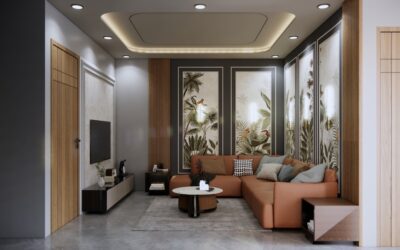
Dog urine doesn’t just stain — it penetrates, off-gasses ammonia, and over time can rot subfloors and warp hardwood. The best flooring for dogs that pee isn’t the most expensive option or the one that looks the most luxurious; it’s the one that holds up under repeated accidents without absorbing odor, swelling at the seams, or staining permanently. After helping dozens of dog-owning clients pick flooring, I want to walk through what actually works in real-world conditions.
Why Dog Urine Damages Flooring
Fresh urine is roughly pH 6 — mildly acidic. Within hours of sitting on a porous surface, bacteria break down urea into ammonia, raising the pH to 12 and creating a chemical reaction with finishes, wood tannins, and dyes. The damage isn’t just cosmetic; the alkaline residue stays in the substrate even after surface cleaning, attracting future accidents and continuing to off-gas odor for months or years.
That’s why surface cleaning rarely solves the underlying problem on permeable flooring. The fix is choosing a non-permeable surface from the start.
Scratch-resistant flooring is half the battle — giving your pet their own space helps too. A sturdy dog crate keeps muddy paws contained, and a cat tree gives your cat somewhere to scratch that isn’t the new floor.
We may earn a commission when you purchase through our links.
Top Picks for Dog-Owning Households
1. Sheet Vinyl with Welded Seams
For dogs with chronic accidents, professionally heat-welded sheet vinyl is genuinely unbeatable. The continuous surface has no joints for urine to penetrate, the wear layer is dense enough to resist the alkaline residue, and a quality enzymatic cleaner removes odor completely. Tarkett and Forbo make residential sheet vinyl in convincing wood-look and stone-look visuals at $2-$5 per sq ft material plus $4-$7 per sq ft for professional installation.
2. Porcelain Tile with Epoxy Grout
Porcelain tile is essentially impermeable. Paired with epoxy grout (not standard cementitious grout), the entire floor system resists urine, odor, and bacteria. The downside is the hard, cold surface that can be uncomfortable for older dogs with joint issues. Material runs $2-$8 per sq ft, plus installation at $5-$10 per sq ft. Use a slip-rated tile (DCOF 0.42 or higher) so wet paws don’t slide.
3. Luxury Vinyl Plank (LVP) with Tight Click Joints
Premium SPC and WPC vinyl plank with attached pad and tight click joints handles dog accidents well if cleaned promptly. Brands like COREtec, Shaw Floorte Pro, and Mohawk SolidTech use joint designs that resist water penetration. Look for products specifically rated waterproof rather than water-resistant. $2.99-$5.99 per sq ft material.
4. Polished Concrete
For mudrooms, basements, and outdoor-adjacent rooms, sealed and polished concrete is the most durable dog-friendly surface available. A penetrating densifier plus a topical sealer makes the slab non-absorbent, easy to mop, and odor-free. Installation costs vary widely from $3-$15 per sq ft depending on whether you’re polishing existing concrete or pouring new.
5. Rubber Flooring (Mudrooms and Crates)
For dedicated dog spaces, kennel rooms, or mudrooms, rolled rubber or interlocking rubber tiles are practically immune to urine damage. Easy to hose down, comfortable underfoot, and shock-absorbent. $2-$6 per sq ft.
What to Avoid
- Solid hardwood — even sealed, urine eventually penetrates and stains the wood permanently
- Engineered hardwood — same vulnerability at the seams and edges
- Carpet — fibers absorb, padding traps, and odor lingers indefinitely
- Bamboo — natural pH reaction with urine causes black staining within days
- Cork — porous and damaged by repeated wet exposure
- Standard laminate — joints swell from urine sitting on them, even with sealed top surfaces
Key Specs to Check
Whatever flooring you’re considering, verify these points before buying:
- Waterproof rating — not just water-resistant. Look for “100% waterproof” language and unlimited spill warranty.
- Joint design — tight tongue-and-groove or click joints with manufacturer’s water-rated locking system.
- Wear layer — 20mil or thicker for active households with claws.
- Pet damage warranty — many manufacturers exclude pet urine; some specifically include it. Read the fine print.
- Slip resistance — DCOF 0.42 minimum for wet conditions.
Cleaning Routine That Works
Even the best flooring requires immediate cleaning of accidents. Blot fresh urine with paper towels rather than rubbing (rubbing pushes liquid into seams). Apply an enzymatic cleaner like Nature’s Miracle or Rocco & Roxie — these break down the uric acid crystals that ammonia-based cleaners leave behind. Let the enzyme cleaner dwell for 10-15 minutes per the label, then blot dry.
Avoid bleach and ammonia-based cleaners on any flooring. Bleach can damage wear layers and grout, while ammonia smells like more urine to the dog and encourages re-marking.
Subfloor Considerations
If a dog has been peeing on hardwood or carpet for years, the subfloor is likely contaminated. Before installing new flooring, lift any flooring with active urine staining, seal the subfloor with a stain-blocking primer like Zinsser BIN or Kilz Restoration, and let it cure 24-48 hours. Skip this step and odor will telegraph through any new flooring within months.
Installation Tips
For LVP and sheet vinyl in dog homes, ask the installer to run a small bead of compatible silicone caulk along walls and around pipe penetrations under the baseboard. This prevents urine from migrating to the subfloor at the perimeter, which is the most common failure point. The caulk is invisible after the baseboard is installed and adds maybe $30 in materials to a typical room.
Cost Comparison All-In
- Sheet vinyl with welded seams: $7-$12 per sq ft installed
- Porcelain tile with epoxy grout: $8-$18 per sq ft installed
- Luxury vinyl plank: $5-$10 per sq ft installed
- Polished concrete: $4-$15 per sq ft installed (existing slab)
- Rubber flooring: $4-$9 per sq ft installed
My Recommendation by Use Case
For a whole-home install with one or two dogs that have occasional accidents, premium LVP gives the best balance of cost, comfort, and durability. For chronic markers or senior dogs with incontinence, sheet vinyl with welded seams or porcelain tile is worth the premium. For dedicated dog rooms and mudrooms, polished concrete or rubber is hard to beat.
Choosing the best flooring for dogs that pee comes down to matching the surface to the severity of the situation. Don’t oversell yourself on hardwood or carpet thinking you’ll train the problem away — pick a floor that survives the accidents you’ll have, and the dog and the floor will both age better.
Prefer to explore on your own?
See how new flooring looks in your actual room in seconds — free, no signup.
Try the free Floor Studio →