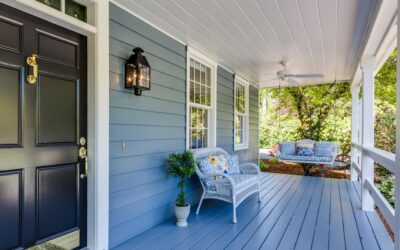
Real estate agents consistently report that a freshly painted front door is one of the highest-return improvements a seller can make, costing under $50 in paint and a few hours of labor while potentially adding $6,000 or more to perceived home value. Choosing the best front door colors depends on your home’s exterior palette, architectural style, and the impression you want to create. The wrong shade blends in and gets ignored. The right one makes people slow down and take a second look. Here are the colors that work, the ones that do not, and how to pick the perfect match for your home.
Part of our Windows & Doors guide — explore the full guide →
Classic Colors That Never Miss
Some front door colors have proven staying power because they work across nearly every architectural style and exterior color scheme.
Black is the single most versatile front door color. It pairs with white, gray, beige, brick, stone, and virtually every siding color. A high-gloss black door reads as sophisticated and intentional on everything from a Colonial to a contemporary ranch. Benjamin Moore’s Black (2132-10) and Sherwin-Williams Tricorn Black (SW 6258) are industry standards for a reason.
Navy blue delivers warmth and depth without the heaviness of black. It works exceptionally well against white or light gray exteriors and natural stone. Try Benjamin Moore Hale Navy (HC-154) or Sherwin-Williams Naval (SW 6244), which was their 2020 Color of the Year and remains a top seller for doors.
Red is the traditional statement color. A deep, true red like Benjamin Moore Heritage Red (HC-181) commands attention against white, cream, or gray siding. Avoid orange-leaning reds on homes with warm-toned brick, as they clash rather than contrast. Red doors suit Colonial, Cape Cod, and Craftsman styles particularly well.
Trending Colors for Modern Homes
Current trends lean toward nature-inspired tones and unexpected neutrals that feel fresh without being trendy enough to date quickly.
Sage green has surged in popularity for good reason. It connects to the landscape, reads as calm and welcoming, and pairs beautifully with warm wood tones, white trim, and natural stone. Sherwin-Williams Retreat (SW 6207) and Benjamin Moore Cushing Green (HC-125) are two standouts that hit the right balance between green and gray.
Charcoal gray splits the difference between black and a softer neutral. On lighter exteriors, charcoal creates contrast without the stark formality of true black. Benjamin Moore Wrought Iron (2124-10) reads as a warm, dark charcoal that shifts slightly depending on light conditions.
Warm terracotta and burnt orange tones are having a moment, especially on Southwestern, Mediterranean, and mid-century homes. Sherwin-Williams Cavern Clay (SW 7701) works on stucco and adobe exteriors. These earthy tones feel grounded and distinctive without screaming for attention.
How to Match Your Door Color to Your Home
The front door does not exist in isolation. It has to work with the siding, trim, shutters, roof, and hardscape surrounding it. Follow these pairing principles to avoid a mismatch.
- Contrast is essential. The door should be noticeably different from the siding. A medium-blue door on medium-blue siding disappears. A navy door on light gray siding pops.
- Coordinate with the undertone. Every color has a warm or cool undertone. Match your door’s undertone to your trim and siding. A cool-toned green door clashes with warm-toned cream siding. A warm-toned green complements it.
- Consider the roof color. A dark charcoal roof, red brick, and a mustard-yellow door is a lot of competing warmth. Step back and look at the full picture from the curb.
- Test with large samples. Paint a 2 x 2-foot section of poster board and tape it to the door. View it at different times of day. North-facing doors get indirect light and make colors look darker. South-facing doors in full sun wash colors out, so you can go bolder.
Colors That Hurt Resale Value
A Zillow analysis of home sale data found that certain front door colors correlated with lower sale prices. Pale pink, light yellow, and bright purple doors were associated with homes selling for less than expected. These colors can feel dated, childish, or too personal for most buyers’ taste.
Neon or fluorescent shades are attention-grabbing for the wrong reasons and rarely look professional once the novelty fades. Flat or matte finishes on front doors show every scuff, handprint, and weather mark within months. Stick with satin, semi-gloss, or high-gloss sheens for durability and visual impact.
If you are painting for resale specifically, play it safe with black, navy, charcoal, or a deep red. These colors appeal to the broadest buyer pool and signal a well-maintained home.
Best Paint and Finish for Front Doors
Front doors take a beating from sun, rain, temperature swings, and constant handling. Use exterior-grade paint rated for direct exposure, not leftover interior paint.
- Benjamin Moore Aura Grand Entrance: Purpose-built for front doors. Self-leveling formula minimizes brush marks. Available in satin and high-gloss. $75 to $85 per quart.
- Sherwin-Williams Emerald Urethane Trim Enamel: Urethane-modified alkyd that flows like oil-based paint but cleans up with water. Excellent adhesion and hardness. $45 to $55 per quart.
- BEHR Ultra Scuff Defense: Budget-friendly option that performs well. Good coverage and durability at $35 to $40 per quart.
High-gloss finish is the classic choice for front doors. It reflects light, makes colors appear richer, and wipes clean easily. Semi-gloss is slightly more forgiving of surface imperfections while still delivering good durability. Satin works well on rustic or Craftsman doors where a sheen would look out of place.
How to Paint a Front Door for the Best Result
Surface prep determines 80% of the final result. Skipping prep is the single most common reason front door paint jobs look amateur.
- Clean the door thoroughly. Wash with TSP (trisodium phosphate) solution or a degreasing cleaner to remove dirt, oils, and chalky residue from old paint.
- Sand the surface. Use 150-grit sandpaper on the entire door to degloss the old finish and create a surface for the new paint to grip. Wipe with a tack cloth after sanding.
- Fill and repair. Use exterior wood filler on any dents, dings, or holes. Sand smooth once cured.
- Prime if needed. Bare wood, stained surfaces, and dramatic color changes require a bonding primer. Going from dark to light (or vice versa) without primer means extra coats and possible bleed-through.
- Apply two coats. Use a 4-inch mini foam roller for flat panels and a 2-inch angled brush for the stiles, rails, and details. Roll or brush in the direction of the wood grain. Allow the manufacturer’s recommended dry time between coats, typically 4 to 6 hours for water-based and 16 to 24 hours for oil-based.
Paint when temperatures are between 50 and 85 degrees F and humidity is below 70%. Early morning on a day when the door is shaded works best. Direct sun causes the paint to dry too fast, leaving brush marks and reducing adhesion. If possible, remove the door from the hinges and paint it flat on sawhorses. Gravity becomes your friend instead of your enemy, and drips become a non-issue.
Making Your Choice
The best front door colors create a focal point that draws the eye and sets the tone for the entire home. For most homes, the safest bets are black, navy, deep red, or charcoal. For homeowners wanting something more distinctive, sage green, teal, or warm terracotta offer personality without risk. Whatever you choose, invest in quality exterior paint, prep the surface properly, and apply a high-gloss or semi-gloss finish that will look sharp for 5 to 7 years before needing a refresh.