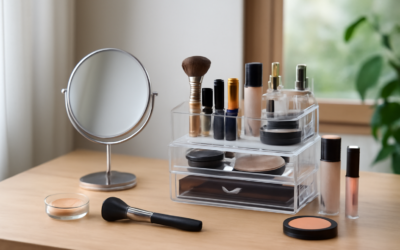
A makeup collection grows faster than the bag holding it, and before long the morning routine becomes a daily dig through loose brushes and rolling lipsticks. The best makeup bag organizer ends that frustration by giving every item a dedicated spot, protecting fragile compacts, and making travel painless. This guide breaks down the main styles, the features that matter, and how to match an organizer to the way you actually use your products.
- Why an Organizer Beats a Plain Pouch
- Main Styles of Makeup Organizers
- Features That Separate Good From Great
- Matching the Organizer to Your Routine
- Materials and Durability
- Sizing It Right for Travel
- Organizing by Category
- Keeping Cosmetics Fresh and Clean
- Making Your Final Choice
- Common Buying Mistakes to Avoid
Why an Organizer Beats a Plain Pouch
A simple zip pouch works until it does not. Products shift, powders crack, and you waste time searching. A purpose-built organizer separates brushes from creams, keeps glass bottles upright, and lets you see your whole collection at a glance. For anyone with more than a handful of items, the time saved each morning makes the upgrade worthwhile.
Main Styles of Makeup Organizers
Different formats suit different needs and spaces:
- Roll-up brush organizers: fabric rolls with individual slots that protect bristles and unroll flat for travel
- Hanging organizers: fold out and hang from a hook or door, ideal for hotel bathrooms with no counter space
- Train cases: hard-sided boxes with stacking trays, best for large collections kept at home
- Pouch-style with compartments: soft bags with internal dividers and mesh pockets for everyday carry
- Clear acrylic caddies: countertop units that display everything upright, great for a vanity rather than travel
Features That Separate Good From Great
When comparing organizers, weigh these details. They are the difference between a bag you love and one that ends up in a drawer:
- Material: water-resistant nylon or coated fabric wipes clean when powder or liquid spills
- Compartments: a mix of elastic loops for brushes, padded slots for compacts, and mesh for small items
- Zippers: sturdy, smooth-running zippers are the first thing to fail on cheap bags
- Structure: some support to hold shape, without so much bulk that it eats luggage space
- Cleanability: a wipeable or removable lining you can rinse
Matching the Organizer to Your Routine
The right pick depends on how and where you use your makeup. A frequent traveler benefits from a hanging organizer that needs no counter, while someone with a fixed vanity may prefer a clear acrylic caddy that keeps everything visible. If brushes are your priority, a dedicated roll protects bristles better than tossing them in a general pouch.
Be honest about volume too. Buying a giant train case for a five-item routine wastes space, while cramming a large collection into a tiny pouch crushes products. Measure your most-used items and choose a size with a little room to grow.
Materials and Durability
Construction quality determines how long an organizer lasts. Look for reinforced seams, a lining that resists staining, and hardware that feels solid rather than flimsy. Coated nylon and polyester clean easily and shrug off the inevitable foundation smear. Genuine and faux leather look elegant but can be harder to clean when liquids seep in.
Hard cases protect best against crushing, which matters if the bag rides in checked luggage. Soft cases pack more flexibly into a carry-on or purse. There is no single winner; it comes down to where the bag travels.
Sizing It Right for Travel
If travel is the main reason you are buying, size the organizer to your luggage and your routine, not to your entire collection. Carry-on travelers benefit from a compact, lie-flat design that slips into a personal item, while anyone flying with liquids needs to remember that products over the carry-on liquid limit must go in checked baggage regardless of the bag.
A smart move is a two-bag system: a small daily organizer for the products you use every morning and a larger one for backups and overflow. That way a weekend trip means grabbing only the small bag, while a longer stay calls for both. Modular setups like this adapt to the trip instead of forcing you to repack every time.
Organizing by Category
However many compartments your organizer has, the system works best when you group products by type and use. Keep brushes together in their loops, stand liquids and bottles upright in deeper slots, and reserve a clear or mesh pocket for small items like tweezers and liners that otherwise disappear. Grouping by category means you reach for the right spot automatically instead of rummaging.
A simple habit keeps the system intact: return each item to its assigned spot after use. The organizer can only stay tidy if you maintain the layout, and a few seconds of discipline each morning preserves the calm, fast routine you bought the bag for in the first place.
Keeping Cosmetics Fresh and Clean
An organizer does more than tidy your collection; it helps your products last. Storing items separately reduces cross-contamination, and a wipeable interior lets you clean up spills before they stain. Wipe the bag out monthly, check expiration dates as you go, and let brushes dry fully before rolling them up to prevent mildew.
Making Your Final Choice
To land on the best makeup bag organizer for you, weigh portability against capacity, choose a material you can keep clean, and prioritize compartments that fit your specific items. Read recent buyer reviews for honest notes on zipper quality and real-world durability, since those details rarely show in product photos. A thoughtful pick pays you back every single morning with a faster, calmer routine and products that stay protected.
Common Buying Mistakes to Avoid
A few predictable missteps lead to organizers that disappoint. Steering around them saves money and frustration:
- Buying for the collection you wish you had rather than the products you actually use day to day
- Ignoring zipper and seam quality, which are the first parts to fail on a cheap bag
- Choosing a hard-to-clean lining that stains the first time a foundation cap loosens
- Overlooking how it packs, ending up with a bulky case that eats luggage space
- Skipping reviews and missing real-world notes on durability
The most common regret is size. Buyers tend to overestimate how much they need to carry, then end up with a half-empty bag that flops around. Be realistic about your everyday kit, leave a little room to grow, and you will choose a bag you actually reach for rather than one that ends up unused in a drawer.