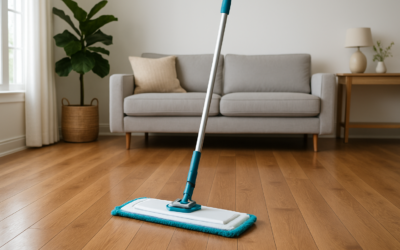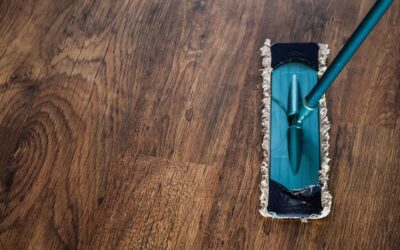
Standing water is the enemy of a polyurethane finish, which is why choosing the best mop for wooden floors matters more than the cleaner you pair with it. A sopping string mop can push moisture into seams as wide as 0.005 inches, eventually swelling the edges of red oak planks until they cup. Microfiber, in contrast, holds 6 to 8 times its weight in water but releases it on a damp pad rather than a flood. The right tool keeps your finish glossy for the full 7 to 10 years a quality urethane is supposed to last.
- What Hardwood Manufacturers Actually Recommend
- Bona Premium Spray Mop: The Category Standard
- O-Cedar EasyWring Microfiber Spin Mop
- Swiffer WetJet Wood for Quick Touch-Ups
- Microfiber Flat Mops for Budget Buyers
- Mops to Avoid on Hardwood
- How to Mop Hardwood Without Damaging It
- Final Pick: Which Mop Wins
What Hardwood Manufacturers Actually Recommend
Bruce, Bona, and Shaw all publish the same warning in their care booklets: avoid steam, avoid soaking, and avoid oil soap on factory-finished planks. The National Wood Flooring Association (NWFA) goes further, recommending pH-neutral cleaners around 7.0 to 7.5 and a microfiber head that leaves no visible film. Anything more aggressive risks delaminating the aluminum oxide topcoat that most prefinished planks ship with from the mill.
Translated to a shopping list, that rules out classic sponge mops and cotton string mops. You want a flat mop with a removable, washable pad, or a spray mop that meters out roughly half an ounce of solution per pull of the trigger.


Bona Premium Spray Mop: The Category Standard
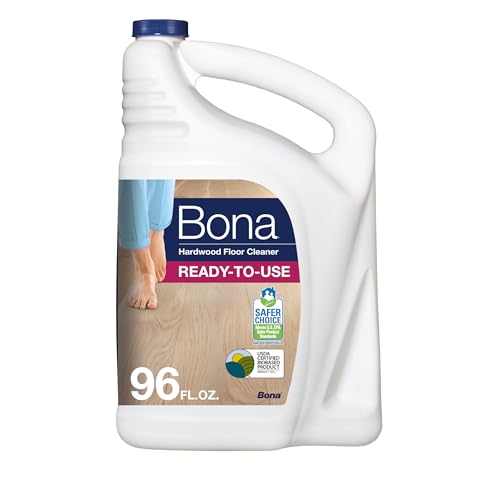
The Bona Premium Spray Mop runs about $45 at Lowes and ships with a refillable 34-ounce cartridge of Bona Hardwood Floor Cleaner. The microfiber pad measures 15 inches wide and snaps on with hook-and-loop fasteners, which speeds up swapping for a dry pad after the wet pass. Bona’s formula is GreenGuard Gold certified for low VOC emissions, an important detail if you have kids crawling on the floor an hour after cleanup.
What sells it for most homeowners is the cartridge swap. When you finish a 500 sq ft kitchen and great room, you pop the empty bottle out and slot a refill in without unscrewing anything. Replacement pads cost $9.99 for a two-pack and survive about 50 wash cycles before the fibers start to mat.
O-Cedar EasyWring Microfiber Spin Mop
If you want bucket-and-mop control without the puddles, the O-Cedar EasyWring runs $39.99 and uses a foot-pedal centrifuge to spin the microfiber head until it is just damp. Bone-dry takes about 4 to 5 pumps, ideal for engineered hardwood with a 3 mm wear layer that hates standing water. The triangle head pivots 360 degrees and reaches into the toe-kick under cabinets where a flat mop binds up.
Pair it with Method Squirt + Mop in almond, which is plant-based and rinses clean without a haze. Skip the cheaper pine-scented cleaners that contain oils designed for vinyl and tile.
Swiffer WetJet Wood for Quick Touch-Ups
The Swiffer WetJet Wood model is $26 at Target and trades reusability for speed. The battery-powered sprayer fires a fine mist, and the disposable pads catch grit without scratching. It is not the most cost-efficient choice over five years, since refill solution runs $5.49 per 42 oz bottle and pads add another $0.40 each, but for a 900 sq ft condo you can clean every Saturday in under 12 minutes.
The WetJet works best as a maintenance tool between deeper cleanings with a Bona system. Do not use the original blue WetJet solution on hardwood — only the Wood-specific yellow bottle, which is pH-balanced for urethane finishes.
Microfiber Flat Mops for Budget Buyers
Turbo Microfiber and MR.SIGA both sell flat mop kits under $30 that include a 17-inch frame, telescoping handle to 60 inches, and four to six washable pads. You add your own cleaner in a spray bottle, which lets you tailor dilution. A 1:32 mix of Murphy’s Oil Soap is overkill for waxed floors; for urethane finishes, a quarter cup of distilled white vinegar in a gallon of warm water works for a weekly clean.
The downside is the manual spray bottle in your off hand — you cover ground roughly 30 percent slower than a built-in sprayer mop. The upside is that the system runs maybe $0.04 per cleaning cycle once you own the pads.
Mops to Avoid on Hardwood
- Steam mops like the Shark Genius and Bissell PowerFresh push 212 °F vapor into the grain. Even one minute of dwell can blanch a satin finish.
- Sponge mops hold too much water and drag grit across the surface like sandpaper.
- Cotton string mops shed lint and require wringing that is rarely tight enough to prevent puddling.
- Disposable wet pads not rated for wood, including the original Swiffer Wet refills, leave a streaky residue from surfactants meant for tile.
How to Mop Hardwood Without Damaging It
Start by dust mopping or vacuuming with a soft-bristle attachment to lift grit. Any particle larger than 60 microns will scratch a urethane topcoat when you push a wet pad over it. Mist the floor in 4 ft by 4 ft sections rather than pre-wetting the whole room. Mop with the grain, not across it, so any streaks fade into the plank seams instead of standing out perpendicular to them.
Stop and rinse or swap the pad every 150 sq ft. A dirty pad just redistributes grime. Let the floor air dry — fans help in humid Gulf Coast summers — and avoid walking on it for 15 to 20 minutes so footprints do not flash mark the finish.
Final Pick: Which Mop Wins
For most homeowners with engineered or solid hardwood under 2,500 sq ft, the Bona Premium Spray Mop is the best mop for wooden floors at this price point. It costs less than $50, refills are stocked at every big-box chain, and the meter-controlled sprayer protects your finish from over-wetting. Step up to the O-Cedar EasyWring if you also need to clean tile or vinyl in adjacent rooms with the same tool. Reach for the Swiffer WetJet Wood only as a fast mid-week touch-up, not your main system.
Prefer to explore on your own?
See how new flooring looks in your actual room in seconds — free, no signup.
Try the free Floor Studio →