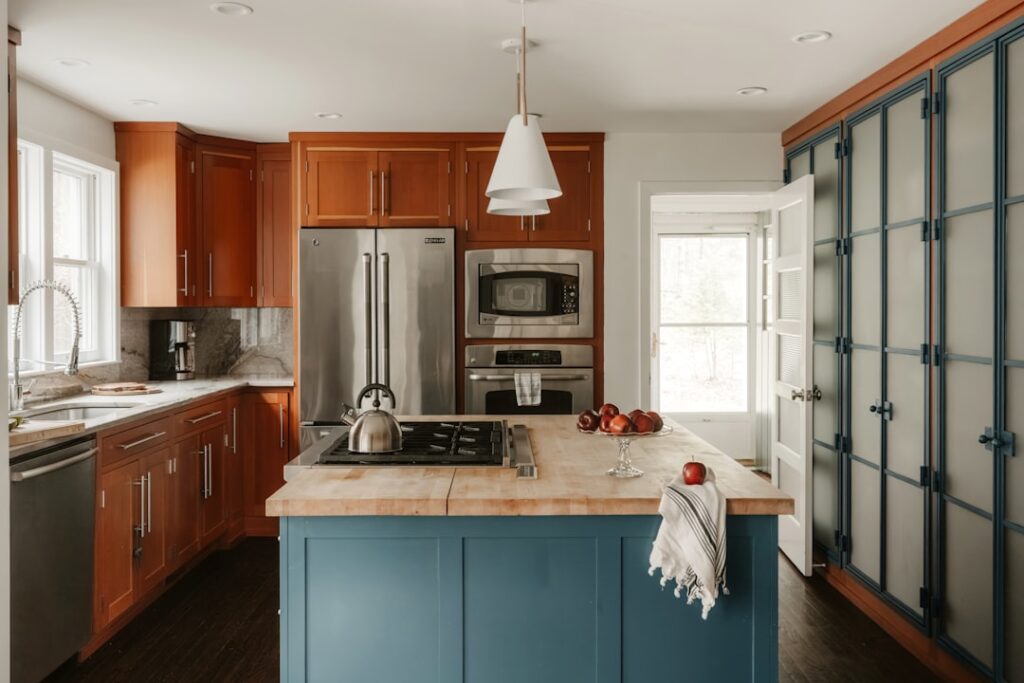
Paint the kitchen the same flat finish you used in the bedroom and within a month you will be staring at grease shadows behind the stove and permanent smudges by the trash can that no amount of wiping removes. The best paint finish for kitchen walls is not about color at all; it is about sheen, and in a room full of grease, steam, splatters, and hands, the answer is almost always satin or semi-gloss. These finishes create a harder, less porous surface that repels moisture and lets you scrub away the mess that kitchens inevitably generate. Here is how to choose between them and why the low-sheen finishes fail.
Part of our Kitchen Remodeling guide — explore the full guide →
- Why Sheen Matters More in the Kitchen
- Satin: The Everyday Kitchen Winner
- Semi-Gloss: Maximum Durability for Splash Zones
- Why Flat and Eggshell Fall Short Here
- Matching Finish to Kitchen Conditions
- Prep and Application Tips
- Ceilings, Cabinets, and Trim Sheens
- Dealing With Moisture and Mildew
- The Bottom Line on Kitchen Sheen
Why Sheen Matters More in the Kitchen
Sheen describes how much light a paint reflects, but its practical effect is durability and cleanability. Higher-sheen paints have more resin and a tighter, less porous surface. That density is exactly what a kitchen needs, because it means splatters and grease sit on top of the paint rather than soaking into it.
A porous, low-sheen finish absorbs grease and stains into the paint film, so wiping only smears them. A tighter satin or semi-gloss surface lets you wipe grease, tomato sauce, and fingerprints right off with a damp cloth. In the messiest room in the house, that difference decides how the walls look a year later.
Satin: The Everyday Kitchen Winner
For most kitchens, satin (sometimes called low-luster) hits the ideal balance. It has enough sheen to be moisture-resistant and scrubbable, yet it is subtle enough that it does not spotlight every bump and roller mark on the wall.
Satin wipes clean easily, tolerates the humidity from cooking and dishwashing, and looks warm and slightly soft rather than plasticky. It is the go-to for the main wall expanses in a kitchen, offering durability without the glare of glossier finishes. If you want one finish for the whole kitchen, satin is the safe, versatile choice.
Semi-Gloss: Maximum Durability for Splash Zones
Semi-gloss is shinier and even more durable and washable than satin. Its very tight surface stands up to the most abuse, which makes it ideal for the highest-splatter, highest-moisture spots.
- The backsplash-adjacent wall areas and the wall behind the stove.
- Trim, doors, window casings, and baseboards.
- Areas around the sink that get frequent water contact.
The trade-off is that semi-gloss reflects a lot of light and reveals every wall imperfection, dent, and patch. Many homeowners use satin on the broad walls and reserve semi-gloss for trim and the most vulnerable splash zones, getting durability where it counts without a glaring finish everywhere.
Why Flat and Eggshell Fall Short Here
Flat and matte finishes have almost no sheen, which makes them great at hiding wall flaws but terrible at resisting grease and moisture. Their porous surface absorbs stains, and scrubbing tends to burnish a shiny spot or lift the paint rather than clean it. In a kitchen, flat paint simply cannot survive the grease and splatter.
Eggshell sits between flat and satin. It is slightly washable and fine for a very light-use kitchen or a dining nook, but in an active cooking kitchen it does not hold up to repeated scrubbing as well as satin. If your kitchen sees real cooking, step up to satin at minimum.
Matching Finish to Kitchen Conditions
Consider how hard your kitchen works before deciding. A household that cooks daily with a lot of frying and a busy family generates far more grease and handprints than a kitchen used mainly for reheating and coffee.
- Heavy-use kitchen: Satin on walls, semi-gloss on trim and behind the range.
- Light-use kitchen: Eggshell may suffice on walls, but satin is still safer long term.
- High humidity or poor ventilation: Lean toward semi-gloss for extra moisture resistance and mildew-resistant formulas.
Prep and Application Tips
Higher-sheen paints are less forgiving of surface flaws, so preparation matters. Fill dents, sand patches smooth, and clean the walls of existing grease with a degreaser before painting, because paint will not adhere well to a greasy surface. A quality primer helps the topcoat bond and cover evenly.
Because satin and semi-gloss show lap marks more than flat, maintain a wet edge as you roll and work in manageable sections. Two thinner coats give a more uniform sheen than one heavy coat.
Ceilings, Cabinets, and Trim Sheens
The walls are only part of a kitchen’s paint story, and each surface calls for a different sheen. Kitchen ceilings get more grease and steam than ceilings elsewhere in the house, so while most rooms use flat ceiling paint, a kitchen ceiling benefits from a washable flat or even an eggshell so you can wipe away cooking film without burnishing the surface.
Cabinets are the opposite extreme: they take constant hand contact and need to be scrubbable and hard-wearing, so satin or semi-gloss enamel is standard, with many painters favoring semi-gloss for its durability and easy cleaning. Trim, doors, and window casings also wear semi-gloss for the same reasons and to create a subtle contrast with the satin walls. Keeping ceilings low-sheen, walls satin, and cabinets and trim in a harder semi-gloss gives the room both durability and a professionally layered look.
Dealing With Moisture and Mildew
Kitchens generate steam from boiling, dishwashing, and running the tap, and that humidity can encourage mildew on walls, especially in poorly ventilated rooms. Sheen is your first defense, since the tighter surface of satin and semi-gloss resists moisture penetration far better than flat. But you can go further for problem areas.
- Choose a paint with mildew-resistant additives, or add a mildewcide, in kitchens that stay humid.
- Prioritize semi-gloss on walls near the sink and dishwasher where splashing is constant.
- Run the range hood and an exhaust fan while cooking to cut the humidity load on the walls.
- Prime any previously stained or mildew-prone areas with a stain-blocking primer before painting.
Pairing the right sheen with good ventilation keeps kitchen walls looking fresh and prevents the discoloration and film that plague flat-painted kitchens. In a room defined by heat and moisture, that combination of a hard finish and moving air does more for longevity than any single product choice.
The Bottom Line on Kitchen Sheen
The best paint finish for kitchen walls is satin for the main walls and semi-gloss for trim and the highest-splatter zones, because these sheens repel grease and moisture and let you scrub the walls clean. Skip flat entirely and treat eggshell as a bare minimum for only the lightest-use kitchens. Choose the right sheen and your kitchen walls will wipe down like new for years instead of absorbing every splatter permanently.