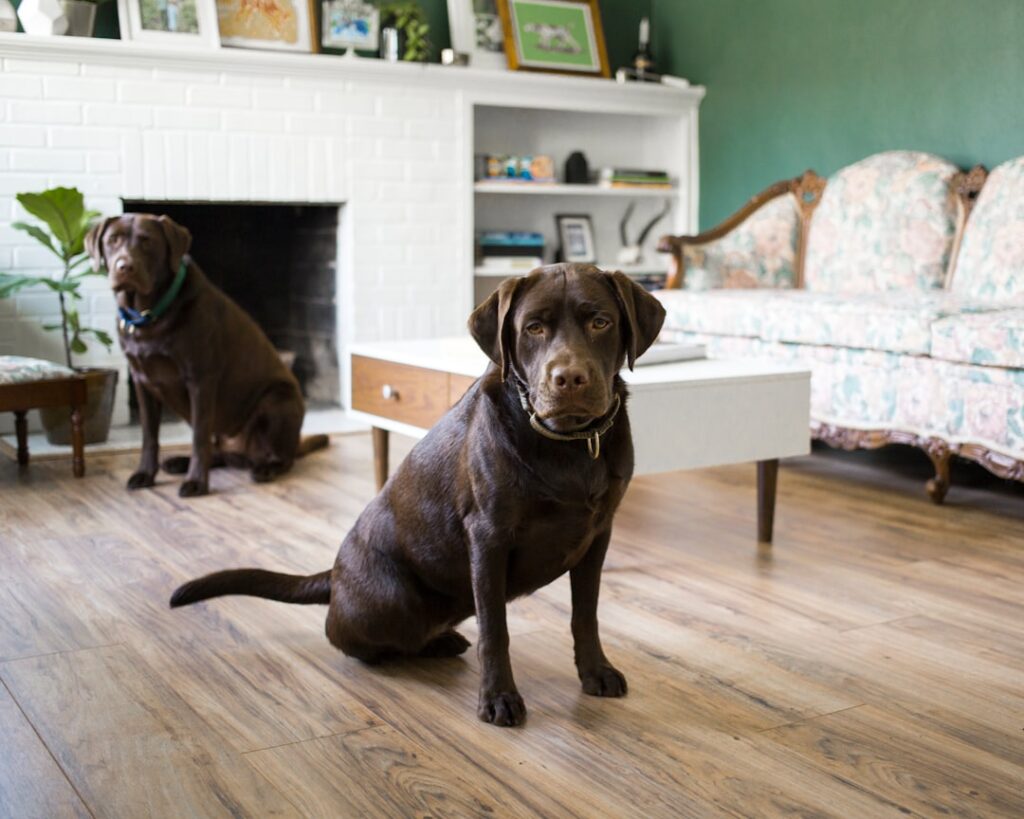
If you share your home with dogs or cats, the best vinyl plank flooring for pets combines a thick wear layer, a waterproof core, and a low-gloss finish that hides scratches and muddy paw prints. Luxury vinyl plank, commonly abbreviated LVP, has quietly become the default choice for pet owners because it shrugs off accidents that would destroy hardwood or swell a laminate board.
In this guide I break down exactly which specifications matter, how much you should expect to pay per square foot, and which product lines consistently hold up to claws, spills, and daily traffic. The goal is simple: help you buy once and avoid the heartbreak of replacing flooring two years after a new puppy arrives.
Why Vinyl Plank Wins for Pet Owners
Pets stress a floor in three specific ways: scratching from nails, moisture from accidents and drinking bowls, and abrasion from constant back-and-forth traffic. Vinyl plank addresses all three better than most alternatives. Unlike engineered hardwood, LVP will not warp when a bowl overflows. Unlike laminate, a modern stone-plastic-composite plank does not swell at the seams when liquid sits on it. And unlike tile, it stays warm and quiet underfoot so your dog’s nails do not click and echo through the house.
The waterproof advantage is the headline feature. A rigid-core LVP plank is 100 percent waterproof through the thickness of the board, meaning a training accident that sits overnight will wipe up clean with no staining and no subfloor damage. That single property is why shelters, veterinary clinics, and pet daycares almost universally specify vinyl over wood.
Scratch-resistant flooring is half the battle — giving your pet their own space helps too. A sturdy dog crate keeps muddy paws contained, and a cat tree gives your cat somewhere to scratch that isn’t the new floor.
We may earn a commission when you purchase through our links.
The Specs That Actually Matter
Marketing language like “pet-proof” means nothing on its own. Focus on these measurable numbers when you compare products:
- Wear layer thickness: Measured in mils (thousandths of an inch), this clear top coat is your scratch defense. For homes with pets, insist on a minimum of 12 mil, and prefer 20 mil or 28 mil for large or high-energy dogs. A 6 mil layer is fine for a closet but will haze under a Labrador in a year.
- Overall plank thickness: Ranges from 4mm to 8mm. Thicker planks (5mm to 8mm) feel more solid, absorb sound, and forgive minor subfloor imperfections.
- Core type: SPC (stone-plastic composite) is denser and more dent-resistant than WPC (wood-plastic composite). SPC is the better pick for pets because it resists indentation from dropped items and heavy furniture.
- Finish and texture: A matte or low-gloss finish with embossed-in-register texture hides fine scratches far better than a glossy plank, which shows every scuff.
- Scratch-resistant coating: Some premium lines add a ceramic-bead or aluminum-oxide enhanced top coat. These meaningfully improve claw resistance.
Top Vinyl Plank Lines for Homes with Pets
Based on wear-layer specs, real-world durability, and availability across the United States, these lines consistently perform well:
- Shaw Floorte Pro / Paragon: A 20 mil wear layer and SPC core make this a dependable choice for active households. Expect roughly $3.50 to $5.50 per square foot for the material.
- COREtec Pro Plus and COREtec Plus: The original rigid-core brand, with strong scratch resistance and an attached cork underlayment that dampens the click of nails. Material runs about $4 to $6 per square foot.
- Mohawk SolidTech Plus: A 20 mil wear layer with a dedicated scratch-guard finish, widely stocked and competitively priced around $3 to $5 per square foot.
- Lifeproof (Home Depot exclusive): A budget-friendly rigid core with a 6 to 22 mil range depending on the collection. Choose the thicker wear-layer versions for pets. Material is often $2.50 to $4 per square foot.
- Karndean Korlok: A premium glue-down and rigid-core line with a 20 to 30 mil wear layer and extremely realistic visuals, in the $5 to $8 per square foot range.
Whichever brand you choose, buy from a collection with at least a 12 mil wear layer and confirm the residential pet warranty covers scratches and stains, not just manufacturing defects.
Installation Options and What They Cost
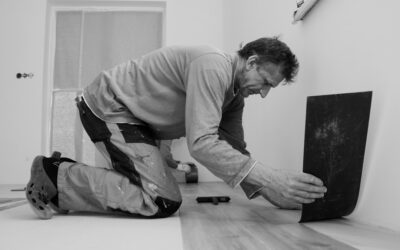
Most pet-focused LVP uses a click-lock floating installation, where planks snap together and float over the subfloor without glue or nails. This is the most DIY-friendly method and typically installs at $1.50 to $3 per square foot when hired out, on top of the material. Glue-down vinyl, common in the Karndean lineup, bonds directly to the subfloor and is favored in very high-traffic or commercial pet settings because individual planks stay put and can be replaced one at a time. Glue-down labor runs a bit higher, roughly $2 to $4 per square foot.
For a typical 200 square foot room, budget $700 to $1,400 for a mid-grade pet-rated floating floor, materials and labor combined. A whole-home 1,200 square foot project generally lands between $4,200 and $9,000 depending on the plank grade you select.
Color and Texture Tips to Hide Pet Wear
Beyond durability, smart color selection keeps a floor looking clean between deep cleans. Consider these practical points:
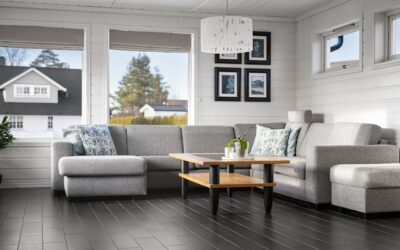
- Choose mid-tone browns, grays, and greiges. Very dark planks show dust, hair, and dried water spots, while very light planks reveal muddy prints.
- Pick planks with visible graining and color variation. A busy, multi-tone look camouflages scratches and shed fur between vacuum sessions.
- Favor a matte finish. Gloss reflects light and highlights every claw mark.
- Wider planks (7 to 9 inches) mean fewer seams, and fewer seams mean fewer places for liquid to potentially sit.
Caring for Vinyl Plank in a Pet Household
Vinyl plank is low maintenance, but a few habits extend its life considerably. Keep your pet’s nails trimmed, since even the toughest wear layer will eventually dull under overgrown claws. Place washable mats under food and water bowls to catch splashes. Sweep or dry-mop frequently to remove grit, which acts like sandpaper underfoot. For deeper cleaning, use a pH-neutral vinyl floor cleaner and a damp (not soaking) mop. Avoid steam mops, which can force moisture into the seams over time, and skip abrasive scrubbing pads that can scuff the finish.
Frequently Asked Questions
Can dog nails scratch vinyl plank flooring?
They can, but a quality plank with a 20 mil wear layer and a matte, textured finish resists everyday claw contact remarkably well. The scratches that do occur tend to be superficial hazing in the clear coat rather than gouges, and they are largely hidden by the plank’s texture. Cheap 6 mil planks are far more vulnerable, so spend up on the wear layer.
Is vinyl plank or laminate better for pets?
Vinyl plank is the clear winner for pets. Laminate has a fiberboard core that can swell and delaminate when exposed to standing liquid from accidents or spills, while rigid-core vinyl is fully waterproof. Vinyl is also quieter and warmer underfoot for napping pets.
How thick should the wear layer be for large dogs?
For large or high-energy dogs, choose a wear layer of 20 mil or more, and prefer an SPC core rather than WPC. The denser core resists dents from heavy paws and dropped toys, while the thick wear layer takes the brunt of the scratching.
The Bottom Line
The best vinyl plank flooring for pets is a rigid SPC-core plank with at least a 12 mil wear layer, a matte textured finish, and a mid-tone color that hides fur and prints. Lines from Shaw, COREtec, Mohawk, and Karndean all deliver on those specs at various price points. Invest in the wear layer, keep nails trimmed, and you will have a floor that looks great and handles the daily chaos of dogs and cats for well over a decade.
Prefer to explore on your own?
See how new flooring looks in your actual room in seconds — free, no signup.
Try the free Floor Studio →