The humble subway tile gets a quiet upgrade when its edges are angled. Beveled subway tile features sloped edges that catch light and cast soft shadows, giving a wall far more depth than its flat cousin. If you want the familiar, timeless rectangle with a touch of dimension and craftsmanship, beveled tile is worth a close look.
What Makes It Beveled
A standard subway tile has square, flat edges and a level face. A beveled version slopes downward at the perimeter, usually at a gentle angle, so the center sits slightly proud of the edges. That small profile change does a lot of work. Light hitting the bevel creates highlights and shadow lines that emphasize each tile’s outline.
The classic size remains 3 by 6 inches, though you will find bevels on 4 by 8, 4 by 12, and other formats. The effect is most dramatic in glossy finishes, where the angled edge reflects light differently than the flat face, producing a subtle shimmer across the whole installation.
Where It Works Best
Kitchens and bathrooms are the natural home for this tile. As a kitchen backsplash, the beveled edge adds visual interest without color or pattern, which keeps the look clean while avoiding the flatness some people find sterile in plain subway tile. The dimension reads as a deliberate design choice rather than a default.
In bathrooms, beveled tile shines on shower walls and tub surrounds, where steam and changing light play across the angled edges. It also works beautifully as a fireplace surround or an accent wall. Because the profile carries the interest, you can use simple white tile and still get a room that feels custom.
Popular Layouts
The bevel looks good in nearly every classic subway pattern, but some flatter it more than others.
- Running bond (offset): the traditional brick layout, offset by half, which keeps the look familiar and timeless.
- Stacked: straight grid alignment that emphasizes the geometric, modern side of the bevel.
- Herringbone: angled and woven for a dynamic, high-end feel where the bevels create a faceted texture.
- Vertical stack: rotated 90 degrees to draw the eye upward and heighten a room.
Whatever layout you choose, the shadow lines from the bevel make grout joints read more strongly, so plan your grout color carefully.
Choosing Color and Grout
Crisp white remains the bestseller because it lets the bevel and light do the talking. That said, soft gray, sage, blush, and deep navy all look striking with beveled edges, since the dimensional surface gives the color extra richness.
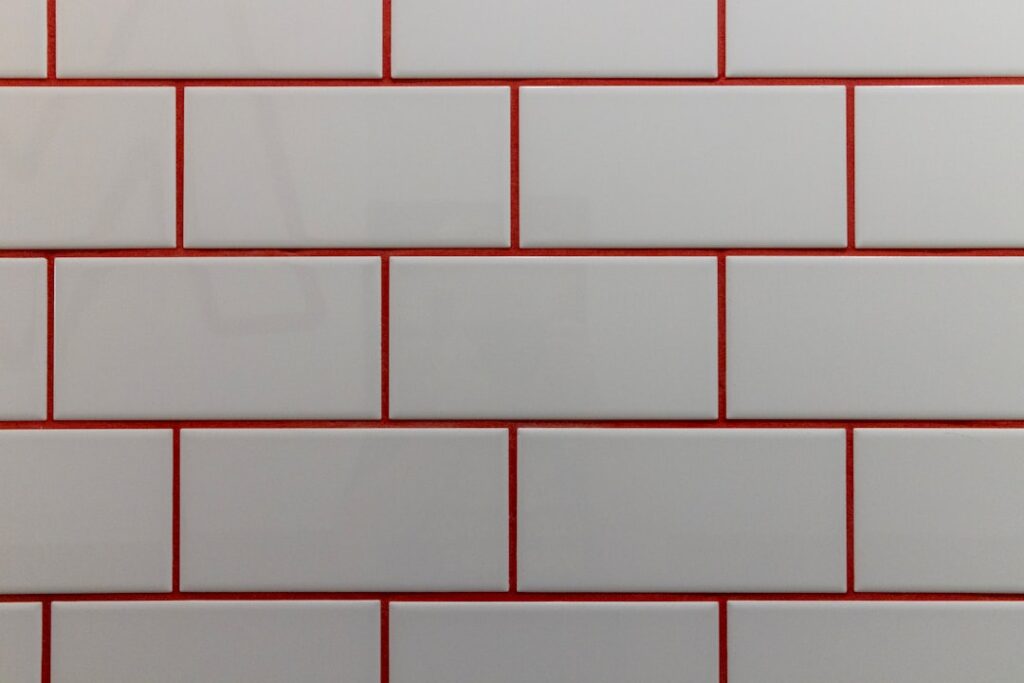
Grout choice dramatically changes the result. A matching white grout produces a seamless, soft field where the bevels provide gentle definition. A contrasting gray or charcoal grout outlines every tile and amplifies the dimensional effect, leaning more graphic and bold. Keep in mind that the recessed bevel can collect a little more grout haze during installation, so thorough cleanup matters.
Cost and What to Budget
Beveled subway tile is affordable for the impact it delivers. Ceramic versions typically run $3 to $8 per square foot, while glass, marble, or handmade beveled tiles climb to $10 to $25 per square foot. Most homeowners land in the lower range with quality ceramic or porcelain.
Installation usually adds $7 to $15 per square foot depending on layout. Herringbone and other intricate patterns cost more in labor and produce more waste, so order roughly 10 to 15 percent extra to cover cuts and breakage. Specialty trim pieces for edges and outside corners may carry a small premium.
Beveled Versus Flat Subway Tile
Choosing between beveled and flat comes down to the mood you want. Flat subway tile is clean, minimal, and recedes into the background, which suits very modern, pared-back spaces. The beveled version steps forward, adding shadow lines and a hint of traditional craftsmanship that keeps a white wall from feeling flat or builder-grade.
Cost is nearly identical between the two, so the decision is purely aesthetic. If your room already has plenty of texture and detail, flat tile may be the better backdrop. If you want a simple tile to carry visual weight on its own, the bevel earns its keep. Many homeowners find the beveled profile gives them the timeless subway look with just enough character to feel custom.
Materials and Finishes Available
Beveled subway tile is not limited to one material. Glossy ceramic is the most common and the most affordable, prized for the way the glaze amplifies the bevel’s light play. Matte ceramic offers a softer, more contemporary read where the dimension comes through in texture rather than shine.
You will also find beveled tile in glass, which adds luminous depth, and in marble and other natural stone for a high-end, organic look. Handmade and zellige-style beveled tiles bring subtle color variation and irregular edges that feel artisanal. Each material changes both the price and the personality, so request samples and view them in your room’s lighting before committing.
Installation Notes
Setting beveled tile follows the same fundamentals as flat subway tile, with a couple of nuances. The angled edges can make consistent spacing slightly trickier, so use tile spacers and check your lines often. Because the bevel sits lower than the face, take extra care to wipe grout from the recessed edges before it hazes.
Use the thinset and grout the manufacturer recommends, and on wet walls install a proper waterproofing layer behind the tile. If you are comfortable with basic tile work, a small backsplash is a reasonable DIY project. For a full shower or a complex herringbone wall, hiring an experienced tile setter protects your investment and your time.
Is Beveled Subway Tile Right for You
If you love the timelessness of subway tile but find the flat version a bit plain, the beveled profile is a low-cost way to add character. It bridges traditional and contemporary, plays well with almost any color, and rewards good lighting. For a backsplash, accent wall, or shower that needs to feel a little more crafted, beveled subway tile delivers dimension and shadow that flat tile simply cannot match, all without straying from a classic that never goes out of style.
Prefer to explore on your own?
See how new flooring looks in your actual room in seconds — free, no signup.
Try the free Floor Studio →