A black bathroom either looks like a five-star hotel suite or a poorly lit basement, with very little middle ground. The difference between those two outcomes is not budget. It is execution. Black bathroom design works because the absence of color forces materials, lighting, and texture to do all the storytelling. When every surface earns its place, the room reads as confident and modern. When even one element is off, the space looks dim and cramped instead of moody and luxurious. The good news is that the rules for getting it right are specific and learnable.
Part of our Bathroom Remodeling & Flooring guide — explore the full guide →
Why Black Bathrooms Have Become So Popular
Five years ago, all-white bathrooms ruled real estate listings. The current shift toward black, charcoal, and deep navy reflects a wider design backlash against sterile minimalism. Black absorbs light differently than any other color. Skin tones look warmer in the mirror. The harsh fluorescent feel of typical bathrooms disappears entirely. Hardware finishes like brushed brass and aged copper read as jewelry against dark backgrounds.
From a practical standpoint, black surfaces hide water spots, soap residue, and the daily film that white finishes show in unforgiving detail. The trade-off is dust. Every speck reads bright on a dark counter, and a black bathroom needs slightly more frequent dusting than a white one.
Picking the Right Black
Not every black is the same. The wrong shade looks flat, dirty, or weirdly purple under bathroom lighting. The right shade looks like deep velvet. Six paints earn consistent praise from interior designers in 2026.
- Benjamin Moore Black Beauty (2128-10): True neutral black with no color cast
- Sherwin-Williams Tricorn Black (SW 6258): The architectural designer favorite
- Farrow & Ball Off-Black (No. 57): Slight green undertone, reads soft
- Benjamin Moore Wrought Iron (2124-10): Very deep gray, easier than full black
- Sherwin-Williams Iron Ore (SW 7069): Charcoal with subtle warmth
- Farrow & Ball Pitch Black (No. 256): The richest, deepest option
Test all candidates with a 12×18 inch sample board at three times of day: morning, midday, evening with artificial light. Black changes character more than any other color depending on light source. North-facing rooms make some blacks read cold and gray; south-facing rooms can shift them surprisingly warm.
The 70-30 Rule
An all-black bathroom feels suffocating. Use the 70-30 rule as a baseline: 70 percent dark tones (walls, vanity, floor) balanced by 30 percent contrast (counters, fixtures, mirror frame, lighting). The contrast does the work of giving the eye somewhere to rest.
For a small bathroom under 60 square feet, flip the ratio. A 30 percent black accent wall behind the vanity with 70 percent lighter surfaces around it gives the drama without the cave. Save the full immersion for bathrooms with 80+ square feet and at least one window or skylight.
Lighting Is Not Optional
A black bathroom needs roughly three times the lumens of a white bathroom of the same size. Plan for layered lighting in at least three sources: ceiling general illumination, vanity task lighting, and at least one accent fixture.
Ceiling lights should produce 35 to 45 lumens per square foot. A 50-square-foot bathroom needs 1,750 to 2,250 lumens of ambient light, ideally split between two 4-inch LED recessed cans and one decorative fixture like a Schoolhouse Electric flush mount. Vanity lighting needs two sconces flanking the mirror at 66 inches center height, each rated 800 to 1,200 lumens, with 2700K to 3000K color temperature. Cool 4000K bulbs make black surfaces look gray and dingy.
Add a small picture light over a piece of framed art or above the bathtub for the magazine-cover detail that elevates the room from nice to memorable.
Tile and Stone Choices That Carry the Look
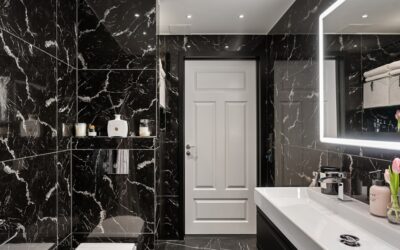
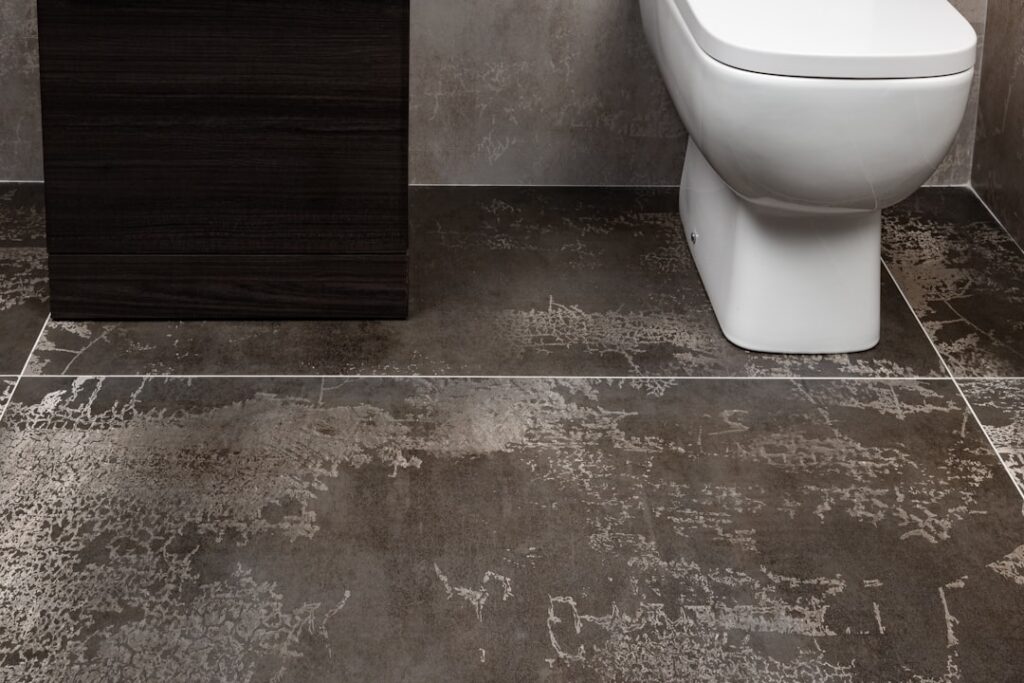
Black tile comes in two finishes: matte and glossy. Matte black absorbs light and reads soft. Glossy black reflects light and can either look glamorous or remind everyone of a 1980s nightclub depending on context. As a rule, use matte tile on floors and shower walls, glossy as accents on a single feature wall or backsplash.
Large-format porcelain (24×48 inches, $7 to $14 per square foot) minimizes grout lines and gives a luxe, seamless look. Smaller hex or penny tiles in matte black read more traditional and forgiving of subtle floor irregularities. For shower walls, a single slab of honed black granite or a porcelain Calacatta Black ($95 to $185 per square foot installed) feels like a custom hotel.
Skip black grout under any circumstance. It looks great on day one and turns gray within 18 months from soap residue. Use a charcoal or medium-gray epoxy grout (Mapei Kerapoxy in Quarry Gray or similar) that hides discoloration without trying to match the tile exactly.
Fixtures and Hardware
Hardware is where black bathrooms succeed or fail. Three finish families work consistently: matte black, unlacquered brass, and brushed nickel. Chrome looks cold against black. Polished brass can read dated unless paired with very specific materials. Choose one finish and commit to it throughout, including hinges, towel bars, and even toilet paper holders.
For faucets, Kohler Purist, Brizo Litze, and Delta Trinsic ($295 to $850) all come in matte black or champagne bronze and look custom even at the price point. Add a matching shower system, towel ring, robe hook, and mirror frame for visual cohesion. The total fixture investment for a master bath usually runs $1,200 to $2,800.
Counters and Vanity Materials
A black vanity needs a counter that contrasts but does not fight it. The three winning combinations:
Calacatta marble or quartz on black cabinet: Classic high contrast, white veining draws the eye, hides everything in between. Caesarstone Calacatta Nuvo runs $75 to $95 per square foot installed.
Walnut or smoked oak on charcoal cabinet: Warmer, softer, more spa-like. Pair with brushed brass hardware. The cabinet looks black, the counter glows warm against it.
Black-on-black with a single brass detail: All in for the moody look. Black quartz counter on a Tricorn Black cabinet with one piece of unlacquered brass hardware (a single inset pull, a knob). High risk, very high reward when it works.
Common Mistakes to Avoid
Five errors turn good black bathrooms bad. First, fluorescent vanity lighting. Even one cool-temperature bulb ruins the effect. Second, undersized fixtures. A small 18-inch round mirror over a 36-inch vanity looks lost. Use a mirror at least 80 percent of the vanity width. Third, busy patterned floors. Black bathrooms need calm under-foot to balance dramatic walls.
Fourth, ignoring ventilation. Black shows water spots and moisture residue more than any other color. Upgrade the exhaust fan to a Panasonic WhisperGreen ($175 to $285) with humidity sensing. Fifth, treating it like a powder room. Black works beautifully in a powder room (no windows, brief visits, all drama no consequence). It works in a full bath too, but requires more lighting and ventilation planning than a guest half-bath.
Putting It All Together
The best black bathroom design projects start with a moodboard of materials, not a Pinterest folder. Lay actual tile samples, paint chips, and hardware on a board in your bathroom for at least three days. Watch how they read in the room’s specific light. Adjust before purchasing anything. A bathroom in committed black with the right contrast, lighting, and finish selection feels like a sanctuary. The same room executed without those details feels like a regret. Get the planning right, and you end up with the rarest thing in residential design: a high-impact space that you still love five years later.