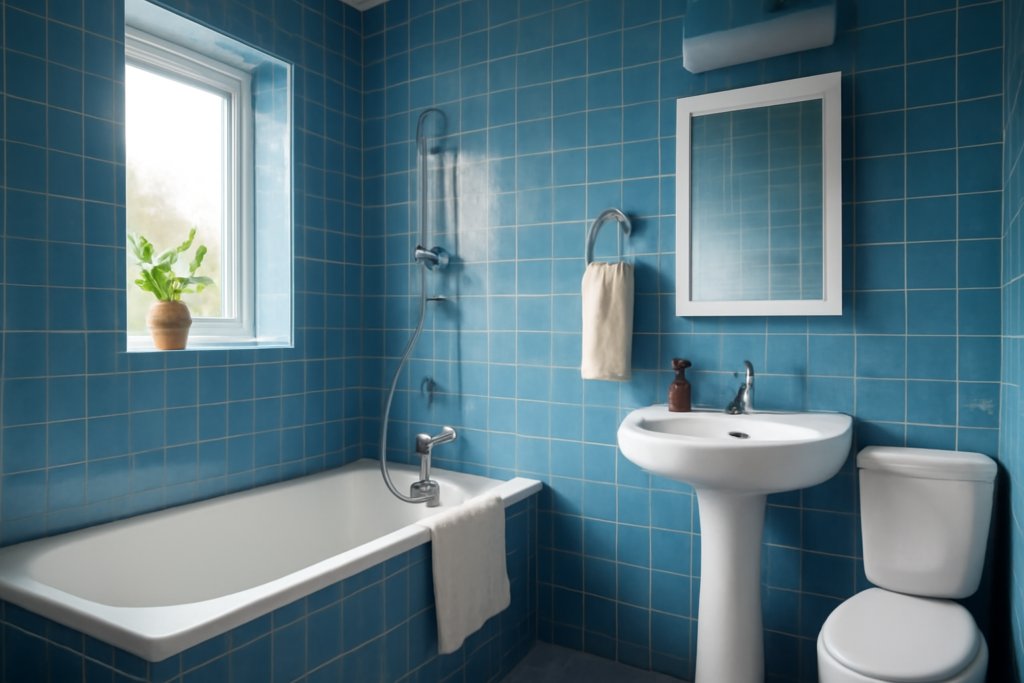
Few color choices feel as right in a bathroom as blue. A blue tile bathroom taps into the calming, spa-like associations of water and sky, which is exactly why designers keep returning to it for showers, floors, and accent walls. Blue is also remarkably versatile, working in everything from a moody powder room to a bright coastal bath. This guide walks through choosing the right shade, the best tile shapes and finishes, how to pair blue with other materials, and what a tiled bathroom typically costs.
- Why Blue Works in Bathrooms
- Choosing the Right Shade
- Tile Shapes and Finishes
- Where to Use Blue Tile
- Pairing Blue With Other Materials
- Grout and Finishing Details
- Making a Small Blue Bathroom Feel Larger
- Caring for Blue Tile
- Blue Tile Styles for Different Bathrooms
- Common Mistakes to Avoid
- Typical Costs
Why Blue Works in Bathrooms
Blue evokes calm and cleanliness, two things you want in a space built around water. It reads fresh without being sterile, and it spans a huge tonal range, from pale powder and seafoam to deep navy and teal. That range lets you set almost any mood. Light blues open up and brighten a small bath, while deep blues add drama and warmth to a larger one. Because blue is a cool color, it also pairs naturally with the white fixtures, chrome, and glass already common in bathrooms.
Choosing the Right Shade
The shade you pick sets the entire tone, so match it to the room and the feeling you want.
- Soft and pale blues: Powder blue, sky, and seafoam make small or windowless baths feel larger and airier.
- Mid-tone blues: Cerulean, denim, and slate strike a confident balance and hide water spots better than very pale tiles.
- Deep blues: Navy, indigo, and teal create a rich, enveloping look, best in rooms with good lighting so they do not feel cave-like.
Consider your natural light. North-facing or dim baths suit lighter, warmer blues, while sun-filled rooms can carry deeper, cooler tones beautifully.
Tile Shapes and Finishes
Shape and finish change how blue reads as much as the color itself. Classic subway tiles in blue feel timeless and clean. Glossy finishes bounce light and amplify a small space, while matte tiles feel modern and hide water spots. Handmade-look tiles with subtle color variation, called zellige, add artisan texture and depth. Penny rounds, hexagons, and fish-scale shapes bring playful pattern, especially as a shower floor or accent. For floors, choose a tile with enough slip resistance and a matte or textured finish for safety underfoot.
Where to Use Blue Tile
You do not have to commit to wall-to-wall blue. There are several ways to work it in:
- Full shower surround for an immersive, spa-like effect.
- Accent wall or niche to add a pop of color without overwhelming the room.
- Floor only, with white walls, for a grounded, balanced look.
- Wainscot height, blue tile on the lower wall with paint above, a traditional and budget-friendly approach.
Pairing Blue With Other Materials
Blue plays well with many partners. Crisp white tile, fixtures, and trim keep a blue bathroom bright and classic. Warm brass and gold fixtures contrast beautifully against blue for a modern, upscale feel, while chrome and polished nickel lean cool and clean. Natural wood vanities add warmth that softens blue’s coolness. White or light gray grout keeps the look fresh, while a darker grout outlines the tile pattern for graphic contrast. Aim for one or two accent materials so the room feels curated, not busy.
Grout and Finishing Details
Grout color is a design decision, not an afterthought. Matching grout to the tile creates a seamless field of color, while contrasting grout highlights the shape and pattern of each tile. In wet areas, use a stain-resistant grout and seal cement-based grout to keep it from discoloring. Pay attention to trim and edges too. Bullnose tiles, metal edge trim, or a coordinating pencil liner give the installation a finished, professional border rather than a raw cut edge.
Making a Small Blue Bathroom Feel Larger
Blue can either open up or close in a small bath depending on how you use it. To keep a compact space feeling airy, lean on light blues with a glossy finish that reflects light, pair the tile with plenty of white, and run the tile vertically or in large formats to reduce busy grout lines. Bright, even lighting helps cool tones read fresh rather than dim. If you crave a deep navy in a small room, confine it to a single accent wall or the lower wainscot and keep the rest white, so the dark color adds depth without shrinking the space.
Caring for Blue Tile
Blue tile is as easy to maintain as any glazed ceramic or porcelain, but a few habits keep it looking sharp. Wipe glossy tiles regularly to clear water spots and soap film, which show more on dark colors. Use a pH-neutral cleaner and avoid abrasive pads that can dull the glaze. The grout, not the tile, is usually what discolors first, so seal cement-based grout and clean it periodically with a soft brush. In a shower, squeegee the walls after use to limit mineral buildup. With routine cleaning, a blue tile bathroom holds its color and shine for many years.
Blue Tile Styles for Different Bathrooms
A blue tile bathroom can read as classic, coastal, or boldly modern depending on how you handle the shade and pattern. For a traditional bath, glossy blue subway tile in a running bond with white grout never goes out of style, especially paired with a pedestal sink and polished nickel fixtures. A coastal look leans on soft seafoam and sky tones, often in larger formats, with natural wood and woven accents to echo a beach feel. For a moody, contemporary powder room, a deep navy zellige or a glossy cobalt covering all four walls creates an enveloping jewel-box effect that feels intentional in a small space.
Pattern is another lever. A herringbone or vertical-stack layout of blue tile feels current and adds movement without changing the color. Mixing two blues, such as a pale field with a navy border or a gradient that deepens toward the floor, gives depth in a custom shower. If you want blue without a full commitment, a single band of patterned blue tile at chair-rail height or a blue mosaic shower niche delivers personality while the rest of the room stays neutral and easy to restyle later.
Common Mistakes to Avoid
The most frequent misstep is picking a blue from a small sample chip and being surprised by how it reads across an entire wall. Tile color intensifies in quantity, so a blue that looks gentle on a 4-inch sample can feel saturated over a full surround. Always tape a few tiles to the wall and look at them in the room’s actual morning and evening light before ordering. Cool fluorescent bulbs also push blues toward gray and green, so check your bulb color temperature if the tile looks off after installation.
Another trap is fighting blue’s coolness with more cool elements until the room feels cold and clinical. Balance a blue field with at least one warm note, such as a wood vanity, brass fixtures, or warm-toned lighting. Finally, do not ignore grout. A stark white grout against deep navy creates a strong grid that some people love and others find busy, while a mid-gray grout reads softer. Buy a grout sample and dry it on a scrap before committing, since wet grout always looks darker than the cured result.
Typical Costs
Tile prices vary widely by material and style. Basic blue ceramic tile often runs about 1.50 to 5 dollars per square foot, mid-range porcelain and glass land around 5 to 15 dollars, and handmade or designer tiles can exceed 20 dollars. Professional installation typically adds 7 to 15 dollars per square foot depending on the tile size, layout, and your region. A small accent project costs far less than a full surround, so you can introduce blue at almost any budget. With a thoughtful shade, the right finishes, and complementary fixtures, a blue tile bathroom delivers a fresh, calming space that stays stylish for years.
Prefer to explore on your own?
See how new flooring looks in your actual room in seconds — free, no signup.
Try the free Floor Studio →