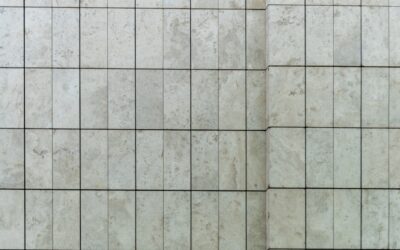
Walk into any high-end backyard in the Northeast and you will see the same material underfoot — Pennsylvania bluestone, a dense sandstone that ages into a soft slate-blue patina over decades. The best bluestone patio ideas lean into that natural variation rather than fighting it with sterile grid layouts. Most homeowners default to standard 12×12 thermal squares because that is what their landscaper quotes first, but the material is far more versatile than that. After installing bluestone on roughly 90 patios across the mid-Atlantic, here is how I think about layout, edging, and the design choices that separate a $25,000 patio from a $50,000 one in terms of curb appeal.
Part of our Decks & Outdoor guide — explore the full guide →
Choose Your Finish First
Bluestone comes in three primary finishes, and each one creates a different mood. Thermal (sometimes called flamed) has been heat-treated to a uniform smooth surface — best for formal layouts and slip resistance when wet. Natural cleft features the raw rippled texture from being split along the natural bedding plane, ideal for rustic and woodland settings. Honed bluestone is mechanically smoothed to nearly polished, which reads contemporary but gets slippery in rain.
Thermal runs $9 to $14 per sq ft for the stone alone, natural cleft drops to $7 to $11, and honed climbs to $14 to $19. Installation adds $18 to $30 per sq ft depending on whether you go dry-laid on a stone-dust base or wet-set on a concrete slab.
Rectangular Patterns for Formal Spaces
A symmetrical bluestone patio with rectangular pieces in a random-width ashlar pattern works beautifully off the back of colonial or Federal-style homes. Specify a four-size pattern (12×12, 12×18, 18×24, 24×36) for visual interest without chaos. Keep joints tight at 3/8 inch and use a dark gray polymeric sand to make the stone color pop.
For a 400 sq ft patio, this layout typically takes a two-person crew six to eight days on a properly prepped base. Insist on a 6-inch compacted 3/4-inch crushed stone subbase topped with 1 inch of stone dust. Skimping here causes heaving and lippage within three winters.
Irregular Bluestone for an Organic Look
If your house has a craftsman, farmhouse, or cottage style, irregular bluestone (also called flagstone or “irreg”) is the move. Pieces arrive in random shapes ranging from 1 to 6 sq ft each, and the installer cuts them on-site to create a puzzle-like layout. Joints widen to 1 to 2 inches and get filled with moss, creeping thyme, or polymeric sand.
Irregular layouts hide settling and look better as they age. Material runs $6 to $9 per sq ft. The catch — installation labor jumps 30 to 50 percent because of the cutting and fitting time. Budget $32 to $42 per sq ft installed.
Mixing Bluestone with Other Materials
Pure stone patios can read flat over large areas. Break them up with a contrasting border or inlay. Three combinations that consistently look high-end:
- Bluestone field with a single soldier course of clay brick at the edge — classic Philadelphia look
- Thermal bluestone main patio with a natural cleft ribbon path leading to a fire pit
- Bluestone steppers set into a Kentucky bluegrass lawn with 6-inch grass joints
For wood pairings, ipe and thermally modified ash both stand up to weather and complement the cool gray tones of the stone. Avoid cedar — it weathers to a warm silver-gray that fights the blue undertones.
Edging and Drainage
A clean edge defines the whole patio. For dry-laid installations, a hidden aluminum landscape edging from Permaloc holds the perimeter for 30-plus years and costs $7 to $9 per linear foot installed. Granite or bluestone curbing makes a more substantial statement for $40 to $80 per linear foot.
Slope every patio away from the house at 1/4 inch per foot minimum. On a 16-foot deep patio, that means the far edge sits 4 inches lower than the house side. Use a string line and a 4-foot level during base prep — eyeballing causes ponding that kills the look and creates ice slip hazards in winter.
Sealing and Long-Term Care
Bluestone does not require sealing the way limestone or sandstone does, but a penetrating sealer like Aqua Mix Sealer’s Choice Gold extends color richness and slows efflorescence. Apply it after 60 to 90 days of curing on wet-set installations. Plan to reseal every 4 to 5 years at roughly $0.40 to $0.70 per sq ft for materials.
For winter maintenance, never use rock salt (sodium chloride) on bluestone. Calcium magnesium acetate or just sand handles ice without etching the surface or pulling efflorescence to the top.
Layout Sizing for How You Actually Live
A common mistake is undersizing for furniture. A six-person dining set needs a minimum 14×14 ft space (196 sq ft) to allow chairs to push back without rolling off the edge. A lounge seating group with sofa, two chairs, and a coffee table needs 12×14 ft minimum. Combine both zones and you are at 350 to 450 sq ft, plus walkway clearances.
Good bluestone patio ideas always start with a chalk outline of your actual furniture on the proposed location, then add 3 feet of clearance on all open sides. Walk around it for a day or two before you commit. That single exercise saves more regret than any design software can.
Lighting and Evening Use
A patio that gets used after dark needs intentional lighting, not just porch glow spilling onto the corner. Low-voltage path lights along walking edges, downlights mounted in nearby trees for moonlighting, and dimmable string lights overhead each layer the space for actual evening function. Volt and Kichler both make brass fixtures that develop a patina matching the bluestone tone within a few seasons.
Budget roughly $1,200 to $2,400 for a transformer, eight to twelve fixtures, and wire on a 400 sq ft patio. Bury the low-voltage cable about 4 to 6 inches deep along the patio edges before the final backfill — running it after installation means either trenching through landscaping or routing under existing stone, both painful.