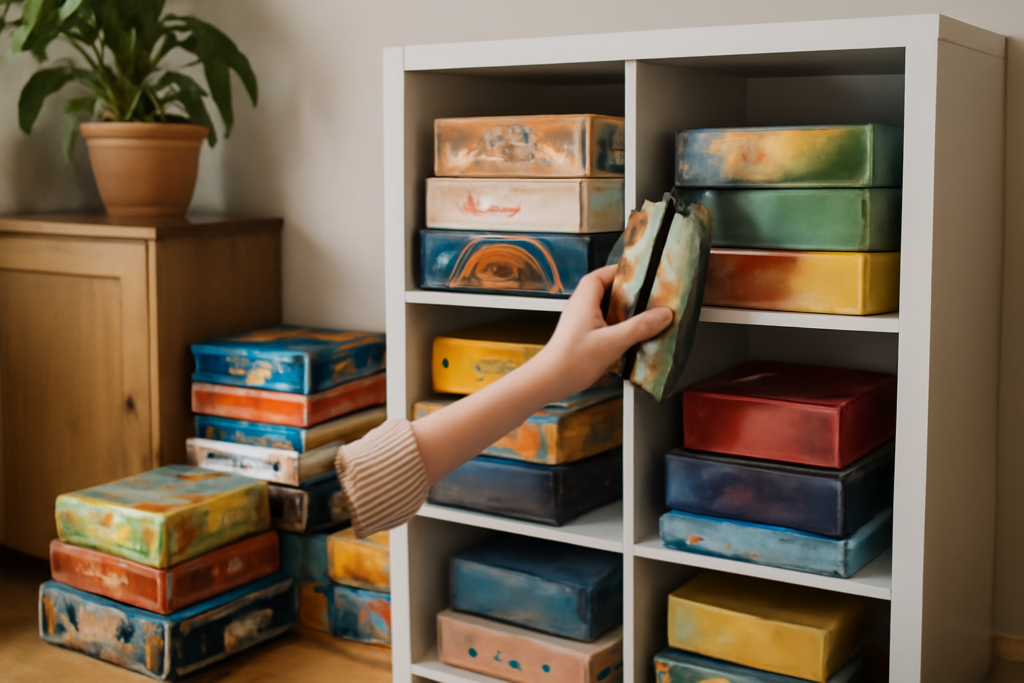
A serious game collection creeps up on you. One birthday gift becomes a shelf, then a leaning tower of mismatched boxes crushing the game at the bottom, with dice and cards migrating to every corner of the house. The best board game storage solutions solve three separate problems at once: they hold heavy, oddly sized boxes without collapsing, they keep loose pieces from vanishing, and they make it easy to actually reach the game you want on a Friday night. Get the system right and a 60-game collection fits neatly into a single cabinet; get it wrong and the same games sprawl across a whole room. Here is how to store them properly.
Store Boxes Vertically, Not Stacked
The single most important rule is to stand boxes on their edges like books rather than stacking them flat. Stacking crushes the bottom boxes, hides the games in the middle, and forces you to dismantle the whole pile to reach one title. Standing them vertically lets you read every spine at a glance and pull any game without disturbing the rest.
The catch is that many board game boxes are not built to stand on end; the lid slides off and pieces spill inside. Rubber bands around the box, or better, purpose-made box bands, hold lids shut so you can shelve them upright safely. For your heaviest games with fragile boxes, a shelf deep enough to lay them flat in a short stack of two or three is a reasonable compromise, but keep those stacks low.
Match the Shelving to the Boxes
Board games are wider and heavier than books, so standard bookshelves often fall short. The workhorse solution is a cube shelving unit, the ubiquitous 13-inch cube system, because most standard and large game boxes fit a cube almost perfectly. A 4×4 cube unit holds a substantial collection and doubles as a room divider.
- Cube units (13-inch openings): Ideal for the majority of games; roughly $60 to $150 for a 4×4. Each cube holds 4 to 8 standing boxes.
- Adjustable metal or wood shelving: Set shelf spacing to your tallest boxes and load capacity to the weight; good for large or unusually deep games.
- Closet with adjustable shelves: A hall or spare-room closet retrofitted with sturdy shelves hides a big collection behind a door.
- Rolling cart: A three-tier utility cart parks in a closet and rolls to the table on game night.
Whatever you choose, respect the weight. A stuffed cube shelf can hold well over 100 pounds, so anchor tall units to the wall with an anti-tip strap. A loaded shelf that tips is a genuine hazard, especially with kids around.
Tame the Loose Pieces
Half the frustration with games is not the boxes, it is the chaos inside them, and the pieces that escape. The publisher’s molded insert usually wastes space and lets components slide together during transport and storage. Replacing that clutter with organization pays off fast.
Zip-top bags are the cheap, universal fix: bag cards by type, tokens by color, and dice separately, then everything stays sorted when the box stands on edge. For favorite games, small plastic organizer boxes, the kind sold for tackle or craft beads with adjustable dividers, keep components tray-ready. Enthusiasts often buy or 3D-print laser-cut foamcore or plywood inserts that let a game be set up in seconds. Rare or fragile cards benefit from penny sleeves and a small deck box inside the game.
Solutions for Small Spaces
No dedicated game room? Storage can hide in furniture you already need. A storage ottoman or a lift-top coffee table swallows a dozen games right where you play them. A bench with cubbies under a window, or the space under a bed in flat under-bed bins, holds an overflow collection out of sight.
Vertical wall space is underused. Floating shelves mounted above a desk or couch turn games into a display and free up floor space, just secure them into studs and respect the shelf’s weight rating, since a row of games gets heavy quickly. In a truly tight apartment, a slim over-the-door organizer or a narrow bookcase in a closet keeps the collection contained without eating a room.
Organize So You Actually Find Things
A great shelf still fails if you cannot find a game in it. Sort in a way that matches how you choose games. Popular systems include grouping by player count, by play length, by weight or complexity, or simply alphabetically. Many people keep a “play often” zone at eye level and archive rarely played games up high or in a closet.
Small labels on spines or shelf edges, noting player count and play time, turn a Friday-night debate into a five-second decision. If your boxes stand spine-out, a strip of masking tape or a printed label along the top edge shows the title clearly when you glance down at a low shelf. The goal of any board game storage solution is not just tidiness for its own sake, it is that the games get pulled off the shelf and played instead of buried and forgotten.
Purge and Digitize to Save Space
The cheapest storage solution is owning fewer boxes. Before you buy another shelf, pull every game and be honest about which ones actually hit the table. Games you have not played in two years, duplicates, and titles nobody in the house enjoys can be sold, traded at a local game store, or donated, instantly reclaiming shelf space for the collection you truly use. A quick annual purge keeps a growing hobby from swallowing a whole room.
You can also shrink the collection’s footprint without giving games up. Many bulky boxes hold a tiny amount of actual game, so consolidating a big box into a smaller organizer or a labeled zip pouch can cut its shelf space by half or more, as long as you keep the rules sheet with it. Some hobbyists photograph or scan rulebooks so a torn or bulky manual can be recycled while the reference lives on a phone. Between purging the dead weight and repackaging the space-wasters, most collections tighten up dramatically before you spend a dollar on shelving.
Protecting Your Collection Long Term
Storage conditions matter for anything you want to keep for years. Keep games out of damp basements and hot attics; humidity warps cardboard and glues, and heat can fade printing and soften boxes. A stable, room-temperature interior closet is far kinder than a garage. Avoid direct sunlight on a display shelf, which bleaches box art and cards over time.
Keep a little space between the shelf and an exterior wall in humid climates to prevent trapped moisture, and use silica gel packets in bins that stay closed for months. With boxes standing upright, lids banded, pieces bagged, and everything sorted by how you play, a collection that once sprawled across a whole room settles into one tidy, grab-and-go system.
Frequently Asked Questions
Should I store board games vertically or stacked flat?
Store them vertically on their edges like books. Stacking crushes bottom boxes and hides the games in the middle. Standing them upright lets you read every spine and pull any game without disturbing the rest; band the lids shut so pieces do not spill.
What kind of shelf is best for board games?
Cube shelving with 13-inch openings fits most game boxes nearly perfectly and is the most popular choice. For oversized games, use adjustable shelving set to your tallest boxes. Always anchor tall, heavy units to the wall to prevent tipping.
How do I keep loose game pieces organized?
Replace wasteful factory inserts with zip-top bags sorted by cards, tokens, and dice, or use small adjustable organizer boxes. Foamcore or plywood inserts let a game set up in seconds, and penny sleeves protect rare or fragile cards.
How can I store games in a small apartment?
Use furniture that hides storage: a lift-top coffee table, a storage ottoman, under-bed bins, or a bench with cubbies. Floating wall shelves and a narrow closet bookcase add capacity without taking floor space. Secure wall shelves into studs.
How should I protect board games in storage?
Keep them in a stable, room-temperature interior space, away from damp basements, hot attics, and direct sunlight, which warp cardboard and fade art. Add silica gel packets to sealed bins and leave a gap from exterior walls in humid climates.