Streaks, sticky residue, and a dull haze are the three complaints that send homeowners looking for a better mopping system. The Bona hardwood floor cleaner mop has become the default recommendation from flooring installers and finish manufacturers because it cleans without soaking the wood or leaving a soapy film behind. It bundles a flat microfiber head, a refillable cartridge, and a pH-neutral spray into one lightweight tool. After a decade of pushing one across job-site floors, here is what actually matters before you buy.
- How the Bona Mop System Works
- What Comes in the Box
- Why It Is Safe for Finished Wood
- Getting Streak-Free Results
- Caring for the Microfiber Pads
- How It Compares to Other Options
- Common Problems and Quick Fixes
- Frequency and a Simple Maintenance Schedule
- Accessories Worth Adding
- Is the Bona Mop Worth It?
How the Bona Mop System Works
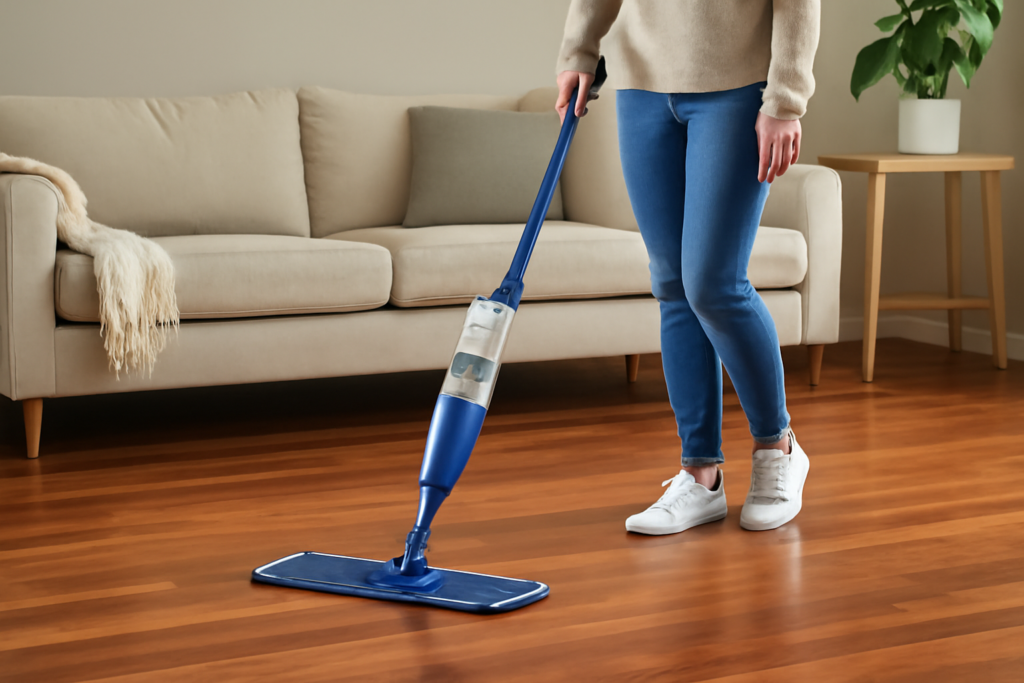
Instead of a bucket, the mop stores cleaner in a sealed cartridge that clicks into the handle. A trigger on the grip releases a fine mist directly in front of the pad, so you spray only where you clean. That design is deliberate: hardwood hates standing water, and a spray mop puts down roughly 1 to 2 milliliters per pass versus the quart a string mop can leave pooling in the seams.
The 15-inch cleaning head pivots on a rubberized joint, letting you reach under toe kicks and around table legs without lifting the pad. Total weight sits near 3 pounds fully loaded, which is why it works well for people with wrist or shoulder issues who find wringing a traditional mop painful.
What Comes in the Box
A standard kit from most retailers runs $22 to $30 and includes everything you need for the first month of use:
- The telescoping aluminum handle and pivoting mop base
- One 34-ounce cartridge of Bona Hardwood Floor Cleaner (ready to use, no dilution)
- One washable microfiber cleaning pad
- A snap-in dusting pad on premium kits for dry pickup
Replacement cartridges cost about $8 to $12, and a two-pack of microfiber pads runs $10 to $15. Over a year of weekly cleaning in a 1,500-square-foot home, plan on roughly $40 to $60 in refills and the occasional new pad.
Why It Is Safe for Finished Wood
Not every floor cleaner belongs on a polyurethane or aluminum-oxide finish. Ammonia, vinegar, and oil soaps either etch the topcoat or build a residue that eventually clouds the surface. Bona’s formula is water-based, pH-neutral, and residue-free, and it carries the GreenGuard Gold certification for low VOC emissions. That certification matters if you have kids crawling on the floor or anyone in the house with respiratory sensitivity.
The one caveat: this system is designed for sealed hardwood, engineered wood, and factory-finished planks. It is not intended for raw, waxed, or oiled floors. If water beads and sits on your floor, it is sealed and you are fine. If a drop soaks in and darkens the wood within seconds, stop and use a product made for unfinished surfaces.
Getting Streak-Free Results
Most streaking complaints trace back to a dirty pad, not the cleaner. Microfiber holds grime, and once it is saturated it just smears that dirt in a thin film that dries cloudy. Swap to a fresh pad when you can see or feel buildup, and never let a used pad dry crusty on the handle.
Follow this simple routine for a clean shine:
- Dry-dust or vacuum first to lift grit that would otherwise scratch as you mop
- Spray a short burst about 2 feet ahead of the pad, then pull the mop through the mist
- Work in the direction of the wood grain in 3-by-3-foot sections
- Flip or swap the pad the moment it feels loaded with dirt
One pro tip that saves a second pass: keep two pads in rotation so you always start with a clean one on the high-traffic entry and kitchen zones.
Caring for the Microfiber Pads
The pads are the part people neglect, and it costs them. Machine wash on warm with regular detergent, then air dry or tumble on low. Skip the fabric softener entirely, because it coats the fibers and kills their ability to grab dirt and dry streak-free. A quality Bona pad survives 300 or more wash cycles when you treat it right, which is what makes the reusable system cheaper over time than disposable wet pads.
How It Compares to Other Options
Against a Swiffer WetJet, the Bona system wins on floor safety and long-term cost, since Swiffer’s disposable pads and non-refillable solution add up fast and its formula is not tuned specifically for wood finishes. Against an old-fashioned string mop and bucket, Bona wins on speed and on protecting the wood from excess moisture. Where a string mop still has a place is deep grease in a busy kitchen, though even then a lightly dampened Bona pad handles most spills.
If you want to expand the system, Bona sells a matching spray for stone, tile, and laminate, plus a premium mop with a built-in dusting pad. Buying into one brand keeps your refills interchangeable across surfaces.
Common Problems and Quick Fixes
A few recurring issues have easy answers:
- Trigger sprays nothing: the cartridge is empty or not seated; press it firmly until it clicks, and prime the pump with three or four squeezes
- Cloudy film after mopping: you are using too much product or a dirty pad; spray less and switch pads
- Pad leaves lint: a brand-new pad was not pre-washed; run it through the laundry once before first use
- Handle feels loose: tighten the telescoping lock ring where the two sections meet
Frequency and a Simple Maintenance Schedule
Over-mopping wears a finish just as surely as neglect lets grime build up, so match the routine to the traffic. In a busy household with kids and pets, a quick spray-mop of the kitchen and entry twice a week keeps things under control, while bedrooms and low-traffic rooms need it only every two to three weeks. Dry-dust or run a hardwood-setting vacuum in between, since most of the damage to a wood floor comes from grit being ground underfoot, not from the occasional spill.
A practical schedule looks like this: daily or every-other-day dry pickup in high-traffic zones, a weekly damp spray-mop across the main living areas, and a more thorough top-to-bottom pass once a month where you move light furniture and hit the edges. Twice a year, inspect the finish in doorways and in front of the sink, because those spots wear first and tell you when it is time to consider a screen-and-recoat. Sticking to this rhythm stretches the life of the topcoat and keeps the Bona system doing exactly what it is good at.
Accessories Worth Adding
Two small add-ons make the mop noticeably better. A spare pack of microfiber pads, running $10 to $15, lets you keep a clean pad on hand so you never smear dirt on the last few square feet of a room. A separate microfiber dusting pad snaps onto the same base and turns the mop into a dry duster for daily grit pickup, which means one tool covers both jobs and lives in the same closet. Some homeowners also keep a second cartridge filled with Bona’s stone, tile, and laminate formula so the same handle cleans the whole house without cross-contaminating surfaces.
Is the Bona Mop Worth It?
For anyone with sealed hardwood or engineered floors, the bona hardwood floor cleaner mop earns its spot in the closet. It cleans in minutes, protects the finish, and the refillable design keeps ongoing costs modest at roughly $50 a year. The system rewards a little discipline: keep the pads clean, spray sparingly, and dust before you mop. Do that and your floors will hold a natural, streak-free shine for years without the residue buildup that dulls wood over time. For a weekly-use tool under $30, it is one of the easiest upgrades a homeowner can make.
Prefer to explore on your own?
See how new flooring looks in your actual room in seconds — free, no signup.
Try the free Floor Studio →