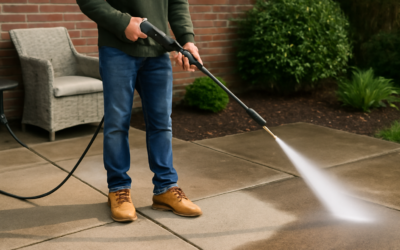
A gray, mildew-streaked patio can make an entire backyard look neglected, yet the concrete underneath is almost always fine — it’s just dirty. The best way to clean concrete patio surfaces isn’t one single method; it’s matching the technique to the mess, whether that’s ground-in dirt, black mold, rust rings, or a greasy grill spot. Blast everything with a pressure washer and you might etch the surface. Reach for bleach on the wrong stain and you’ll barely move it. Here’s how to read your patio and pick the approach that actually works without damaging the concrete.
Part of our Decks & Outdoor guide — explore the full guide →
Start With the Basics: Sweep and Rinse
Before any cleaner touches the slab, clear it completely. Sweep off leaves, dirt, and debris, and pull any weeds growing in the joints or cracks. A stiff push broom loosens the top layer of grime that a rinse alone would leave behind.
Follow with a garden hose to wet the surface. Many light dirt films lift with nothing more than water and a scrub, so you may discover the patio needs far less than you expected once the loose debris is gone.
The Everyday Method: Soap and a Stiff Brush
For general grime with no heavy staining, mild dish soap in warm water handles most patios. Mix a few squirts into a bucket, work it in sections with a stiff-bristle deck brush, and rinse before the solution dries.
This gentle approach is also the safest for sealed or colored concrete, where harsh chemicals can strip the finish. When in doubt about your surface, start here and escalate only if the stain resists.
Killing Mold, Mildew, and Algae
Those black and green streaks in shady, damp areas are biological growth, and they need more than soap. A diluted bleach solution is the classic fix.
- Mix roughly 1 part household bleach to 3 parts water.
- Apply to the stained area and let it dwell 10 to 15 minutes.
- Scrub with a stiff brush, then rinse thoroughly.
Protect nearby plants and grass by wetting them first and rinsing runoff afterward, since bleach will scorch foliage. Oxygen bleach (sodium percarbonate) is a plant-safer alternative that works more slowly but avoids the fumes and collateral damage.
Tackling Grease and Oil Stains
Grill drippings and oil soak into concrete’s pores, so surface scrubbing rarely finishes the job. Fresh spills respond to a poultice: cover the stain with an absorbent like baking soda or cat litter, let it draw the oil out overnight, then sweep it up.
For set-in grease, a degreaser formulated for concrete or a paste of dish soap and baking soda scrubbed in with a brush pulls the oil to the surface. Stubborn old stains may need two or three treatments to lighten fully.
Pressure Washing Done Right
A pressure washer is the fastest route to a uniformly clean slab, but power is a double-edged sword. Too much pressure with the wrong tip leaves visible wand marks etched into the concrete.
Safe Pressure Washer Settings
- Use a machine around 2,500 to 3,000 PSI for typical patio concrete.
- Fit a 25-degree tip, and keep the nozzle 8 to 12 inches from the surface.
- Move in steady, overlapping passes to avoid leaving stripes.
- Apply a concrete cleaner first and let it dwell so the water does less of the work.
A surface-cleaner attachment — the round disc that rides on the concrete — gives the most even result and prevents the streaking that a bare wand causes.
Removing Rust and Efflorescence
Rust stains from metal furniture or fertilizer won’t budge with soap. A specialized oxalic-acid rust remover dissolves them; apply per the label, let it work, and rinse. White, chalky efflorescence — mineral salts rising through the concrete — usually brushes off dry or responds to a diluted vinegar rinse.
Always test any acid-based product in an inconspicuous corner first. On colored or stamped concrete, acids can lighten the surface, so caution up front saves an expensive mistake.
Seal It to Stay Clean Longer
Once the patio is clean and fully dry, a coat of concrete sealer pays off. Sealer fills the pores so future spills sit on top instead of soaking in, and it makes the next cleaning dramatically easier. Reapply every two to three years depending on sun and traffic.
How Often to Clean Your Patio
A little routine care beats a big annual battle. Sweep the patio weekly during heavy-use seasons to keep grit from grinding into the surface, and give it a full soap-and-water scrub once or twice a year — spring and fall are ideal. Shady, damp patios that grow algae may need a bleach or oxygen-bleach treatment more often, since biological growth returns fast in the wrong conditions.
Address spills quickly rather than letting them set. A grill grease drip wiped up the same day rarely leaves a mark, but the same spill left for a month soaks deep into the pores and becomes a poultice job. Catching problems early is by far the least labor-intensive way to keep concrete looking good.
Match the Method to the Mess
The real secret to a clean concrete patio is diagnosis, not brute force. Sweep and rinse first, use soap for everyday grime, bleach for biological growth, a poultice or degreaser for oil, and an acid remover for rust — reserving the pressure washer for a fast, even finish. Work gently on colored or sealed surfaces, protect your plants, and seal the slab when you’re done. Always test any cleaner in a hidden corner first, and start with the mildest method that could work before escalating to acids or high pressure. Do that, and your patio will look years younger without a single crack or wand mark to show for it — and the sealer you apply at the end will keep it that way through the next season.