A concrete patio takes a beating from weather, foot traffic, grill grease, and creeping mildew, and over a few seasons it can turn dingy gray-green and stained. The good news is that learning how to clean concrete patio surfaces is straightforward, and with the right method you can restore that fresh, light-gray look in an afternoon. From a simple soap-and-scrub for light dirt to pressure washing and targeted stain removal for tougher jobs, this guide covers everything you need to bring your patio back to life and keep it that way.
Part of our Decks & Outdoor guide — explore the full guide →
- Start by Assessing the Job
- Basic Cleaning for Everyday Dirt
- Pressure Washing for a Deep Clean
- Removing Mildew, Algae, and Green Stains
- Tackling Oil and Grease Stains
- Getting Rid of Rust and Tannin Stains
- Homemade vs. Commercial Cleaners
- Sealing to Keep It Clean Longer
- Maintenance to Prevent Future Buildup
- Safety Precautions While Cleaning
- Seasonal Timing for the Best Results
Start by Assessing the Job
Before you grab any cleaner, look closely at what you are dealing with. General grime and a dull surface call for a basic wash. Green or black patches are mildew and algae. Dark spots near the grill are grease and oil. Orange streaks are rust from metal furniture or fertilizer. Reddish stains under trees are tannins from leaves and berries. Identifying the stains tells you which cleaner to use, since a product that lifts oil does nothing for rust. Also check whether your patio is sealed or stamped, because harsh chemicals and high-pressure washing can damage decorative finishes.
Basic Cleaning for Everyday Dirt
For a patio that is simply dusty and dull, you often do not need anything fancy. Start with these steps:
- Clear the patio of furniture, planters, and grill, and sweep away all loose debris.
- Wet the surface with a garden hose.
- Mix a bucket of warm water with a squirt of dish soap or a general-purpose concrete cleaner.
- Scrub with a stiff-bristle push broom, working in sections.
- Rinse thoroughly with the hose, pushing dirty water toward a drain or the lawn edge.
This simple routine handles most routine grime and is safe for sealed and decorative surfaces. For many patios, a good soap scrub once or twice a season is all that is needed.
Pressure Washing for a Deep Clean
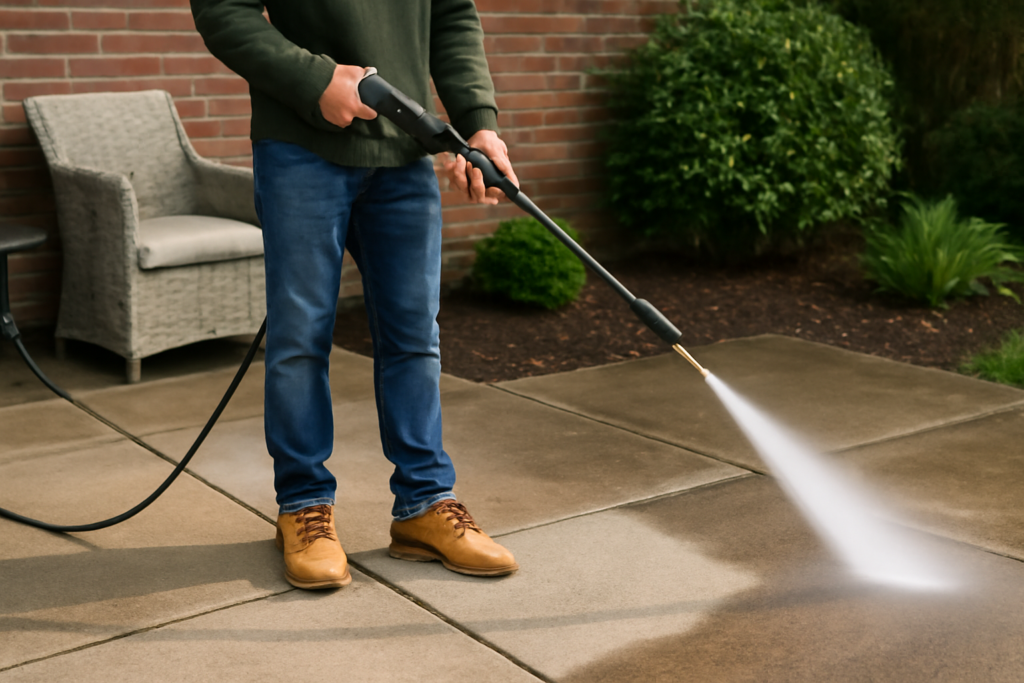
For heavily soiled or long-neglected concrete, a pressure washer delivers dramatic results. Use a machine rated around 3,000 PSI with a 25-degree fan tip, keeping the nozzle 6 to 12 inches from the surface and moving steadily to avoid etching lines into the concrete. Work in overlapping passes from one side to the other so you do not leave streaks. Apply a concrete cleaner or detergent first, let it dwell for several minutes, then rinse it away with the pressure washer for the best result. Be cautious on stamped or sealed patios, where high pressure can strip the sealer or damage the texture; use lower pressure and a wider tip, or stick to hand scrubbing on decorative surfaces.
Removing Mildew, Algae, and Green Stains
The green and black growth common on shaded patios is mildew and algae, and it needs a cleaner that kills the organism, not just loosens dirt. A solution of one part household bleach to three or four parts water, or a dedicated outdoor mold and mildew remover, works well. Apply it, let it sit for 10 to 15 minutes without drying out, scrub with a stiff broom, and rinse thoroughly. Wear gloves and eye protection, protect nearby plants by wetting them first and rinsing after, and never mix bleach with ammonia or other cleaners. Oxygen bleach (sodium percarbonate) is a plant-safer alternative that also lifts organic staining effectively.
Tackling Oil and Grease Stains
Grease from a grill or a leaking car is one of the most stubborn patio stains because oil soaks into porous concrete. For fresh spills, sprinkle cat litter, sawdust, or baking soda to absorb the excess, then sweep it up. For set-in stains, apply a degreaser or a paste of a strong dish soap, or use a dedicated concrete oil remover or poultice that draws the oil out of the pores. Scrub with a stiff brush, let a degreaser dwell, and repeat as needed, since deep oil stains often take more than one treatment. A commercial concrete degreaser or a microbial oil-eating cleaner gives the best results on old, deep stains.
Getting Rid of Rust and Tannin Stains
Rust and organic stains need their own approach. Rust from metal furniture or fertilizer responds to an oxalic-acid-based rust remover or products made specifically for concrete rust; ordinary cleaners will not touch it. Apply per the label, let it react, scrub, and rinse well. Leaf and berry tannin stains often lift with oxygen bleach or a general concrete cleaner and a good scrub. Avoid using acidic rust removers on stamped or sealed concrete without testing first, since acids can etch the surface and dull decorative finishes.
Homemade vs. Commercial Cleaners
You can clean a patio with pantry staples or store-bought products, depending on the job. Dish soap and warm water handle light dirt, a vinegar solution helps with mild mildew on unsealed concrete, and baking soda absorbs grease. For tougher jobs, commercial concrete cleaners, degreasers, and rust removers are formulated to work faster and more reliably. A good rule: try the gentlest effective method first, and escalate to stronger commercial products only for stains that resist. Always test any cleaner on a small hidden area first, especially on sealed or colored concrete.
Sealing to Keep It Clean Longer
Once your patio is clean and fully dry, sealing it makes future cleaning far easier. A concrete sealer fills the pores so dirt, oil, and moisture cannot soak in, meaning spills wipe up instead of staining and mildew has less foothold. Penetrating sealers give a natural look with excellent protection, while acrylic sealers add a slight sheen and richer color. Reseal every two to three years for ongoing protection. A sealed patio stays cleaner, resists stains, and needs only occasional sweeping and rinsing to look good, saving you the heavy scrubbing sessions.
Maintenance to Prevent Future Buildup
Keeping a patio clean is easier than deep-cleaning it. Sweep regularly to remove the organic debris that feeds mildew, rinse it down periodically, wipe grill grease promptly before it soaks in, and move metal furniture or use protective feet to prevent rust rings. Trim back overhanging branches to reduce leaf litter and let sunlight discourage algae in damp shaded spots. A quick seasonal wash plus these small habits keeps your concrete looking fresh year-round and spares you the big cleanup.
Safety Precautions While Cleaning
Cleaning a patio involves chemicals, pressure, and water, so a few precautions keep the job safe. Whenever you use bleach, degreasers, or acidic rust removers, wear waterproof gloves and eye protection, and work in a ventilated outdoor area. Never mix cleaning products, especially bleach with any ammonia-based cleaner, which creates toxic fumes. Protect nearby plants and grass by wetting them before you start and rinsing them afterward, since concentrated cleaners can scorch foliage. If you use a pressure washer, keep the nozzle away from your feet and never point it at people or pets, because the stream can cause serious injury. Watch your footing on wet, soapy concrete, which becomes slippery, and set up a way to direct runoff toward a lawn or drain rather than into a storm sewer where local rules may restrict it.
Seasonal Timing for the Best Results
When you clean matters more than many homeowners realize. Consider these timing tips for the most effective, longest-lasting results:
- Clean on a mild, overcast day so cleaners do not dry out and streak before you can scrub and rinse.
- Tackle a deep clean in spring to remove the winter’s grime, or in fall before sealing ahead of cold weather.
- Avoid sealing right after cleaning until the concrete is fully dry, which can take 24 to 48 hours.
- Address stains promptly rather than letting them set through a season, since fresh spills lift far more easily.
Planning your cleaning around the weather and the seasons, and pairing a deep clean with resealing, gives you the brightest surface with the least effort and keeps it looking good the longest.
Knowing how to clean concrete patio surfaces comes down to matching the method to the mess: soap and a stiff broom for everyday grime, pressure washing for deep cleaning, and targeted removers for mildew, oil, and rust. Work from the gentlest approach up, protect decorative and sealed finishes from harsh chemicals and high pressure, and finish by sealing the concrete so it stays clean longer. With that approach, your patio will look bright and inviting all season, ready for whenever you want to relax outdoors.