A concrete patio takes a beating from weather, foot traffic, grill grease, rust from furniture, and the slow creep of mold and algae in shady spots. Over time it can look dingy and gray even though the concrete itself is perfectly sound. The good news is that cleaning concrete patio surfaces is straightforward once you know which method matches the mess — from a simple soap-and-water scrub to pressure washing and targeted stain treatments. This guide walks through every common cleaning job and how to keep your patio looking fresh.
Part of our Decks & Outdoor guide — explore the full guide →
- Start With a Good Sweep
- The Basic Soap-and-Water Method
- Removing Mold, Mildew, and Algae
- Tackling Grease and Oil Stains
- Removing Rust Stains
- Pressure Washing a Concrete Patio
- Deep Cleaning With a Concrete Cleaner
- Dealing With Efflorescence
- Sealing to Protect Your Work
- Natural and Eco-Friendly Cleaning Options
- Cleaning Stamped and Decorative Concrete
- How Often to Clean Your Patio
- Mistakes to Avoid
- Choosing the Right Pressure Washer
- Staying Safe While Cleaning
- Final Thoughts
Start With a Good Sweep
Before any wet cleaning, clear the surface:
- Sweep off leaves, dirt, and debris with a stiff push broom.
- Move furniture, planters, and the grill out of the way.
- Pull any weeds growing in cracks or expansion joints.
Removing loose material first prevents you from grinding grit into the surface and lets your cleaner work directly on the stains.
The Basic Soap-and-Water Method
For routine dirt and light grime, you often don’t need anything fancy:
- Mix warm water with a squirt of dish soap or a mild all-purpose cleaner in a bucket.
- Wet the patio with a hose.
- Scrub in sections with a stiff-bristle broom or deck brush.
- Rinse thoroughly before the soapy water dries.
Unlike composite or wood, bare concrete can handle a stiff brush, so scrub with confidence on general grime.
Removing Mold, Mildew, and Algae
Green and black growth thrives in damp, shaded areas and makes concrete slippery:
- Mix a solution of one part bleach to about three parts water, or use a dedicated concrete mold cleaner.
- Apply to the affected area and let it dwell for 10 to 15 minutes.
- Scrub with a stiff brush and rinse well.
- Protect nearby plants by wetting them first and rinsing off overspray.
Vinegar is a milder, plant-safe alternative for light algae, though bleach works faster on stubborn black mold.
Tackling Grease and Oil Stains
Grease from the grill or oil drips are among the toughest concrete stains because they soak into the porous surface:
- For fresh spills, cover with an absorbent like cat litter or baking soda to soak up the oil, then sweep it up.
- Apply a degreaser or dish soap directly, scrub, and rinse.
- For set-in stains, use a commercial concrete degreaser or a poultice that draws oil out of the pores.
Deeply set oil may need more than one treatment. Acting quickly on fresh spills prevents permanent staining.
Removing Rust Stains
Rust from metal furniture legs, planters, or fertilizer leaves orange-brown marks:
- Use a concrete rust remover, typically oxalic-acid based, following the label directions.
- For light rust, white vinegar or lemon juice left to sit can help before scrubbing.
- Rinse thoroughly and repeat if needed.
Avoid harsh acids that can etch and lighten the concrete unevenly; stick with products formulated for rust on concrete.
Pressure Washing a Concrete Patio
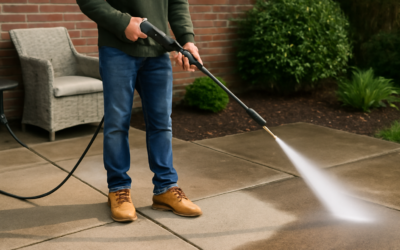
Pressure washing is the fastest way to deep-clean concrete, and unlike composite decking, concrete can handle high pressure:
- Use a pressure washer rated 2,500 to 3,000 PSI for effective cleaning.
- Attach a 25-degree fan tip for general cleaning; a surface cleaner attachment gives streak-free, even results.
- Hold the nozzle a consistent distance and sweep evenly to avoid leaving wand marks.
- Apply a concrete detergent first for grease and heavy grime, let it dwell, then rinse with the washer.
Keep the spray moving; lingering in one spot with a narrow tip can etch even durable concrete.
Deep Cleaning With a Concrete Cleaner
For an overall dingy patio, a dedicated concrete cleaner or degreaser applied across the whole surface, scrubbed, and rinsed restores a uniform, bright appearance. Alkaline cleaners cut grease and grime, while acidic cleaners (used carefully) brighten and remove mineral deposits. Always follow dilution instructions and wear gloves and eye protection.
Dealing With Efflorescence
That white, chalky film that sometimes appears on concrete is efflorescence — mineral salts drawn to the surface by moisture. Remove it by:
- Dry-brushing off the loose powder first.
- Using an efflorescence remover or a diluted acidic cleaner if brushing alone doesn’t work.
- Rinsing thoroughly.
Addressing the underlying moisture source helps keep it from returning.
Sealing to Protect Your Work
After a thorough cleaning, sealing keeps the patio looking good longer:
- Let the concrete dry completely for a day or two.
- Apply a concrete sealer to repel water, grease, and stains.
- Reseal every 2 to 3 years, or as the product recommends.
A sealed patio sheds spills and resists mold, making future cleaning far easier.
Natural and Eco-Friendly Cleaning Options
If you’d rather avoid harsh chemicals, several gentler methods work well:
- White vinegar diluted with water tackles light mold, mildew, and mineral deposits and is safe around plants.
- Baking soda makes a mild abrasive paste for spot-scrubbing stains.
- Dish soap and hot water handle most everyday grime.
- Oxygen bleach (sodium percarbonate) lifts organic stains without the harshness of chlorine bleach and is safer for surrounding greenery.
These options clean effectively for routine jobs while being kinder to your landscaping and the environment.
Cleaning Stamped and Decorative Concrete
Decorative, colored, or stamped patios need a gentler touch than plain gray slabs:
- Use mild cleaners and soft brushes to avoid dulling the color or damaging the sealer.
- Keep pressure washing gentle — high pressure can strip the sealer and expose the surface.
- Reseal decorative concrete after deep cleaning to restore the protective layer and color depth.
- Avoid acidic cleaners that can etch and discolor stained surfaces.
Protecting the sealer is key, since it carries much of the color and stain resistance on decorative concrete.
How Often to Clean Your Patio
A regular routine keeps deep cleaning to a minimum:
- Weekly: a quick sweep to keep debris and grit off the surface.
- Monthly: a rinse and spot-clean of any spills or stains.
- Twice a year: a thorough wash or pressure wash, in spring and fall.
- Every 2 to 3 years: reseal to maintain protection.
Staying ahead of dirt and stains means you rarely face the tough, set-in messes that require aggressive treatment.
Mistakes to Avoid
Steer clear of these common errors:
- Letting cleaner or bleach dry on the surface, which leaves streaks and can discolor.
- Using a narrow pressure-washer tip too close, which etches the concrete.
- Ignoring nearby plants when using bleach — wet and rinse them.
- Using deicing salts in winter, which damage the surface over time.
- Skipping the seal, leaving porous concrete to soak up the next stain.
Choosing the Right Pressure Washer
If you clean concrete often, the right machine makes the job faster and safer:
- Electric pressure washers (around 1,800 to 2,000 PSI) suit light cleaning and are quiet and easy to use.
- Gas pressure washers (2,500 to 3,300 PSI) deliver the power needed for deep grime and large patios.
- A surface cleaner attachment is the single best upgrade for concrete — it spins two nozzles under a shroud for even, streak-free results with no wand marks.
- Renting a gas unit for a one-time deep clean is cost-effective if you don’t own one.
For a big, heavily soiled patio, a gas washer with a surface cleaner turns hours of scrubbing into a quick pass.
Staying Safe While Cleaning
Cleaning chemicals and pressure washers both demand basic precautions:
- Wear gloves and eye protection when handling bleach, acids, or degreasers.
- Never mix bleach with ammonia or acidic cleaners, which creates toxic fumes.
- Keep the pressure-washer wand away from feet, and be aware the high-pressure stream can injure skin.
- Work in ventilated conditions and rinse off nearby plants before and after using chemicals.
A few simple safety habits keep the job productive and injury-free.
Final Thoughts
Keeping a patio fresh is mostly about matching the method to the mess. For cleaning concrete patio surfaces, start with a sweep and a soap-and-water scrub, hit mold and algae with a bleach solution, pull grease with a degreaser, and lift rust with an oxalic-acid remover. Pressure washing at 2,500 to 3,000 PSI with a fan tip or surface cleaner makes quick work of a whole patio, and sealing afterward protects your effort for years. Avoid letting cleaners dry, etching with a too-close nozzle, and skipping the seal, and your concrete patio will stay bright, safe, and inviting through every season.