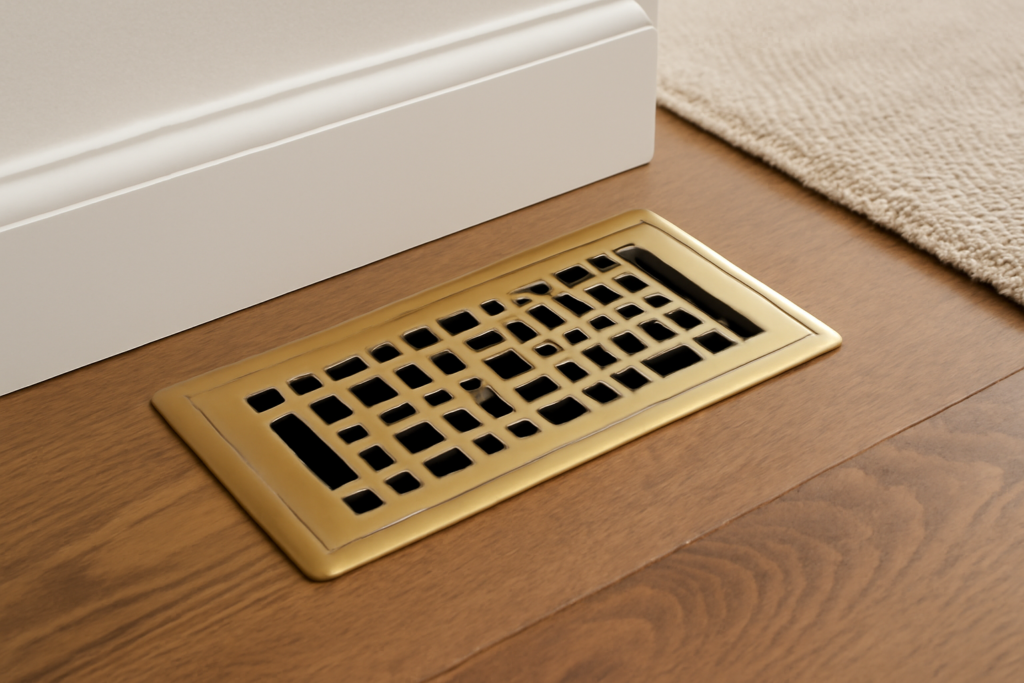
The cheapest way to make a room look custom is often the detail people overlook: the vent in the floor. Swapping a flimsy stamped-steel grille for a brass floor register adds warmth, weight, and a touch of old-world craftsmanship that instantly elevates hardwood, tile, and even luxury vinyl floors. Brass registers suit everything from a restored Victorian to a modern kitchen craving a hint of warm metal, and they hold up far better than the painted steel vents most homes ship with. This guide covers finishes, sizing, solid versus plated construction, cost, and installation.
What a Floor Register Actually Does
A register is the visible grille that covers a floor supply duct, and unlike a plain grille it typically includes a damper, a lever-operated set of blades underneath that lets you open, close, or throttle the airflow into that room. That distinction matters when you shop. A “register” has a damper for airflow control; a “grille” or “vent cover” is just a decorative faceplate with no damper, often used over return-air openings. Decide which you need before buying, because closing a supply register in an unused room can help balance your home’s heating and cooling.
Brass has been used for HVAC and heating grilles for well over a century, which is why it looks so at home in period properties. Beyond looks, brass is durable, corrosion-resistant, and heavy enough to sit flat and stay put underfoot.
Solid Brass vs. Brass-Plated
This is the single most important thing to understand before you spend money. Products described as “brass” fall into two very different camps.
- Solid brass: The register is cast or milled from real brass throughout. It is heavier, more durable, develops a natural patina you can control, and costs considerably more. Solid brass will not chip or flake because the color goes all the way through.
- Brass-plated steel or zinc: A base metal with a thin brass coating. It looks similar when new and costs far less, but the plating can wear, scratch, or flake over years of foot traffic, revealing the metal underneath.
For a floor register that gets stepped on daily, solid brass is worth the premium in high-visibility rooms; brass-plated is a reasonable budget choice for low-traffic or hidden locations. Always read the product description carefully, because listings often bury the word “plated.”
Finishes and How They Age
Brass comes in several finishes, and each ages differently. Polished brass is bright, shiny, and formal, but it shows fingerprints and needs occasional polishing to stay gleaming. Satin or brushed brass has a softer, matte glow that hides smudges and reads more contemporary. Antique or oil-rubbed brass carries a darker, aged patina for traditional and vintage interiors. Unlacquered (living) brass is left raw so it naturally darkens and patinas over time, prized by restorers who want it to age gracefully; lacquered brass is sealed to lock in its shine and resist tarnish.
If you want a consistent, low-maintenance look, choose lacquered or satin. If you love the evolving character of aged metal, unlacquered living brass is the choice, just expect the color to deepen over the years.
How to Measure and Size a Register
Sizing trips up more buyers than anything else, so measure carefully. Floor registers are listed by their duct opening size, not the outer faceplate. Measure the length and width of the actual hole in the floor (the duct opening), and order a register with that nominal size, for example 4×10, 4×12, 6×10, or 6×12. The faceplate will be roughly 1.5 to 2 inches larger on each dimension so it overlaps the hole and rests on the floor.
Common residential sizes include 4×10, 4×12, 6×10, 6×12, and 2.25×12. If you are unsure, pull your old register and measure the opening it covers, or measure the metal duct boot below the floor. Ordering by faceplate size instead of duct size is the classic mistake that leads to a register that will not seat properly.
Brass Floor Register Cost
Price tracks closely with construction. A brass-plated steel register in a standard size typically runs $20 to $45. Solid cast brass registers cost considerably more, generally $60 to $150 each, with premium designer and antique-reproduction patterns reaching $200 or higher. Larger sizes and ornate scroll or Victorian patterns command the top of the range. Because a home may have a dozen or more floor vents, many homeowners upgrade only the registers in prominent rooms, an entry, living room, and dining room, and leave bedrooms in standard finishes to control cost.
Installing a Brass Floor Register
Installation is genuinely a five-minute, no-tools job in most cases, which is part of the appeal. Drop-in floor registers simply rest in the duct opening, held by gravity and their own weight, with the damper mechanism hanging down into the duct. Pull the old register straight up, vacuum out any dust and debris from the duct boot, and set the new brass register in place, aligning the damper lever so you can reach it.
A few tips make the result look professional. Confirm the register sits flush and does not rock; if the floor opening is slightly rough, a bead of the surrounding flooring may need light cleaning. For registers in walkways, choose a low-profile faceplate so it does not catch toes or furniture. And if you have radiant or wall-mounted versions, some screw down, so check whether your model is drop-in or screw-mounted before buying.
Cleaning and Long-Term Care
Lacquered brass needs only occasional dusting and a wipe with a soft, damp cloth; avoid abrasive cleaners that scratch the coating. For unlacquered brass you want to keep bright, a dedicated brass polish restores shine, though many homeowners embrace the patina and leave it alone. Twice a year, lift the register and vacuum the duct below to keep dust from recirculating into the room. Because brass resists corrosion, a quality register will outlast the flooring around it with minimal upkeep.
The Bottom Line
A brass floor register is a small, affordable detail that punches well above its price in visual impact. Decide between solid and plated based on traffic and budget, pick a finish that matches how much upkeep you want, measure the duct opening rather than the faceplate, and enjoy an easy drop-in upgrade that makes an ordinary floor look considered and custom.
Prefer to explore on your own?
See how new flooring looks in your actual room in seconds — free, no signup.
Try the free Floor Studio →