The pattern you choose for a brick floor matters as much as the material itself — herringbone reads upscale, running bond reads industrial farmhouse, and basket weave reads colonial restoration. Brick flooring patterns can completely change the perceived size, formality, and architectural style of a room without changing a single material spec. Most homeowners pick a pattern based on a single Pinterest photo, then learn the hard way that some layouts cost twice as much in labor and material waste as others. Picking the right pattern means understanding installation complexity, the cost premium, and how the layout interacts with your room dimensions.
- The Six Patterns That Dominate Brick Floors
- Running Bond: The Workhorse
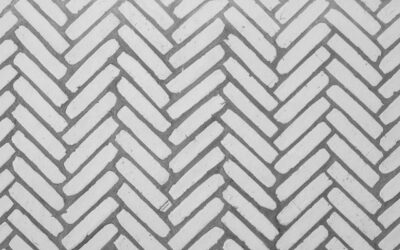
- Herringbone: The Designer Favorite
- Basket Weave: The Period Choice
- Pros of Brick Patterns Generally
- Honest Drawbacks of Complex Patterns
- Material Options That Affect Pattern Choice
- Cost Breakdown by Pattern and Material
- Installation Notes That Matter
The Six Patterns That Dominate Brick Floors
- Running bond: Bricks laid end-to-end with each row offset by half a brick
- Herringbone: Bricks set at 45 or 90 degrees in an interlocking V pattern
- Basket weave: Pairs of bricks alternating horizontal and vertical orientations
- Stack bond: Bricks aligned in straight columns and rows, no offset
- Diagonal running bond: Running bond rotated 45 degrees from the walls
- Pinwheel: Four bricks around a small central square tile
Running Bond: The Workhorse
Running bond is the default for a reason. It uses the least material (5 to 8% waste factor), is the fastest pattern to install, and reads cleanly in any architectural style. A skilled mason can lay 80 to 120 sq ft per day in running bond compared to 40 to 60 sq ft in herringbone.
Variations include third-bond (offset by 1/3 instead of 1/2) and quarter-bond, both of which add visual interest without increasing labor significantly. Running bond works especially well in long, narrow rooms because the parallel courses elongate the visual line.
Herringbone: The Designer Favorite
Nothing reads upscale quite like herringbone. The 45 degree version is the more popular variant in residential work, while 90 degree (or right-angle herringbone) is more common in entryways and formal galleries. Either creates dramatic visual interest that running bond simply cannot match.
The cost is real. Herringbone runs roughly 25 to 40% more in labor than running bond because every brick requires precise angle cuts at the perimeter. Material waste also jumps to 15 to 20% from cutting brick to fit walls and openings. Budget accordingly.
Basket Weave: The Period Choice
Basket weave is the historically accurate pattern for early American homes, colonial restorations, and farmhouse kitchens. The square-by-square geometry feels grounded and intentional in spaces with traditional architecture. It does not work as well in modern interiors where it can read as fussy or out of place.
Installation is moderate difficulty. The pattern repeats in tight 4-brick or 6-brick modules, so labor is faster than herringbone but slower than running bond. Material waste sits around 10 to 12% depending on room geometry.
Pros of Brick Patterns Generally
Pattern variation lets you stretch a modest material budget into something memorable. Even a $4 per sq ft thin brick veneer in herringbone reads as a custom luxury installation. The same material in stack bond looks like a basic warehouse floor. The pattern is what people see when they walk in.
Patterns also hide minor installation imperfections. A 1/16 inch offset in stack bond screams at the eye because every line is perfectly straight. The same offset in herringbone disappears because the eye is following a complex interlocking shape rather than a straight line.
Honest Drawbacks of Complex Patterns
Cost scales fast. A 200 sq ft entry done in 45 degree herringbone with thin brick veneer can run $5,000 to $7,500 turnkey versus $2,800 to $4,000 in running bond. Labor is the bigger driver than material. Make sure your contractor has experience with the specific pattern before you commit.
Time is the other cost. Herringbone and pinwheel patterns take 50 to 80% longer to install than running bond. On a 400 sq ft floor that can mean an extra week of contractor presence, more dust in the house, and delayed access to the space.
Material Options That Affect Pattern Choice
- Solid clay brick paver (1-1/4 to 2 inch thick): $4 to $9 per sq ft material
- Thin brick veneer (1/2 to 3/4 inch thick): $3 to $7 per sq ft material
- Brick-look porcelain tile: $2.49 to $6.99 per sq ft, easier to install
- Reclaimed antique brick: $8 to $18 per sq ft, premium for character
- Concrete brick pavers: $3 to $6 per sq ft, modern industrial look
Cost Breakdown by Pattern and Material
A typical 300 sq ft kitchen done in running bond with thin brick veneer lands $4,500 to $7,500 turnkey. The same room in herringbone runs $6,000 to $10,000. In reclaimed antique brick with herringbone, expect $9,000 to $14,000. The material choice is the smaller variable — the pattern complexity drives most of the price difference.
Brick-look porcelain tile in any pattern saves 30 to 50% versus actual brick. The texture and color are realistic enough at six feet that most visitors cannot tell the difference. Consider it for budget-conscious projects that still want the pattern aesthetic.
Installation Notes That Matter
Subfloor must handle the weight. Solid brick paver floors at 1-1/4 inch thickness add 12 to 18 lb per sq ft to the structure. For older homes, consult a structural engineer before specifying solid brick on an upper floor. Thin brick veneer and porcelain tile avoid this problem entirely.
Layout starts from the center. Find the room center, dry-lay the pattern from there outward, and adjust the starting point so cuts at the perimeter are reasonably symmetrical. Mortar joints typically run 1/4 to 3/8 inch wide, set with a Type N mortar mix for indoor applications. Seal the finished floor with a penetrating sealer like Miracle 511 or Aqua Mix Sealer’s Choice to lock in the color and protect from spills.
Prefer to explore on your own?
See how new flooring looks in your actual room in seconds — free, no signup.
Try the free Floor Studio →