Choosing the right layout matters more than choosing the right brick. The most beautiful clay paver in the catalog will look cheap in a sloppy pattern, while a basic concrete brick laid in a tight 45-degree herringbone reads as high-end masonry. The best brick patterns for patios balance visual impact, structural strength, and how forgiving they are to a DIY installer who has never wielded a wet saw before. Each pattern has a personality and a price tag, and matching them to your yard is what separates a magazine-grade patio from a backyard regret.
Part of our Decks & Outdoor guide — explore the full guide →
Why the Pattern Affects More Than Looks
Pattern choice changes load distribution, drainage, and waste. A 45-degree herringbone resists vehicle traffic and lateral shifting better than any other pattern, which is why driveways almost always use it. Running bond cuts waste to less than 5 percent but slides over time without a sturdy edge restraint. Basket weave looks formal but creates straight grout lines in both directions that can telegraph minor settling years later.
Cutting waste also varies. A running bond eats roughly 5 percent of your brick order. A 45-degree herringbone eats 12 to 18 percent because every perimeter brick gets a diagonal cut. Order accordingly or you will spend a Saturday driving back to the masonry yard.
Running Bond: The Workhorse
Running bond stacks bricks end-to-end with each row offset by half a brick. It is the pattern on almost every brick house wall in America, and it works on a patio for the same reasons: it is simple, fast, and visually quiet. A reasonably handy homeowner can lay 100 square feet of running bond in a day once the base is prepped.
Use running bond when you want the brick to play a supporting role to landscaping, furniture, or a feature wall. Pair it with a soldier course border (bricks set on end around the perimeter) to give the field a finished frame. Materials run $4.50 to $7.25 per square foot for standard 4×8 concrete pavers, or $9 to $14 for genuine clay brick.
Herringbone: Strongest and Most Striking
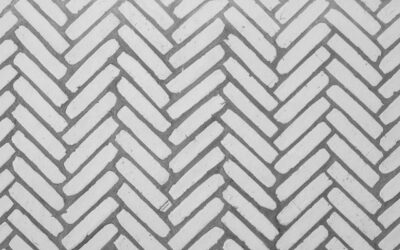
Herringbone interlocks every brick at a right angle to its neighbor, which is why engineers specify it for areas that must carry weight without shifting. Visually, the diagonal lines pull the eye across the patio and make a small space feel larger.
You have two choices. A 90-degree herringbone aligns the legs with the patio edges and minimizes cuts. A 45-degree herringbone rotates the entire pattern, creating dramatic diagonal lines and the strongest interlock available. Plan on 15 percent waste for the 45-degree version. Expect to spend three full days laying 200 square feet if you have not done it before. Hire a mason if your patio exceeds 300 square feet, since cumulative cut errors get expensive past that point.
Basket Weave: Classic and Forgiving
Basket weave pairs two bricks side by side, then rotates the next pair 90 degrees. The result reads as woven squares across the patio. It is one of the easiest patterns to lay because every unit is a tidy 8×8 block, which means you can dry-lay an entire section without cutting and adjust freely.
The downside is structural. Continuous joint lines run in both directions, which gives water and roots a clear path. Use basket weave on smaller patios under 200 square feet, on screened porches, or anywhere with a stable concrete base under the bricks rather than a sand bed. It pairs beautifully with traditional architecture, especially colonial and Craftsman homes.
Pinwheel and Whorl Patterns
Pinwheel patterns use four full-size bricks rotated around a smaller central square. The center is usually a single 4×4 brick or a contrasting stone insert. The pattern reads as a rosette repeated across the field, which works well in formal European-style gardens and around fountains.
Pinwheel requires a smaller specialty brick or a precise saw cut for every center piece. Cost per square foot runs 20 to 30 percent above running bond once you factor in cuts and labor. The visual payoff is enormous in courtyards under 250 square feet, but it gets busy fast on larger patios.
Stack Bond and European Fan
Stack bond aligns every brick directly above the one below, creating clean vertical and horizontal grout lines. It is the most modern-looking pattern available and pairs well with contemporary architecture, oversized format bricks, and minimalist landscaping. Stack bond is the weakest pattern structurally, so install it only over a compacted base with polymeric sand joints and a rigid plastic or steel edge restraint.
European fan, also called peacock tail, lays small clay pavers in radiating arcs. It is stunning on a circular patio or as an inlay medallion within a larger field. Plan for $18 to $26 per square foot installed, since hand-cutting hundreds of trapezoidal pieces eats labor hours. Use it as an accent rather than the whole patio unless budget is no object.
Choosing the Right Pattern for Your Yard
Match the pattern to the space and the use case. A 12×16-foot rectangular patio off a colonial home looks balanced in 90-degree herringbone with a soldier border. A round fire-pit patio works in concentric ring patterns or a pinwheel. A long, narrow side-yard path begs for running bond aligned with the direction of travel, which lengthens the visual line.
- Heavy use (grills, traffic): 45-degree herringbone
- Traditional homes: Basket weave or running bond with soldier border
- Modern homes: Stack bond or 90-degree running bond with large-format pavers
- Small formal courtyards: Pinwheel or European fan
- Curved or irregular shapes: Running bond, which conforms easily to gentle curves
Walk the space at the time of day you will use it most and look at sun angles. Diagonal patterns cast crisp shadow lines that emphasize the texture of the brick, which can be stunning at golden hour or distracting at noon depending on your taste.
Installation Tips That Make Any Pattern Look Better
Three details separate a professional install from a weekend warrior job. Use a 6-inch compacted base of crushed limestone (4 inches for foot traffic, 8 inches for vehicles) topped with 1 inch of coarse bedding sand. Skip the play sand. Lay every brick with a 1/16 to 1/8-inch joint, never tight. Sweep polymeric sand into the joints, mist with a fine spray, and let it set 24 hours before walking on it.
Install a rigid edge restraint along every cut edge. Snapedge or Permaloc, spiked every 12 inches, prevents the entire patio from creeping outward over a few freeze-thaw cycles. Pitch the surface 1/4 inch per foot away from the house to drain. Get these three things right and any of the brick patterns for patios in this guide will outlast the warranty on the bricks themselves.