The same pile of pavers can produce a patio that looks builder-basic or one that looks custom, and the difference is almost entirely the layout. Choosing among the many patio paver patterns affects not just how your patio looks but how strong it is, how much you waste in cuts, and how easy it is to install. A herringbone locks together and resists shifting under a driveway’s weight, while a simple running bond goes down fast and forgiving. Before you order material, it pays to understand which pattern fits your space, your paver shape, and your DIY skill. Here are the layouts worth considering and where each one shines.
Part of our Decks & Outdoor guide — explore the full guide →
- Why the Pattern Matters
- Running Bond (Stretcher Bond)
- Herringbone
- Basketweave
- Stack Bond (Grid)
- Random or Ashlar Pattern
- Circular and Fan Patterns
- How to Choose the Right Pattern
- Mixing Patterns and Borders
- Using Color to Enhance a Pattern
- Base Preparation: The Foundation of Any Pattern
- Edge Restraint Keeps Patterns Tight
- Final Thoughts
Why the Pattern Matters
Pattern is more than decoration. The way pavers interlock determines how well the surface distributes weight and resists shifting over time. Patterns with staggered or angled joints lock together and stay put under load, which is why herringbone is the standard for driveways. Simpler grid patterns are easier and faster to lay but rely more on solid edge restraint to stay tight. Pattern also drives waste — angled layouts need more cuts at the borders, adding material cost and labor. Match the pattern to the job and you get a patio that is both beautiful and durable.
Running Bond (Stretcher Bond)
The simplest and most popular pattern, running bond stacks rectangular pavers in offset rows, with each paver’s joint centered over the one below — the same layout as a brick wall laid flat. It is fast, beginner-friendly, and wastes little material. The offset joints give it decent strength and a clean, classic look that suits almost any home. If you are laying your first patio, this is the pattern to start with. Running the rows perpendicular to the main sightline can even make a patio feel wider.
Herringbone
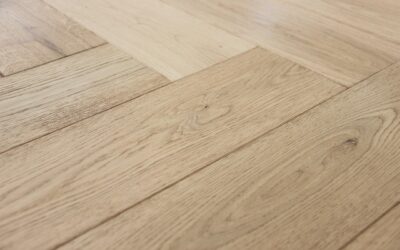
Herringbone arranges rectangular pavers in an interlocking V or zigzag, and it is the strongest common pattern. Because every paver locks against its neighbors at 45 or 90 degrees, the surface resists the shifting and rutting that vehicles and heavy furniture cause. That structural strength makes it the go-to for driveways and high-traffic patios.
- 45-degree herringbone — the most dynamic look, but requires the most border cuts
- 90-degree herringbone — nearly as strong, with somewhat simpler edges
Herringbone is more work to lay and generates more waste at the perimeter, but the payoff is a patio that stays flat and tight for decades.
Basketweave
Basketweave pairs pavers in alternating horizontal and vertical sets so the surface looks like woven strips. It has a charming, traditional, almost old-world feel and works beautifully in cottage gardens and classic landscapes. It is easy to lay because it uses a simple repeating grid with minimal cutting. The tradeoff is that its joints line up more than herringbone’s, so it interlocks less and is better suited to patios and walkways than to driveways.
Stack Bond (Grid)
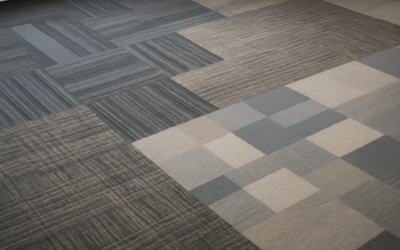
Stack bond lines pavers up in a perfect grid, with all joints aligning both directions. It gives the cleanest, most contemporary, geometric look and is extremely simple to install with square or rectangular pavers. The downside is strength — with every joint aligned, there is no interlock, so the surface can shift more easily and depends heavily on tight joints and firm edge restraint. Reserve stack bond for low-traffic patios where the crisp modern look is the priority.
Random or Ashlar Pattern
Using pavers in several different sizes, a random or ashlar pattern creates a natural, non-repeating look reminiscent of natural stone. Manufacturers sell modular paver kits designed to combine multiple sizes into a repeating but organic layout. This pattern hides the manufactured uniformity of concrete pavers and suits rustic or natural landscapes. It takes more planning to lay out the sizes correctly, and many kits include a printed layout diagram to follow.
Circular and Fan Patterns
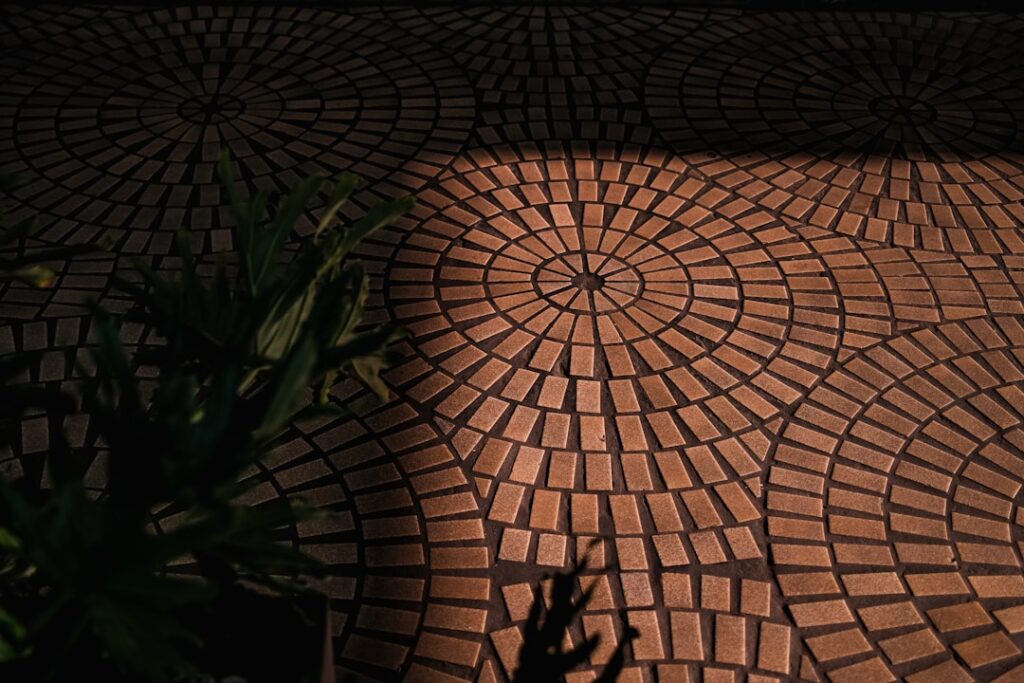
For a focal point, circular or fan-shaped patterns radiate pavers outward from a center, often using tapered pavers sold in kits specifically for the purpose. A circular pattern makes a striking centerpiece for a fire pit or a courtyard and draws the eye. These are the most challenging to install because of the precise cuts and layout involved, so they are best for experienced DIYers or professional installation, but few patterns are as impressive.
How to Choose the Right Pattern
Weigh these factors before you commit:
- Traffic and load — driveways need herringbone; patios and walkways can use any pattern.
- Paver shape — rectangular pavers suit herringbone and running bond; square pavers suit grid and basketweave.
- Skill level — running bond and basketweave are beginner-friendly; herringbone and circular are advanced.
- Waste and budget — angled patterns need more cuts and extra material; buy 10 percent overage, more for herringbone.
- Style — match the pattern to your home; grid reads modern, basketweave reads traditional, random reads rustic.
Mixing Patterns and Borders
You do not have to pick just one. A common designer move is to lay the main field in one pattern — say, herringbone — and frame it with a soldier-course border, where pavers run end to end around the perimeter. The border cleans up the edge, hides the cut ends, and adds a finished, intentional look. Combining a running-bond field with a contrasting border color is an easy way to elevate a basic patio without extra skill. Just plan the border first so your field pattern lands cleanly inside it.
Using Color to Enhance a Pattern
Pattern and color work together, and a thoughtful color plan can make even a simple layout look custom. Blending two or three closely related paver colors across a field creates subtle depth and hides the uniformity of manufactured pavers, giving a more natural, stone-like appearance. A single accent color woven randomly through a neutral field adds interest without looking busy. For borders, a contrasting color — a charcoal edge around a tan field, for instance — sharply defines the patio’s shape and frames the pattern. Be cautious with high-contrast checkerboard effects, which can overwhelm a space; subtle blends age better and suit more homes. Buy all your pavers from the same production lot when possible so colors match, and mix from several pallets as you lay to distribute any shade variation evenly across the patio.
Base Preparation: The Foundation of Any Pattern
The most beautiful pattern fails if the base beneath it is wrong, so this stage deserves the bulk of your effort. A proper paver base starts with excavating 7 to 9 inches below the finished height, more for a driveway. Lay down 4 to 6 inches of crushed aggregate base, compacting it in 2-inch lifts with a plate compactor until it is rock solid. Add about an inch of bedding sand, screeded perfectly flat, and only then set your pavers in the chosen pattern. After laying, sweep polymeric sand into the joints and compact again to lock everything together. Skipping compaction or shorting the base depth leads to settling, ruts, and a wavy surface no pattern can disguise. Plan a slight slope of about a quarter inch per foot away from the house so water drains off rather than pooling.
Edge Restraint Keeps Patterns Tight
Every paver pattern relies on edge restraint to stay tight over time, and this is the step DIYers most often skip. Without a solid border holding the perimeter pavers in place, the whole field gradually spreads outward, joints open up, and the pattern loosens. Plastic paver edging staked into the base, a concrete haunch, or a soldier-course border set in a stable base all serve to lock the edges. Grid and stack-bond patterns depend on edge restraint even more than interlocking herringbone, since they have no internal locking geometry to hold them together. Install the restraint before sweeping in joint sand, and your pattern will stay crisp and tight for decades rather than creeping apart after a few seasons of freeze and thaw.
Final Thoughts
The best patio paver patterns balance looks, strength, and your comfort level with a saw. For a first patio, running bond or basketweave gives a great result with minimal fuss. When strength matters or you want a high-end look, herringbone is worth the extra cuts. Add a soldier-course border to frame any layout, buy enough overage for the pattern you choose, and take your time on the base — because even the most beautiful pattern only looks as good as the level, compacted foundation beneath it.