The Bruce name has been on US hardwood floors since 1884, and the brand’s reputation in solid and engineered hardwood is unquestioned. The laminate side of the business is less well-known but offers a distinct value proposition — name recognition, broad availability through Home Depot and Lowe’s, and a competitive AC rating profile that punches above its budget price point. Bruce laminate flooring targets the homeowner who wants a recognized brand without paying premium prices for Mohawk RevWood Premier or Pergo Outlast+. This guide walks through the current lines, AC ratings that actually matter, realistic pricing, and how Bruce stacks against direct competitors.
Where Bruce Sits in the Market
Bruce is owned by AHF Products, which acquired the brand along with Armstrong Flooring’s hardwood business in 2018. The laminate lineup is positioned in the value-to-mid-tier segment — above generic store brands but below premium products from Pergo, Mannington Restoration, and the higher Mohawk RevWood lines.
Distribution focuses heavily on Home Depot, with some product through Lowe’s and independent flooring retailers. Online direct purchase exists through AHF’s site but carries shipping minimums that often make local retail more economical.
Current Bruce Laminate Lines
The lineup is structured around a few key product families:
- Bruce Reserve: Mid-tier laminate, AC4 rating, 12 mm thick, $2-$3.50 per square foot
- Bruce Estate: Entry to mid-tier, AC3-AC4, 8 mm to 10 mm thick, $1.50-$2.50 per square foot
- Bruce Park Avenue and Avenues: Wider plank options, AC3 rating, $1.80-$2.80 per square foot
- Premier Performance (waterproof): Newer line with sealed core, $2.80-$4 per square foot
Product lines rotate at retailers, so specific names may vary by region and store. Always check the current SKU at your local Home Depot or Lowe’s before committing.
AC Ratings Explained
AC (Abrasion Class) ratings measure laminate durability under standardized testing. The scale runs:
- AC1-AC2: Light residential — closets, bedrooms with minimal traffic
- AC3: General residential — most rooms in a typical home
- AC4: Heavy residential or light commercial — kitchens, hallways, small offices
- AC5: Heavy commercial — retail spaces, restaurants
Bruce’s mainstream lines run AC3, with Reserve hitting AC4. For an active family with kids and pets, AC4 is the right baseline. Bruce Reserve at AC4 with a 12 mm core is genuinely durable — comparable to Pergo Outlast+ at a lower price point.
Plank Specs and Visuals
Plank dimensions vary by line. Most Bruce laminate runs:
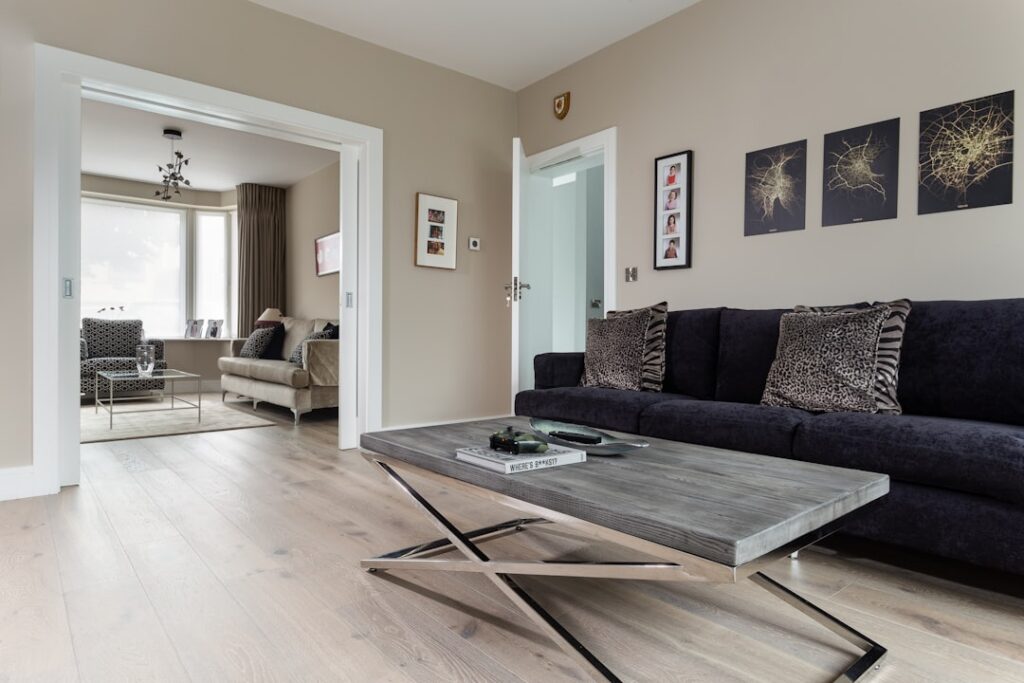
Thickness 8 mm to 12 mm. Width 5 inches to 7.5 inches, with wider plank options on premium lines. Length 47 inches to 50 inches, standard for the laminate category. Bevel options range from micro-bevel (subtle) to painted bevel (deeper definition between planks).
Embossed-in-register (EIR) textures, where the surface texture follows the printed wood grain, are available on premium Bruce lines and read as much more realistic than smooth-surface budget laminate.
Installation Method
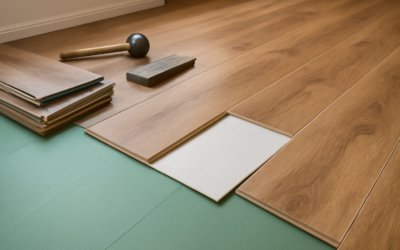
All current Bruce laminate uses click-lock joinery, typically a proprietary version of the Valinge or Unilin angle-tap-tap system. Floating install over an underlayment is standard — Bruce sells matched underlayment with attached vapor barrier for $0.30-$0.50 per square foot, though aftermarket products like QuietWalk Plus ($0.40-$0.60 per sq ft) outperform the included options on sound dampening.
Expansion gaps of 1/4 inch to 3/8 inch at every wall, doorway, and obstruction are non-negotiable. The most common laminate installation failure is skipping or shortening the expansion gap, which leads to peaking and joint separation as humidity changes.
Water Resistance Versus Waterproof
Standard Bruce laminate is water-resistant for surface spills cleaned within 30 minutes. The Premier Performance line is marketed as waterproof with sealed core technology — these products handle pet accidents and minor flooding better but still are not appropriate for bathrooms with shower exposure or basements with vapor issues.
For genuinely waterproof flooring, LVP (SPC or WPC core) outperforms even premium laminate. Bruce’s parent company AHF also sells under the Armstrong Flooring name with vinyl options for wet areas.
Warranty Coverage
Bruce laminate warranties range from 15 years on entry-level Estate up to 30 years on Reserve and Premier Performance. Warranties cover wear-through, staining, and manufacturing defects on residential installations. Commercial use typically gets a much shorter warranty (5-10 years).
Read the fine print on installation requirements — improper subfloor prep, skipped expansion gaps, and use of non-approved adhesives all void coverage. Document installation with photos and keep all receipts.
How Bruce Compares
Against Pergo Outlast+ ($2.50-$4 per sq ft, AC4): Bruce Reserve costs slightly less with similar performance. Against Mohawk RevWood Premier ($3-$5 per sq ft, AC5 waterproof): Mohawk leads on water performance, Bruce wins on price. Against budget laminate from TrafficMaster or Style Selections ($0.80-$1.50 per sq ft, AC3): Bruce Estate offers meaningfully better wear performance for $1-$1.50 more per square foot.
For the price-conscious shopper who wants a recognized name and decent performance, Bruce hits a useful sweet spot. For premium waterproof needs or commercial-grade durability, the conversation moves to other brands.
Real-World Service Life
Properly installed Bruce laminate in a typical residential application lasts 12-20 years. The variables: AC rating versus actual traffic load, climate control (35-55 percent relative humidity year-round), expansion gap discipline, and water management. Kitchens and entryways wear fastest; bedrooms and dining rooms can outlast the warranty period easily.
For one or two rooms in a moderate-traffic home, Bruce Estate or Park Avenue is a defensible choice. For a full-house install in a busy family home, stepping up to Bruce Reserve at AC4 is worth the extra dollar per square foot.
Maintenance and Cleaning
Bruce laminate cleans with standard laminate floor cleaners — Bona Hard-Surface Floor Cleaner, Bruce No-Wax Hardwood and Laminate Floor Cleaner, and Method Squirt + Mop all work well. Avoid wet mopping; laminate joints can absorb moisture even on water-resistant products. Use a slightly damp microfiber mop, never a soaking wet one.
Place felt furniture pads under all chair and table legs to prevent surface scratches. Use walk-off mats at exterior doors to capture grit before it reaches the laminate. Vacuum or sweep weekly with a soft-bristle attachment — never use a beater bar vacuum on laminate as it can damage the surface texture over time.
Common Installation Problems and Fixes
The most common Bruce laminate complaints stem from installation rather than product. Peaking at joints usually indicates insufficient expansion gap — the fix requires removing trim, cutting back the floor 1/4 inch at each wall, and reinstalling. Hollow-sounding spots often mean uneven subfloor that was not addressed; minor issues can sometimes be lived with, but severe cases require pulling the floor and leveling the substrate. Visible seams between planks usually indicate boards not fully clicked together at install — pulling apart and re-clicking the affected row solves most cases.
Prefer to explore on your own?
See how new flooring looks in your actual room in seconds — free, no signup.
Try the free Floor Studio →