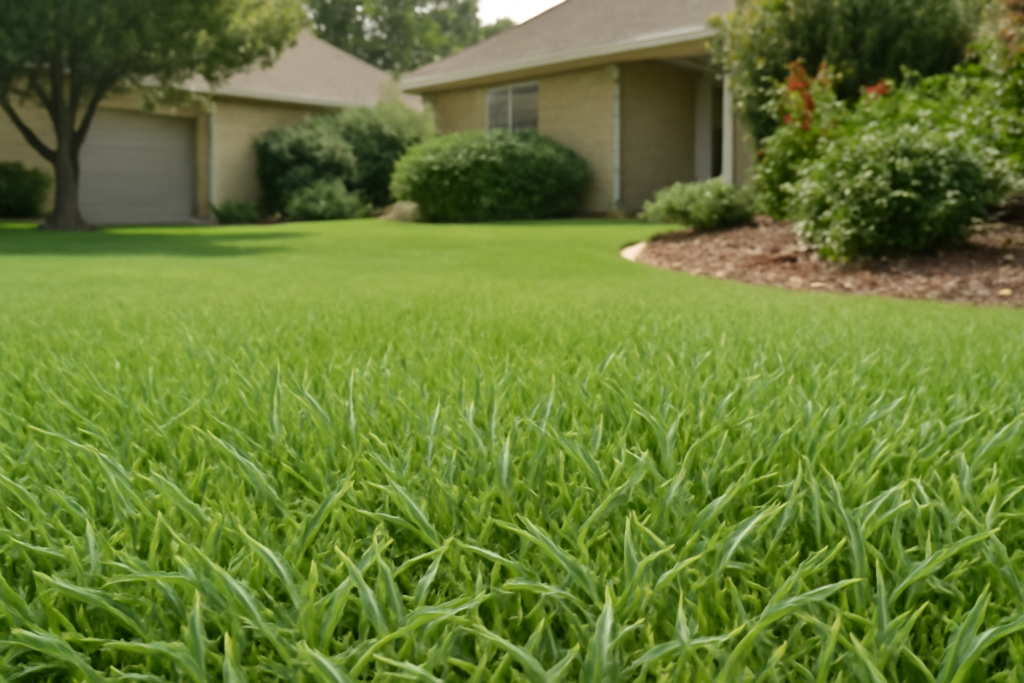
If you are tired of pouring water and money into a thirsty lawn, a buffalo grass lawn may be the sustainable answer you have been looking for. Buffalo grass, Bouteloua dactyloides (formerly Buchloe dactyloides), is a fine-textured, warm-season turf native to the North American Great Plains, the same grass that once fed the vast bison herds. It evolved to survive on natural rainfall in some of the harshest conditions on the continent, which makes it extraordinarily drought-tolerant and low-maintenance. For the right region and the right homeowner, it delivers a soft blue-green lawn on a fraction of the water and mowing a conventional lawn demands.
- Hardiness and Where It Grows Best
- Why Choose Buffalo Grass
- Establishing a Buffalo Grass Lawn
- Sun and Soil Requirements
- Watering: Less Is More
- Mowing and Fertilizing
- Weed Control and Common Problems
- Buffalo Grass Versus Other Low-Water Options
- Blending With Other Native Grasses
- Is a Buffalo Grass Lawn Right for You
Hardiness and Where It Grows Best
Buffalo grass is hardy in USDA zones 4 through 9 and is best suited to the central and western United States, especially the Great Plains, the Midwest, and the semi-arid West where it is native. It thrives in hot, dry, sunny climates with low humidity and moderate rainfall. It is not the right choice for humid, high-rainfall regions like the Southeast or the Pacific Northwest, where it struggles with disease, gets outcompeted by weeds and other grasses, and simply does not perform. Match the grass to its native conditions and it excels; plant it in the wrong climate and it disappoints.
Why Choose Buffalo Grass
The appeal of buffalo grass comes down to how little it asks of you:
- Exceptional drought tolerance: survives on natural rainfall in much of its range once established
- Low mowing needs: grows only 4 to 8 inches tall and can be left unmowed for a natural look or mowed occasionally
- Minimal fertilizer: a native adapted to lean prairie soils, it needs little feeding
- Cold and heat hardy: handles both harsh winters and blazing summers
- Soft, fine texture: a pleasant blue-green to gray-green color
The tradeoff is that buffalo grass goes dormant and turns tan in winter and during severe drought, and it is a warm-season grass, so it greens up later in spring than cool-season lawns.
Establishing a Buffalo Grass Lawn
You can start a buffalo grass lawn from seed, plugs, or sod, and timing is important. Because it is a warm-season grass, plant in late spring to early summer when the soil has warmed, which gives it the whole hot season to establish.
- Seed: the most economical option; sow at the recommended rate into a well-prepared, weed-free seedbed and keep it moist until germination, which can take two to three weeks
- Plugs: spaced 6 to 12 inches apart, they spread by runners (stolons) to fill in over a season or two; closer spacing fills in faster
- Sod: the fastest but most expensive route to an instant lawn
Prepare the site by clearing weeds, loosening the top few inches of soil, and grading smooth. Weed control before planting is critical, because young buffalo grass is slow to establish and can be overrun by aggressive weeds early on.
Sun and Soil Requirements
Full sun is non-negotiable. Buffalo grass demands at least six to eight hours of direct sunlight a day and performs poorly in shade, thinning out and letting weeds move in. It is not a lawn for shady yards. As for soil, it prefers heavier clay and loam soils, reflecting its Great Plains origins, and it tolerates a range of pH, doing well even in the neutral to alkaline soils common in the West. It handles poor, native soils that would struggle to support other turf. Good drainage helps, but its real preference is for the firm, fertile prairie soils of its homeland rather than light, sandy ground.
Watering: Less Is More
Watering is where a buffalo grass lawn saves you the most. During establishment, keep seed or plugs consistently moist until they are rooted and growing, which may take several weeks of regular watering. After that, back off dramatically. Established buffalo grass needs very little supplemental water, often surviving on rainfall alone in its native range. During extended drought it may go dormant and brown, but it greens back up when moisture returns; this dormancy is a survival mechanism, not death. Overwatering an established buffalo grass lawn is a common mistake that encourages weeds and other grasses to invade and outcompete it.
Mowing and Fertilizing
Buffalo grass gives you real freedom in how you keep it. For a traditional lawn look, mow to about 2 to 3 inches every couple of weeks during the growing season. For a low-maintenance natural look, you can leave it unmowed entirely, and it settles into a soft, informal meadow-like turf only 4 to 8 inches tall. Either way, it needs far less mowing than conventional grass. Fertilizing needs are minimal; one light application of nitrogen in late spring or early summer is plenty, and often it needs none at all. Overfertilizing wastes money and, again, invites weeds and competing grasses.
Weed Control and Common Problems
The biggest challenge with buffalo grass is weeds, especially during the slow establishment phase and in any thin or shady spots. Because it is not a dense, aggressive turf like Bermuda grass, it does not choke out weeds as forcefully, so keeping the lawn thick, sunny, and unstressed is your best defense. A few issues to watch for:
- Weed invasion: the main problem, worst in shade, thin spots, and during establishment
- Competition from other grasses: Bermuda and cool-season grasses can crowd it out, especially with overwatering
- Winter dormancy: normal tan color in cold and drought; not a disease
- Slow spring green-up: expect it to green later than cool-season lawns
Disease and insect problems are rare in its proper dry-climate range, which is another reason it is so low-maintenance there.
Buffalo Grass Versus Other Low-Water Options
Before committing, it helps to see how a buffalo grass lawn stacks up against the alternatives. Compared with Bermuda grass, another warm-season option, buffalo grass uses less water and needs far less mowing and fertilizer, but it is also less dense and less able to handle heavy foot traffic and constant play. Compared with conventional cool-season lawns like Kentucky bluegrass and tall fescue, buffalo grass slashes water and maintenance dramatically, though it trades away the deep green color those grasses hold and greens up later in spring. Against non-living options like artificial turf or gravel, it stays a soft, living, cooling surface that supports pollinators and soaks up rainfall.
The honest summary is that buffalo grass is a specialist, not an all-purpose turf. For a sunny, low-traffic yard in a dry climate where saving water is the priority, it is hard to beat. For a shady lot, a heavily used play area, or a humid region, another grass will serve you better.
Blending With Other Native Grasses
Many homeowners get the best results by not treating buffalo grass as a monoculture at all. In its native range it grows intermingled with blue grama (Bouteloua gracilis), a similarly drought-tough, fine-textured native, and the two are often sold together as a low-water lawn blend. Blue grama adds density and its own charming eyelash-shaped seed heads, while buffalo grass spreads by runners to knit the turf together. A blend like this tends to be more resilient and better at resisting weeds than either grass alone, and it captures the soft, informal look of a shortgrass prairie. For gardeners embracing the low-water, native approach, leaning into that natural pairing rather than fighting for a pure buffalo grass stand often produces a healthier, easier lawn.
Is a Buffalo Grass Lawn Right for You
A buffalo grass lawn is an outstanding choice if you live in the central or western United States, have a sunny yard, and want a genuinely low-water, low-mow, native turf. It rewards a hands-off approach and punishes overwatering and overfeeding, which is the opposite of most lawns. If you can accept its winter dormancy and later spring green-up, and you keep it in full sun, buffalo grass will give you a soft, sustainable, drought-tough lawn that honors the prairie it came from while cutting your water bill and your weekends spent mowing.