
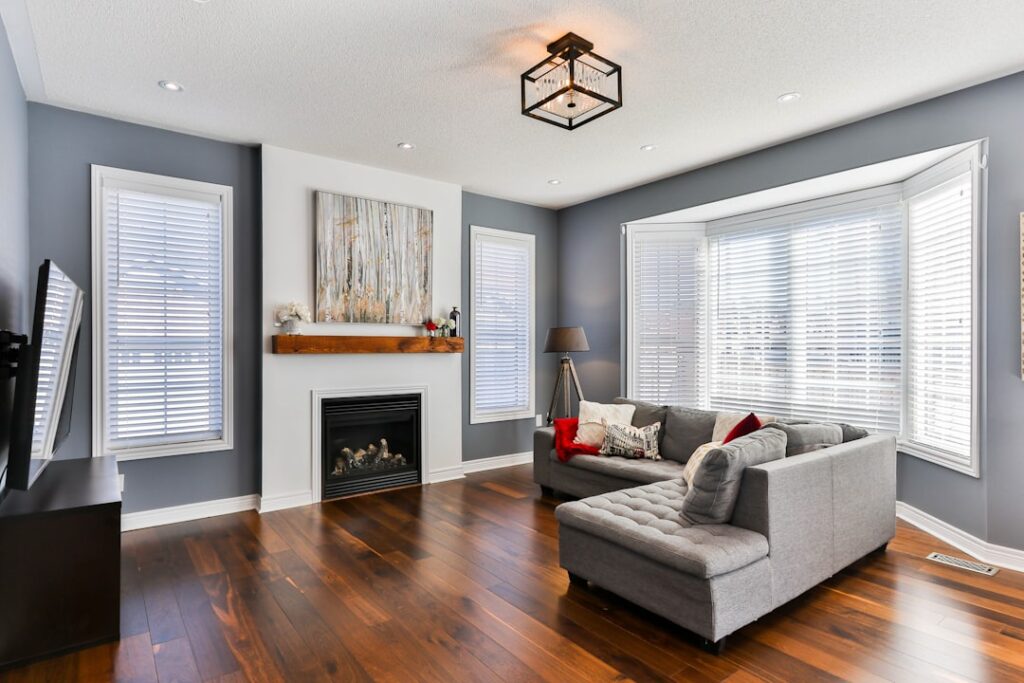
The single most expensive hardwood mistake is choosing on looks alone and ignoring how the floor will live in your home. Buying hardwood floor the right way means matching wood species, construction type, and finish to your climate, traffic, and budget before you ever fall for a sample. Get those fundamentals right and a hardwood floor lasts 50 years or more and can be refinished several times. Get them wrong and you are looking at gaps, dents, and a floor you cannot fix.
- Solid vs. Engineered
- Choosing a Wood Species
- Understanding Wood Grades
- Prefinished vs. Site-Finished
- What Hardwood Costs
- Acclimation and Installation
- Buying With Confidence
- Plank Width and Board Length
- Finish Types and Sheen
- Caring for Your Investment
- Where to Avoid Hardwood
- Final Tips for a Confident Purchase
Solid vs. Engineered
This is the first and most important decision, because the two constructions behave very differently with moisture.
- Solid hardwood: One piece of wood, 3/4 inch thick. Can be sanded and refinished many times, but expands and contracts with humidity. Best for above-grade, climate-controlled rooms.
- Engineered hardwood: A real wood veneer over a stable plywood core. Handles humidity and basements far better, and can go over concrete. Refinishable once or twice depending on veneer thickness.
Choosing a Wood Species
Hardness determines how well a floor resists dents, and it varies enormously by species. The Janka scale measures this directly.
Red oak, the long-standing benchmark, rates 1,290 on the Janka scale and takes stain beautifully. Hickory and hard maple run harder and suit active households with kids and pets. Walnut and cherry are softer and prized for color, so reserve them for lower-traffic spaces where dents are less likely.
Understanding Wood Grades
Grade describes appearance, not structural quality, and it heavily affects price. Knowing the tiers prevents overpaying or being disappointed.
- Clear/Select: Minimal knots and color variation. The most uniform and most expensive.
- Common (No. 1 and No. 2): More knots, streaks, and character. Cheaper and increasingly popular for a rustic look.
- Character/Rustic: Maximum natural variation, knots, and mineral streaking.
Prefinished vs. Site-Finished
You can buy boards already finished at the factory or have them sanded and finished after installation. Each route has clear pros.
Prefinished planks cure under UV-cured aluminum oxide coatings that are tougher than anything applied on site, and you can walk on them immediately. Site-finished floors give a perfectly smooth, seamless surface and let you pick any custom stain, but they bring dust, fumes, and several days of curing into your home.
What Hardwood Costs
Pricing spans a wide range depending on species, grade, and construction. Budget for materials plus installation.
- Domestic oak, solid: $4 to $8 per sq ft for materials
- Engineered hardwood: $4 to $12 per sq ft
- Exotic and wide-plank species: $8 to $15+ per sq ft
- Professional installation: $3 to $8 per sq ft on top of materials
Acclimation and Installation
Wood is a living material that needs to adjust to your home before it goes down. Skipping this step causes more failures than any other shortcut.
Let the boxes sit in the installation room for 3 to 5 days so the boards reach equilibrium with your indoor humidity. Maintain interior humidity between 35 and 55 percent year-round afterward, and your floor stays flat and gap-free through the seasons.
Buying With Confidence
Before buying hardwood floor, order physical samples and view them in your own light at different times of day, since showroom lighting flatters everything. Order 5 to 10 percent extra for cuts, waste, and future repairs.
Match the construction to your environment first, then choose species and grade for the look you want. That order of priorities is what separates a floor that lasts decades from an expensive disappointment.
Plank Width and Board Length
The dimensions of the boards change a room’s whole feel, and it is an easy detail to overlook in the showroom. Narrow strips, around 2 1/4 inches, read traditional and make a small room feel busier but more contained.
Wide planks of 5 to 7 inches or more feel modern and open, and they show off grain and character beautifully in larger rooms. Keep in mind that wider solid-wood boards move more with humidity, so they are best paired with engineered construction or tight climate control. Longer boards mean fewer end seams and a more seamless look, but they also cost more and waste more during cutting.
Finish Types and Sheen
The finish determines both how the floor wears and how it looks under light. Most prefinished floors use a durable aluminum-oxide or polyurethane topcoat, while oil finishes have gained popularity for their natural, matte feel.
- Polyurethane (water or oil-based): The hardest, most scratch-resistant, easy to clean.
- Penetrating oil finishes: Soak into the wood for a natural matte look; easier to spot-repair but need periodic re-oiling.
- Matte and satin sheens: Hide scratches, dust, and footprints far better than glossy.
- High gloss: Striking but shows every scuff, so reserve it for formal, low-traffic rooms.
Caring for Your Investment
A hardwood floor rewards a little routine care with decades of service. The fundamentals are simple but easy to neglect.
Sweep or vacuum with a hardwood-safe head to keep grit from scratching the finish, and damp-mop with a cleaner made for wood rather than soaking it with water. Add felt pads under furniture legs, place mats at entrances to catch tracked-in grit, and keep indoor humidity steady year-round. When the finish eventually dulls in walkways, a screen-and-recoat refreshes the surface for a fraction of a full sanding, and that is one of the great advantages of choosing real wood when buying hardwood floor in the first place.
Where to Avoid Hardwood
As beautiful as wood is, some rooms simply punish it. Bathrooms, laundry rooms, and any space with frequent standing water are poor candidates for solid hardwood, since repeated moisture causes cupping and finish failure no matter how careful you are.
Basements present a different problem: below-grade moisture rising through the slab. Here, engineered hardwood with a proper vapor barrier is the only wood option worth considering, and even then waterproof luxury vinyl is often the smarter pick. Matching the room to the material upfront saves you from an expensive failure down the road.
Final Tips for a Confident Purchase
Buying hardwood floor well is a matter of priorities in the right order. Settle construction first based on your environment, then choose species and grade for durability and looks, and finally pick width, finish, and sheen to suit the room.
Order 5 to 10 percent extra material, acclimate the boards properly, and never skip the moisture test on concrete. Whether you go prefinished for speed and toughness or site-finished for a seamless custom look, a thoughtfully chosen hardwood floor adds warmth and lasting value that few other materials can match.
Prefer to explore on your own?
See how new flooring looks in your actual room in seconds — free, no signup.
Try the free Floor Studio →

