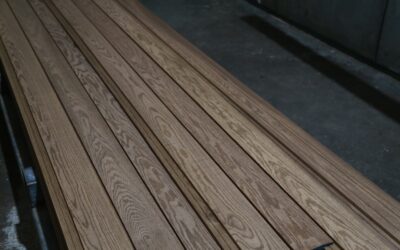
Choosing a floor finish is a bigger decision than choosing a stain color, and almost nobody treats it that way. The stain is cosmetic; the finish is the armor you’ll walk on, clean, scratch, and live with for a decade. I’ve applied every major finish class across hundreds of floors, and this polyurethane finish comparison is the conversation I have at kitchen tables before every refinish: oil-based poly versus waterborne poly versus hardwax oil versus moisture-cure urethane — what each actually is, how it looks and wears, what it costs, and which household each one belongs in.
- The Four Contenders in Plain English
- Look: The First Fork in the Road
- Durability and Wear: What a Decade Does
- The Comparison Table
- Cost, Honestly Framed
- Living Factors: Smell, Family, and Schedule
- My Recommendations by Household
- What About Sheen — Does It Change the Comparison?
- The Mistakes That Undo Any Choice
The Four Contenders in Plain English
Oil-based polyurethane (technically oil-modified urethane) is the classic amber finish of American floors — urethane resins carried in mineral spirits, applied thick, cured slowly by oxidation. Waterborne polyurethane carries its urethane in water, dries fast and clear, and now spans everything from budget single-component jugs to two-component commercial systems like Bona Traffic HD and Loba 2K. Hardwax oil — Rubio Monocoat, Osmo Polyx, Pallmann Magic Oil — isn’t a film at all: it’s a penetrating oil-and-wax treatment that lives in the wood rather than on it. Moisture-cure urethane is the old-school bomb-proof option that cures by grabbing humidity from the air; it’s mostly a gym-floor and specialty product now because its solvents are brutal. Each of these is a different philosophy of protection, not just a different can.
Look: The First Fork in the Road
Start here, because appearance eliminates options fast. Oil poly is warm — it goes on golden and keeps ambering for years, deepening red oak to honey and making brown stains warmer than sampled. If you love traditional golden floors, that’s a feature. Waterborne is water-clear and stays that way: stained colors hold true to the approved sample, and pale, gray, and whitened floors are only possible under it. Hardwax oil gives the most natural look of all — matte, open-pored, “bare wood that repels water” — with optional tinting built into products like Rubio’s color line. Moisture-cure is a thick, glossy, slightly plastic look that suits a basketball court more than a living room. So the first question I ask clients isn’t about durability at all; it’s “warm and golden, true-to-color, or raw and matte?” That answer alone usually cuts four options to two.
Durability and Wear: What a Decade Does
Ranking pure toughness in film integrity, my field experience says: moisture-cure and two-component waterborne at the top, oil poly a solid middle, single-component waterborne below that, and hardwax oil playing a different game entirely. Oil poly builds a thick, slightly flexible film that resists moisture well and wears predictably; its weakness is scratch-whitening and slow cure. Premium 2K waterbornes match or beat it in scratch and chemical resistance while staying colorfast. Cheap 1K waterbornes are the ones that gave “water-based” a bad reputation in the 1990s — modern versions are decent, but they’re the shortest-lived films in this comparison. Hardwax oil scratches most easily — but here’s its trick: because there’s no film, repairs are trivially local. Scratch a poly floor and the fix is a whole-room recoat; scratch a Rubio floor and you scuff the spot and re-oil it in twenty minutes. Durability isn’t one number; it’s “how fast does damage happen” versus “how painful is the fix,” and those two rankings run in opposite directions.
The Comparison Table
| Factor | Oil-Based Poly | Waterborne Poly (1K / 2K) | Hardwax Oil | Moisture-Cure |
|---|---|---|---|---|
| Look | Warm amber, deepens with age | Water-clear, colorfast | Ultra-matte, natural, in-the-wood | High-build gloss |
| Scratch resistance | Good | Good / Excellent (2K) | Fair, but spot-repairable | Excellent |
| Recoat window | Overnight-plus between coats | 2-4 hours between coats | Single-day systems common | Slow, solvent-heavy |
| Full cure | ~30 days | ~7-14 days | ~7-21 days depending on product | ~7+ days |
| Odor/VOCs | Strong; days of off-gassing | Low; often sleep-at-home same night | Very low (most products) | Severe; vacate required |
| Cost per gallon | $30-$50 | $40-$70 (1K) / $110-$150 (2K) | $130-$200 (covers more area) | $60-$100 |
| Repair strategy | Room recoat | Room recoat | Local spot repair | Full recoat, difficult |
| DIY-friendliness | High — slow and forgiving | Moderate — fast dry punishes laps | Moderate — technique-specific | Pro only |
Cost, Honestly Framed
Per gallon, oil poly is the budget king and 2K waterborne looks extravagant — but per finished floor, the gaps shrink. Materials are a minority of a professional refinish; sanding labor dominates. Upgrading a 1,000-square-foot job from oil poly to Traffic HD-class waterborne typically adds well under a dollar per square foot. Hardwax oil flips the math differently: the cans are expensive ($130-$200), but coverage per gallon is enormous (Rubio claims 300-500 square feet per liter because it’s a one-thin-coat system), so material cost lands mid-pack, while its long-run cost depends on your willingness to do periodic maintenance oiling — skip it and the wood suffers; do it and the floor is effectively immortal. Oil poly’s hidden cost is time: overnight recoats and a month of babying before rugs go down.
Living Factors: Smell, Family, and Schedule
These decide more jobs than durability does. Oil poly means days of serious solvent odor — pregnant occupants, babies, asthmatics, and birds should be out of the house, and I mean it about the birds. Waterborne means low odor and same-day reoccupation in socks; it’s why waterborne now dominates occupied-home refinishing. Hardwax oils are mostly plant-based and nearly odorless — Rubio in particular has no real off-gassing story — which makes them beloved by chemically sensitive clients. Schedule-wise, waterborne and single-coat hardwax systems can compress a refinish by days versus oil. If you’re living in the house through the work, that difference is not academic.
My Recommendations by Household
Busy family, dogs, kitchens and great rooms: two-component waterborne (Bona Traffic HD, Loba 2K Supra), satin. It’s the best armor-per-dollar in the business and the colors stay honest. Traditional home, golden aesthetic, budget-conscious, able to vacate: quality oil-based poly remains a completely legitimate choice — three coats of a good oil poly is a proven 5-7 year finish that a careful DIYer can apply well. Design-forward natural look, engaged owner who’ll do maintenance: hardwax oil — nothing else gives that raw matte hand-feel, and spot repair is a genuine superpower for furniture-heavy or dog-scratched floors, but go in eyes-open about re-oiling every couple of years in traffic zones. Gym, restaurant, or “I never want to think about this again” and you can vacate for a week: moisture-cure or a commercial 2K waterborne, applied by a pro, and moisture-cure only if odor logistics genuinely allow. Rental units: 2K waterborne, no debate — turnover damage is exactly what it resists.
What About Sheen — Does It Change the Comparison?
Briefly, because people conflate the two: sheen (matte, satin, semi-gloss) is an optical setting available within most of these chemistries, not a durability tier. Within one product line, the satin protects exactly like the semi-gloss. Where sheen intersects this comparison is availability and character: oil poly historically skews glossier and looks most natural in satin and semi-gloss; premium waterbornes offer the best flat and extra-matte options in the business, which is partly why the modern matte-floor look is a waterborne look; and hardwax oil is inherently ultra-matte — you don’t choose its sheen, you choose it because of its sheen. If your target aesthetic is dead-flat and natural, that requirement alone eliminates half the table before durability ever enters the chat.
The Mistakes That Undo Any Choice
Whatever wins your polyurethane finish comparison, three errors will waste the money. Mixing chemistries carelessly — oil over fresh waterborne, waterborne over uncured oil, poly over an incompatible sealer — causes adhesion failures that only show up as peeling months later; follow one manufacturer’s system top to bottom. Rushing cure — every finish here dries long before it cures, and rugs, furniture sliding, and wet mopping in week one damage floors that would have been fine in week four. And judging finishes by their first month — oil poly looks rich immediately and ambers away from your stain color by year three; matte waterborne looks understated on day one and looks exactly the same on day 3,000. Buy the decade, not the reveal.
If I had to compress twenty years of finish work into one sentence, it’s this: pick the look you can live with forever, then buy the toughest chemistry that produces that look and give it the cure time it asks for. Do those three things and every product in this comparison will serve you well; skip any one of them and even the $150 gallon will disappoint you.
Prefer to explore on your own?
See how new flooring looks in your actual room in seconds — free, no signup.
Try the free Floor Studio →