The Carolinas’ warm, humid climate quietly decides which floors will thrive and which will fail, which is why smart Carolina flooring shoppers think about moisture before they think about style. From the humid coastal plains to the cooler mountains, North and South Carolina share long, sticky summers and damp conditions that put real demands on flooring. Pick a material suited to that environment and you get a floor that lasts; ignore the humidity and you risk warping, cupping, and mildew. This guide covers the best options for the region, fair pricing, and how to vet local stores and installers.
- How the Carolina Climate Shapes Your Choice
- Best Flooring Options for the Carolinas
- Typical Price Ranges
- How to Vet a Flooring Store
- Vetting the Installer
- Questions to Ask Before You Buy
- Preparing for a Successful Installation
- Coastal vs. Inland Considerations
- Matching Flooring to Each Room
- Managing Humidity for Floor Longevity
- The Bottom Line
How the Carolina Climate Shapes Your Choice
Much of the Carolinas falls in a humid subtropical zone. Summers are hot and muggy, humidity runs high for much of the year, and coastal areas add salt air and storm moisture. High humidity causes wood-based floors to expand, and persistent dampness can encourage mildew in poorly ventilated spaces. The practical lesson is to favor moisture-tolerant, dimensionally stable materials, and to pay close attention to subfloor moisture and acclimation no matter what you install.
Best Flooring Options for the Carolinas
Several materials handle the humid climate well, each suited to different rooms and budgets.
- Luxury vinyl plank (LVP): Waterproof and stable across humidity swings, LVP is one of the best all-around choices for Carolina homes, especially ground floors, kitchens, and baths.
- Porcelain and ceramic tile: Impervious to moisture and cool underfoot during muggy summers, ideal for high-humidity and high-traffic areas.
- Engineered hardwood: Its layered construction resists humidity movement far better than solid wood, delivering a real-wood look with more stability.
- Solid hardwood: Beautiful and classic, but it needs careful acclimation and indoor humidity control to avoid cupping in the humid air; best above grade.
- Carpet: Fine for bedrooms with moisture- and mildew-resistant options and good humidity management.
Typical Price Ranges
Prices vary by material, grade, and installer, but these general US market ranges help you evaluate a quote. Combining material and installation:
- Luxury vinyl plank: about $3 to $11 per square foot installed.
- Laminate: about $3 to $9 per square foot installed.
- Ceramic or porcelain tile: about $7 to $20 per square foot installed.
- Engineered hardwood: about $6 to $15 per square foot installed.
- Solid hardwood: about $8 to $18 per square foot installed.
- Carpet: about $3 to $8 per square foot installed.
Treat these as a benchmark. A quote far below the range may skip prep or use low-grade product, while a higher quote should be justified by premium materials or difficult conditions.
How to Vet a Flooring Store
A reputable local store guides you to the right material and stands behind the work. Judge stores on these points:
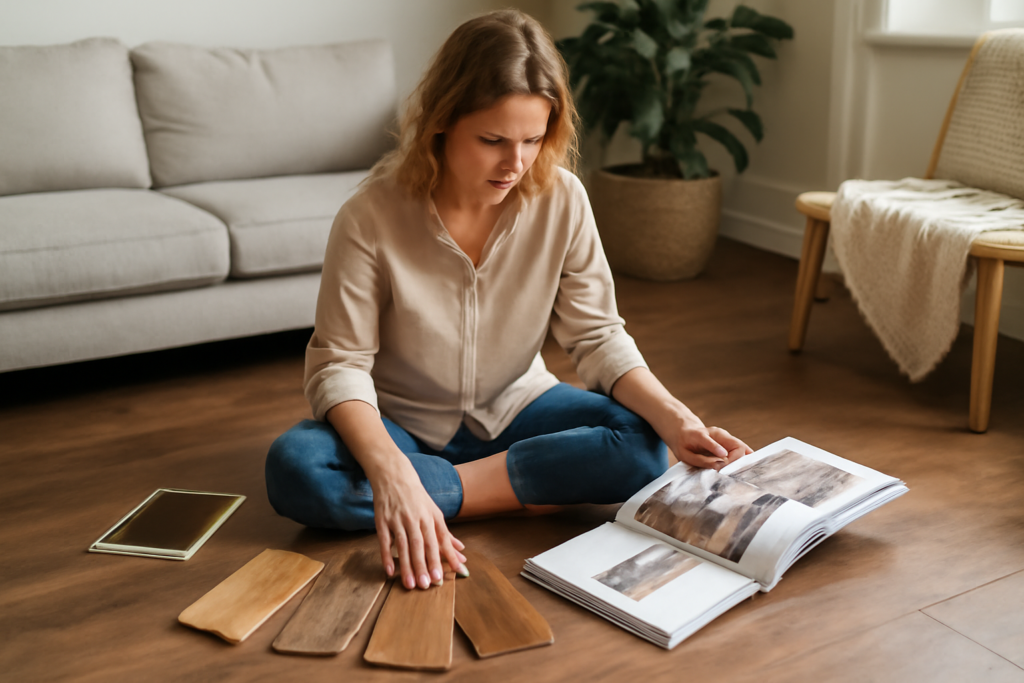
- Take-home samples: See flooring in your own light and humidity before committing.
- Climate-aware guidance: Staff should ask about your rooms, moisture conditions, and ventilation, not just upsell.
- Itemized written quotes: Separate lines for material, labor, prep, removal, and disposal prevent surprises.
- Reputation: Read recent reviews and look for consistent praise of installation quality and after-sale service.
- Warranties: Understand both the product warranty and the store’s installation guarantee.
Vetting the Installer
Even premium flooring fails with a poor install, so vet installers as carefully as products. Confirm they are licensed and insured, and ask whether the store uses in-house crews or subcontractors. Request references and view a finished local job if possible. A professional will test subfloor moisture, allow proper acclimation, and plan correct expansion gaps, all critical in the humid Carolinas. Be cautious of anyone who wants to skip moisture testing or acclimation; in this climate those steps prevent the most common failures.
Questions to Ask Before You Buy
Bring a focused list to every store. Ask how the recommended floor handles humidity, what the installed price includes, how long the job will take, whether old-floor removal is included, and what the warranty covers and requires of you. For any wood product, ask about acclimation time and humidity guidance. For ground floors and slabs, ask about moisture testing and barriers. Clear, specific answers indicate a store that truly understands the regional market.
Preparing for a Successful Installation
A little preparation goes a long way. Clear and measure your rooms, and keep indoor humidity moderate before and after installation. Confirm the subfloor is clean, flat, and dry, and address any drainage or ventilation issues that could trap moisture. For wood floors, follow acclimation guidance closely. After installation, follow the manufacturer’s care instructions, including humidity recommendations, to protect both the floor and its warranty.
Coastal vs. Inland Considerations
The Carolinas are not one climate but several, and where you live shifts the priorities. Along the coast, salt air, high humidity, and storm moisture are constant, so waterproof, corrosion-resistant materials like LVP and tile are strongly favored, and any wood needs careful protection. In the inland Piedmont, humidity is high in summer but conditions are more moderate, giving engineered hardwood a better chance with proper humidity control. In the cooler mountains, swings between humid summers and drier winters mean acclimation and indoor humidity management matter most. Tailor your choice to your specific part of the Carolinas, not just the region as a whole.
Matching Flooring to Each Room
Room use should steer material choice across a Carolina home. In kitchens, bathrooms, and laundry rooms, waterproof LVP or tile handles spills and humidity best. In living rooms and bedrooms, engineered hardwood or LVP offers comfort and looks with manageable risk. Ground-floor rooms and slabs benefit from materials that tolerate moisture from below, again favoring LVP and tile. Carpet suits bedrooms when you pick a mildew-resistant product and control humidity. Planning room by room keeps you from putting a moisture-sensitive floor where the Carolina climate will defeat it.
Managing Humidity for Floor Longevity
Whatever you install, controlling indoor humidity protects it. Running air conditioning and, where needed, a dehumidifier keeps indoor moisture in a stable range, which is especially important for any wood product. Ensure crawl spaces are properly vented or encapsulated, since moisture rising from below is a leading cause of cupping and mildew in Carolina homes. Use exhaust fans in bathrooms and kitchens, fix leaks promptly, and keep gutters directing water away from the foundation. These humidity-management habits do as much to extend a floor’s life here as the material choice itself.
The Bottom Line
Carolina flooring success starts with choosing materials suited to the humid climate, knowing fair prices, and vetting both store and installer. Waterproof options like LVP and tile excel in the Carolinas, while engineered hardwood offers wood appeal with better stability than solid wood. Get itemized quotes, check reviews, confirm licensing and insurance, control indoor humidity, and ask humidity-specific questions. Prepared buyers get better floors at fairer prices, and a floor built to stand up to the Carolinas’ warm, damp seasons for years.
Prefer to explore on your own?
See how new flooring looks in your actual room in seconds — free, no signup.
Try the free Floor Studio →