Ever notice how office and hotel carpet still looks decent after a decade of nonstop foot traffic, while the plush carpet in a five-year-old home already shows tired paths? That difference is engineering, and it is exactly why homeowners increasingly borrow commercial goods for hard-working rooms. Carpet commercial products are built to survive relentless traffic, rolling chairs, and heavy cleaning, using dense low-pile construction and tough fibers that residential plush simply cannot match. Understanding how commercial carpet is made and rated helps you decide when it belongs in a basement, home office, or busy entryway rather than in the showroom you first looked at.
- What Makes Carpet Commercial-Grade
- Broadloom Versus Carpet Tile
- Understanding Traffic Ratings
- Where Commercial Carpet Works at Home
- Installation Methods
- What Commercial Carpet Costs
- Maintenance and Cleaning
- Warranties and Choosing a Commercial Carpet Supplier
- Residential Versus Commercial Carpet: Key Differences
- Final Thoughts
Here is the practical rundown on commercial carpet: the types, the ratings that matter, and where it earns its keep at home.
What Makes Carpet Commercial-Grade
Commercial carpet is defined by durability over softness. Instead of the deep, cushy pile you want in a bedroom, it uses a short, dense, tightly constructed pile that resists crushing under constant use. The yarn is packed close, the pile height is low (often under 1/4 inch), and the whole system is engineered to hold its appearance far longer than residential carpet.
The fibers skew toward solution-dyed nylon and olefin, chosen for stain and fade resistance because commercial spaces get cleaned aggressively. Backings are heavier and stiffer, and many commercial carpets are glued directly to the floor with no separate pad, which eliminates the flexing that wears residential carpet out.
Broadloom Versus Carpet Tile
Commercial carpet comes in two main formats, and each has clear strengths.
Broadloom
Rolled broadloom covers large areas seamlessly and often costs less per square foot. It suits open offices, hospitality spaces, and any large room where a continuous look is wanted.
Carpet tile
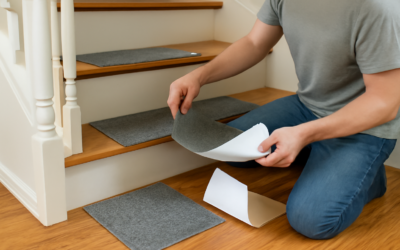
Modular carpet tiles, typically 18-by-18-inch or 24-by-24-inch squares, are the smart choice for most homeowners. If one tile gets stained or damaged, you swap a single square instead of the whole floor. They install without special tools, ship easily, and let you mix colors for a custom pattern. Popular residential-friendly lines like FLOR and Shaw Contract have made tiles a favorite for basements and home gyms.
Understanding Traffic Ratings
Commercial carpet carries ratings that tell you exactly how much abuse it can take. Learn these before you buy.
- Class rating: Look for a “Heavy Traffic” rating for the busiest areas; “Moderate” suffices for a home office.
- Face weight: Measured in ounces per square yard; commercial goods often run 20 to 40 ounces, dense but not deep.
- Stain and soil resistance: Solution-dyed fibers resist bleaching from harsh cleaners and hide soil well.
- Static and slip ratings: Relevant for electronics-heavy rooms and safety.
For a home, a moderate-to-heavy commercial rating is more than enough and will outlast any residential carpet you put beside it.
Where Commercial Carpet Works at Home
Commercial goods are not for every room, but they excel in specific spots.
- Home offices: Rolling desk chairs destroy plush pile; low-pile commercial carpet or tile takes it in stride.
- Basements and rec rooms: Moisture resistance and glue-down installation handle below-grade conditions well.
- Home gyms: Dense, flat pile stands up to equipment and heavy use.
- Playrooms and high-traffic halls: Easy to clean and replaceable by the tile.
Where you want plush comfort underfoot, like bedrooms and formal living rooms, stick with residential carpet. Commercial carpet trades softness for toughness on purpose.
Installation Methods
Commercial carpet usually installs one of two ways, both different from residential stretch-in.
Glue-down is the standard: the carpet or tile bonds directly to the subfloor with adhesive, creating a firm, stable surface that will not ripple under rolling loads. Cushion-back commercial carpet has the pad already attached and glues down as one unit, adding a little comfort. Carpet tiles often use peel-and-stick backing or release adhesive dots, making them genuinely DIY-friendly for a handy homeowner.
Because there is no stretching and no separate pad in most cases, commercial installation is often simpler than residential, though the adhesive work demands a clean, dry, flat subfloor to succeed.
What Commercial Carpet Costs
Pricing is often comparable to or lower than mid-grade residential carpet, with the payoff of far longer life.
- Commercial broadloom: $2 to $6 per square foot for material.
- Carpet tile: $2 to $8 per square foot, with premium designer tiles higher.
- Glue-down installation: $1 to $3 per square foot professionally, less if you DIY tiles.
Factor in the lifespan. Commercial carpet routinely lasts 10 to 20 years in a home setting, so the cost per year of service is often lower than cheaper residential carpet that needs replacing in five.
Maintenance and Cleaning
Commercial carpet is designed to be cleaned hard, which is good news at home. Vacuum regularly, spot-clean spills promptly, and deep-clean with hot-water extraction once or twice a year. Solution-dyed fibers tolerate stronger cleaners than residential carpet, so most household stains lift without drama. With modular tiles, a stubborn stain that will not come out is simply a reason to pop in a fresh square from your leftover box, which is a maintenance advantage no rolled carpet can offer.
Warranties and Choosing a Commercial Carpet Supplier
Commercial goods come with warranties worth reading closely, because they signal how the manufacturer expects the product to perform. Look for stated coverage on wear (fiber loss), texture retention, static, and delamination, with commercial nylon tile often carrying 10- to 15-year commercial wear warranties and lifetime stain and static protection. Match the warranty class to your actual use rather than overbuying airport-grade goods for a home office.
Where you buy matters as much as what you buy. Commercial flooring dealers and contract suppliers stock a far wider range of tile and broadloom than a big-box store and can advise on the right adhesive, moisture mitigation, and installation method for your subfloor. Many sell overstock and discontinued commercial tile at deep discounts, which is how homeowners land premium Interface or Shaw Contract tile for basement prices. Ask for a few loose tiles to test at home, confirm the dye lot if you are ordering in stages, and always run a calcium chloride or plastic-sheet moisture test on concrete before glue-down, since a failed slab is the most common and costly installation mistake.
Residential Versus Commercial Carpet: Key Differences
Set the two side by side and the tradeoffs become obvious. Residential carpet is engineered around comfort: taller pile, softer fibers, a separate cushion pad, and a stretch-in installation that feels plush underfoot. Commercial carpet flips every priority toward endurance. Pile height drops below a quarter inch, density climbs, the backing stiffens, and the whole assembly usually glues straight to the subfloor so nothing flexes under a rolling chair. Face weights tell the same story from opposite directions: a residential plush might carry 50 to 60 ounces of tall, loosely packed yarn, while a commercial carpet packs 20 to 40 ounces into a short, dense, tightly twisted pile that resists crushing. The practical upshot is lifespan. A mid-grade residential carpet in a busy room shows worn paths in five to seven years; a commercial equivalent in the same spot can look presentable for fifteen or more. Choose based on which the room needs most, because you rarely get both softness and toughness in the same product.
Final Thoughts
Choosing carpet commercial products for the right rooms is one of the smartest durability upgrades a homeowner can make, trading a little plushness for a floor that shrugs off rolling chairs, heavy traffic, and aggressive cleaning for a decade or more. Match the traffic rating to the space, lean toward modular tiles for easy repairs, and reserve it for offices, basements, gyms, and busy halls rather than bedrooms. Do that and you get a floor engineered to keep looking good long after residential carpet would have worn into visible paths.