Pet hair embeds in carpet fibers within minutes of grooming season. Urine accidents wick into the pad and the subfloor in under 90 seconds. Muddy paws stamp pigments deep into the pile that no spot cleaner fully extracts. Picking the right carpet cover for pets is the simplest, cheapest way to extend the life of your wall-to-wall carpet from a typical 5 to 8 years to closer to 15. The market is full of products marketed at pet owners, but only a handful actually solve the real problems: shedding, stains, traffic wear, and dragging claws.
- Identify Your Actual Problem First
- Washable Area Rugs Solve Most Problems Cheaply
- Vinyl and Plastic Carpet Runners for Hallways
- Waterproof Pet Mats for Specific Zones
- Carpet Tiles for Damaged Sections
- Stair Runners for Multi-Pet Households
- Choose Materials That Survive Pets
- Layer Your Defense System
- Maintain the Covers on a Regular Cadence
Identify Your Actual Problem First
Different pet behaviors call for different cover strategies. Be honest about which problem your household faces:
- Shedding — dogs and long-haired cats deposit fur that vacuums can’t fully recover
- Tracking — wet or muddy paws from outdoor walks and trips to the yard
- Accidents — urine, vomit, or muddy “zoomies” in specific rooms
- Claw damage — cats kneading carpet pulls loops, dogs digging tears the pile
- Aging pets — incontinence in senior animals requires waterproof coverage
Washable Area Rugs Solve Most Problems Cheaply
The fastest, lowest-cost protection is a machine-washable area rug placed over the highest-traffic carpet areas. Ruggable and Lorena Canals lead the category. Ruggable’s two-piece system uses a low-profile non-slip pad with a velcro-attached washable cover — sizes from 3×5 ($179) up to 9×12 ($729). The cover unzips, goes in a residential washing machine, and tumbles dry. For pet-heavy households, replacing a $1,200 wall-to-wall carpet every 5 years versus $300 in washable rug covers every 8 years is the entire economic argument in one sentence.
Vinyl and Plastic Carpet Runners for Hallways
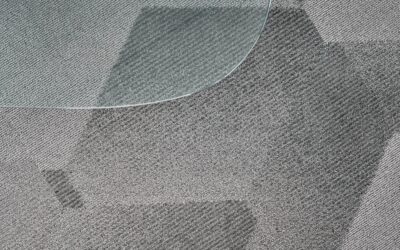
Clear plastic carpet runners look dated but earn their keep. A 27-inch by 12-foot runner from Resilia or Sweethome Stores costs $35 to $75, lays directly on top of carpet, and grips with small plastic spikes molded into the underside. Use them in foyer-to-living-room paths where pets enter wet from outside, or down hallways where multiple dogs run all day. Modern alternatives include clear vinyl with a fabric backing (more attractive, $90 to $140 for the same size) and rubber-backed indoor outdoor rugs.
Waterproof Pet Mats for Specific Zones
Some areas need waterproof protection, not just stain resistance. Food and water bowl areas, crate floors, and litter box surroundings benefit from rubber-backed mats or PVC waterproof rugs. PETMAKER and IRIS USA both make 24 by 36 inch food mats for $15 to $25 that wipe clean and contain spills. For larger crate or sleeping zones, a Furhaven waterproof rug pad placed under a washable bed adds an additional moisture barrier between pet and carpet.
Carpet Tiles for Damaged Sections
If only one area of carpet sees heavy pet abuse, consider replacing that section with peel-and-stick carpet tiles. Flor’s modular tiles ($20 to $40 per 19.7-inch square) and ProSource pet-rated tiles ($8 to $15) let you swap one damaged tile rather than recarpet the room. The visual transition from broadloom to tiles works best when you embrace the change — define the tile area with a clear furniture boundary like a rug pad or a sofa edge rather than trying to blend the seam.
Stair Runners for Multi-Pet Households
Stairs catch hair, mud, and claw damage worse than any other carpet area. A stitched-down stair runner protects the underlying carpet from all of it. Sisal Direct and Stark both sell pet-friendly stair runners in jute or wool blends, installed by a local carpet contractor for $30 to $50 per step including materials and labor. A standard 13-tread staircase runs $700 to $1,200 fully installed and extends the life of the underlying carpet indefinitely. Replace just the runner every 5 to 8 years, leave the carpet beneath alone.
Choose Materials That Survive Pets
Not every fiber holds up to claws and urine. Match the material to the abuse:
- Polypropylene (olefin) — most stain-resistant, cleans with bleach solutions, low cost
- Nylon — durable and resilient, holds up to claw traffic, requires gentler cleaners
- Wool — naturally stain-resistant, expensive but long-lived, professional cleaning preferred
- Polyester — soft and inexpensive, less abrasion-resistant than nylon
- Recycled PET — surprisingly tough, machine washable in smaller sizes
Skip silk, viscose, and rayon entirely — pets will destroy them within months.
Layer Your Defense System
The most successful pet households don’t pick one cover strategy — they layer several. A common winning setup looks like: a sisal entry mat at the front door for paw-wiping, a washable runner down the main hallway, a large washable area rug under the living room furniture grouping, plastic runners during muddy seasons, waterproof mats under food and water bowls, and a wool stair runner over the staircase carpet. Total investment usually lands between $400 and $900, which is less than one-fifth the cost of recarpeting the whole house.
Maintain the Covers on a Regular Cadence
Even the best carpet cover for pets fails if you treat it as install-and-forget. Washable rug covers from Ruggable need a cool 30-minute wash on the gentle cycle every 4 to 6 weeks for an active dog household, and every 8 to 10 weeks for cat-only homes. Tumble dry on low for 25 minutes, never high — high heat shrinks the polyester backing and ruins the velcro grip. Vinyl runners need a weekly wipe-down with a 50/50 vinegar and water mix to lift body oils that otherwise bond to the plastic and yellow it permanently.
Rotate area rugs 180 degrees every three months so foot traffic and sun fade wear evenly across the face. Check the non-slip pad underneath at the same interval — a $30 Mohawk Home pad lasts about 24 months in pet households before the rubber dots crumble and the rug starts sliding. Replacing the pad on schedule prevents the rug from bunching, which is what causes most trip injuries to senior pets and children.
Spot-clean any accident within 90 seconds of discovery. A folded microfiber pressed hard for 20 seconds pulls roughly 80 percent of the liquid out before it can wick into the pad below. Follow with a misting of enzyme cleaner like Nature’s Miracle (about $14 a bottle), wait 10 minutes, then blot a second time. Skipping the enzyme step is why most “trained” pets keep revisiting the same spot — residual proteins broadcast the location no matter how clean it looks to humans.