Pull the water out of a soaked carpet and you are only halfway done; the moisture trapped deep in the fibers and pad is what breeds mold and that stubborn musty smell. A carpet dryer blower, also called an air mover or floor fan, forces high-velocity air across and under the carpet to evaporate that hidden dampness in hours instead of days. Restoration pros stage several of these low-profile machines around a wet room precisely because a household box fan simply cannot match the airflow. Whether you just steam cleaned the living room or you are recovering from a burst pipe, this guide covers how these blowers work, which specs matter, and exactly how to place them.
Why a Carpet Dryer Blower Beats a Regular Fan
A standard oscillating fan pushes maybe 1,000 to 2,000 CFM in a wide, gentle spread. A carpet dryer blower concentrates 800 to 3,200 CFM into a focused, high-velocity stream aimed right at floor level. That directed airflow is what strips the boundary layer of humid air clinging to wet fibers, and it is why an air mover dries carpet two to three times faster.
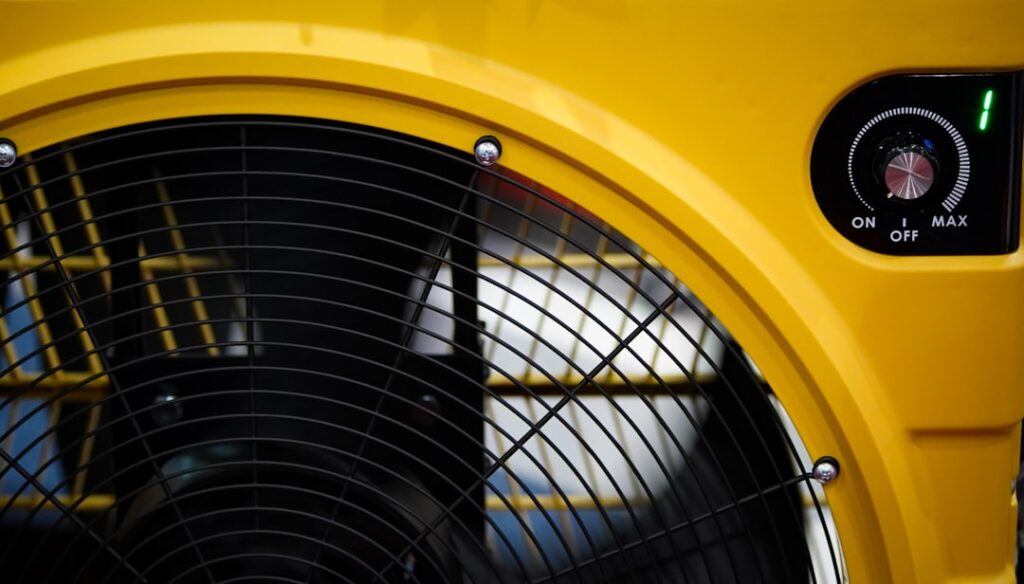
The shape matters too. Most air movers sit low and wide, with a housing angled to blow across the floor or, on many models, up a wall. Several units feature a kickstand so you can tilt the airflow anywhere from flat along the carpet to 90 degrees up. That flexibility lets you dry baseboards, cabinet toe-kicks, and drywall along with the carpet itself.
Types of Carpet Dryer Blowers
Not every air mover is built the same, and the style you pick affects both drying speed and how many outlets you tie up.
- Centrifugal (drum) blowers: The classic snail-shaped units. They deliver strong, focused airflow around 2,000 to 3,000 CFM and are the restoration industry standard. Expect $120 to $250 each.
- Axial air movers: Barrel-shaped fans that move huge volumes of air, often 3,000 CFM or more, while drawing fewer amps. Great for drying large open areas and stacking multiple units on one circuit. Roughly $130 to $220.
- Low-profile utility blowers: Compact, lightweight, and often under $80. Airflow lands around 800 to 1,500 CFM. A solid budget pick for occasional spills and small rooms.
For a single homeowner handling the odd wet carpet, one axial or centrifugal unit does the job. For a whole-house flood, you want three or four running at once.
Understanding CFM and Amp Draw
Two numbers decide how a carpet dryer blower performs in your home. CFM, or cubic feet per minute, measures raw airflow. More CFM means faster evaporation, though anything above 2,500 CFM is overkill for a single bedroom. Amp draw tells you how many units you can run before tripping a breaker.
A typical air mover pulls 1.5 to 4 amps on high. A standard 15-amp household circuit can safely carry roughly 12 amps of continuous load, so you can often chain two or three low-amp axial fans on one outlet using their daisy-chain sockets. Add a dehumidifier, which alone draws 4 to 7 amps, and you will want it on its own circuit. Doing this math up front saves you from popping breakers in the middle of a drying job.
Top Carpet Dryer Blower Picks
These models balance airflow, durability, and price for home use.
- Vacmaster AM201 Air Mover (around $90): A 3-speed centrifugal blower near 800 CFM with a daisy-chain outlet and multiple tilt positions. A great entry point.
- B-Air Vent VP-25 (around $110): A compact 1,500 CFM axial mover weighing just 12 pounds, popular with cleaning pros for its stackability.
- XPOWER P-630HC (around $190): A 2,780 CFM workhorse with a built-in power outlet and even a phone charging port. Handles serious water damage.
- Lasko high-velocity utility blower (around $60): A budget option around 3,000 CFM in a pivoting drum housing. Not restoration-grade, but effective for occasional use.
How to Position a Carpet Dryer Blower for Fast Drying
Placement separates a room that dries in 8 hours from one that stays damp for two days. The goal is to create a moving loop of air that sweeps across every wet surface.
- Angle the airflow along the carpet, not straight down. Point the blower so air skims across the surface at a shallow angle. This lifts moisture instead of just pressing on one spot.
- Set units in a circular pattern. In a square room, place fans in the corners all facing the same rotational direction so the air chases itself around the perimeter.
- Float the carpet when possible. For heavy floods, lift a corner and aim a blower underneath to dry the pad and subfloor directly. This can cut drying time dramatically.
- Pair with a dehumidifier. Blowers move moisture into the air; a dehumidifier pulls it out. Running both together, with windows closed, is how pros hit a dry standard in 24 to 48 hours.
Reposition the units every few hours and check dampness with your hand or a moisture meter. Rotating the airflow reaches spots a static fan misses.
Drying Timelines and What to Expect
After a routine carpet cleaning, one blower usually leaves the carpet dry to the touch in 2 to 4 hours. After a clean-water flood, plan on 24 to 48 hours of continuous running with air movers plus a dehumidifier. Gray or contaminated water changes the equation; that often requires professional remediation and pad replacement rather than just drying in place.
Keep the room sealed off so the dehumidifier is not fighting humid air from the rest of the house. Do not turn everything off overnight to save on electricity. A blower running 24 hours straight costs only a few dollars in power, far less than replacing moldy carpet or treating a health issue down the road.
Track your progress with a cheap pinless moisture meter, which reads dampness through the carpet without probing the fibers. A dry carpet reads roughly the same as an unaffected reference spot in another room. If the numbers stall after 24 hours, you likely have saturated padding that no amount of surface airflow will reach, and floating the carpet to blow air underneath becomes essential rather than optional.
Safety and Maintenance
Electricity and standing water demand respect. Always plug a carpet dryer blower into a GFCI-protected outlet, and never run one while your feet or the cords sit in a puddle. If water is still pooled, extract it first with a wet vacuum before you start the fans.
Maintenance is simple. Wipe the housing after each job, and periodically vacuum dust from the intake grille so the motor breathes freely. Store the unit somewhere dry, and inspect the cord for nicks before every use. Treated with basic care, a quality air mover runs reliably for a decade or more.
Final Thoughts
A good carpet dryer blower is the unsung hero of any water cleanup, turning a potential mold disaster into a manageable afternoon of work. Focus on adequate CFM, a low amp draw so you can run multiple units, and a housing that tilts for flexible placement. Combine directed airflow with a dehumidifier, seal off the room, and let the machines run until the carpet and pad are bone dry. Do that, and your flooring stays fresh, healthy, and free of that telltale musty odor.