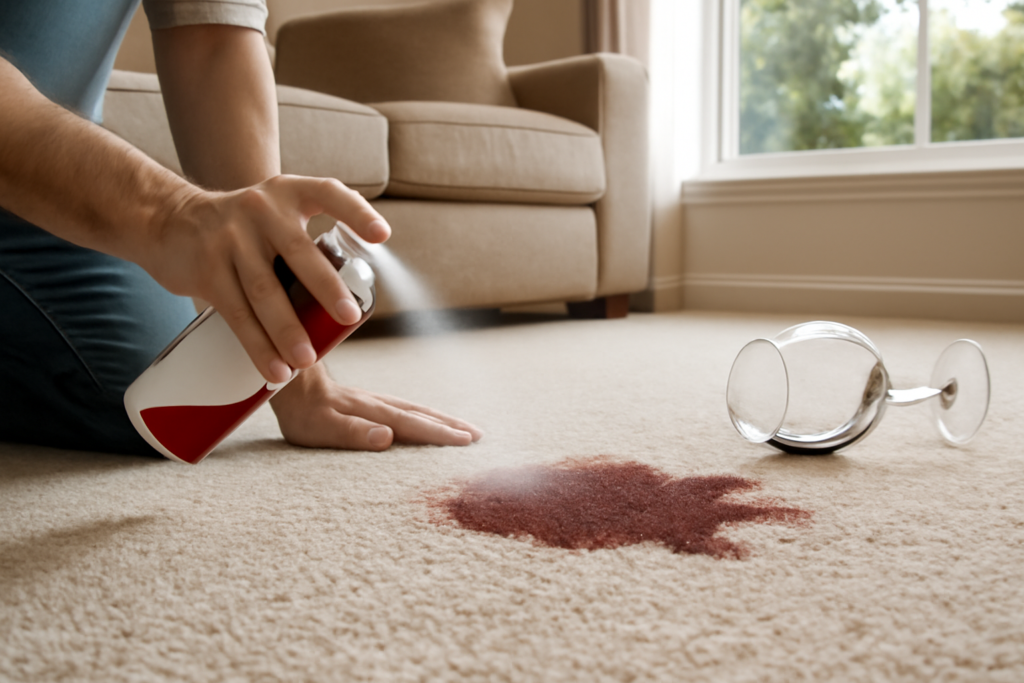
Spill a glass of red wine on treated carpet and it beads up long enough to blot away; spill it on bare fiber and you’re calling a pro. That difference is what a Scotchgard carpet protector is designed to buy you: precious extra minutes before a spill turns into a permanent stain. It’s a genuinely useful product, but it’s widely misunderstood as a magic stain shield. Here’s how the protection actually works and what to realistically expect from it.
How Carpet Protector Works
A fabric protector like Scotchgard coats each carpet fiber with an invisible layer that lowers the surface’s tendency to absorb liquids and hold onto dirt. Instead of a spill immediately wicking into the fiber, the treated surface repels it, so the liquid sits on top and beads. That gives you time to blot it up before it soaks in and bonds. The same coating makes dry soil and dust cling less tightly, so vacuuming pulls out more of it.
The key word is resist, not prevent. The treatment buys you response time and easier cleanup; it does not make carpet bulletproof against every spill.
What It Actually Protects Against
Used correctly, a protector delivers real, everyday benefits:
- Faster spill response — liquids bead instead of instantly absorbing, so blotting works.
- Easier soil removal — dirt releases more readily during vacuuming and cleaning.
- Reduced traffic-lane wear — high-use paths gray and dull more slowly.
- Better stain-cleaner results — spot treatments lift more when the fiber hasn’t fully absorbed the stain.
Think of it as insurance that improves your odds, not a guarantee. Prompt action on your part is still what saves the carpet.
How to Apply It
The most effective time to protect carpet is right after a professional deep cleaning, when the fibers are clean and can accept an even coat. To apply it yourself:
- Clean the carpet thoroughly first; never seal dirt under the coating.
- Vacuum and let the carpet dry, or apply to slightly damp fibers per the label.
- Spray an even, light mist across the surface, keeping the nozzle moving.
- Work the product in lightly with a clean brush or carpet rake for even coverage.
- Ventilate the room and keep off the carpet until it’s fully dry.
Even coverage matters more than heavy coverage. A light, uniform mist protects better than a soaked patchwork, and over-application can leave residue that attracts dirt.
Why Reapplication Is Necessary
Here’s the part that catches people off guard: the protection wears off. Every footstep, vacuum pass, and cleaning gradually abrades the coating, and it fades fastest exactly where you need it most, in the high-traffic lanes. Factory-applied protector on new carpet also diminishes over the first few years.
Plan to reapply periodically, and pay special attention to entryways, hallways, and the paths in front of couches. Many homeowners refresh the treatment after each professional cleaning, roughly once a year, which keeps the coating working where traffic wears it thin.
Honest Expectations
Set your expectations correctly and you’ll be happy with the results; expect miracles and you’ll be let down. A Scotchgard carpet protector will not make stains impossible, and it won’t rescue a spill you leave sitting for hours. Certain aggressive substances still stain treated carpet, and some, like bleach or strong dyes, chemically alter the fiber in ways no protector can stop. The treatment reduces risk and buys time; it does not eliminate the need to act fast and clean up spills promptly.
Still Blot, Not Rub
Even on protected carpet, technique matters when something spills. Blot from the outside of the spill toward the center with a clean white cloth so you don’t spread it, and resist the urge to scrub, which frays fibers and pushes liquid deeper. Because the protector keeps the spill sitting on the surface longer, blotting is far more effective on treated carpet than on bare fiber, so your quick response gets rewarded.
DIY Spray vs. Professional Application
You can buy consumer spray bottles of carpet protector and apply it yourself, or have a carpet cleaning company apply a commercial-grade version as part of a service. Both work, but they differ in strength and coverage. The professional products are typically more concentrated and applied with equipment that lays down an even coat and works it into the fibers, which tends to last longer and cover more consistently.
DIY sprays are convenient and cheap, ideal for refreshing a small high-traffic area or spot-treating between deep cleanings. The trade-off is even coverage; it’s easy to over-apply in one spot and miss another with a handheld bottle. For a whole-house treatment right after a professional cleaning, having the pro apply it is usually the better value. For touch-ups in the entryway or in front of the couch, a DIY bottle does the job.
Which Carpets Benefit Most
Protector helps almost any carpet, but the payoff is biggest in certain situations:
- Light-colored carpet — where every spill and traffic lane shows, the extra stain resistance is invaluable.
- Homes with kids or pets — frequent spills and accidents make faster cleanup a real quality-of-life gain.
- High-traffic areas — hallways and stairs gray and dull slower with a maintained coating.
- Natural-fiber carpets — wool and other absorbent fibers benefit from a repellent layer.
Some carpets arrive with a factory stain treatment already applied, and checking the warranty is smart before you add more; certain manufacturers specify which products are compatible. In most homes, though, a maintained protector meaningfully extends how long the carpet looks new.
Is It Worth It?
For most households, especially those with kids, pets, or light-colored carpet, a carpet protector is inexpensive insurance that genuinely makes cleanup easier and extends how long the carpet looks fresh. The trick is remembering it’s a wear layer that needs periodic renewal, not a one-time forcefield. Keep it refreshed in the traffic lanes, act quickly on spills, and a Scotchgard carpet protector earns its place in your carpet-care routine.
Think of the protector as one part of a broader maintenance system rather than a standalone fix. Regular vacuuming removes the abrasive grit that grinds down both the carpet fibers and the protective coating, so frequent vacuuming actually helps the treatment last. Pairing an annual deep clean and re-treatment with quick spot response and consistent vacuuming is what keeps carpet looking new for years instead of graying out in the walkways.
Weigh the small cost against what carpet replacement runs, and the math favors protection. Extending the life of a carpet by even a couple of years easily pays for the periodic treatment several times over. For the price of a bottle of spray or a modest add-on to a professional cleaning, you get easier cleanups, slower wear, and better odds against the inevitable spills of daily life, which is exactly the kind of low-cost, high-return habit worth building into your routine.