Carpet has a way of holding onto smells long after the source is gone, absorbing pet accidents, cigarette smoke, cooking odors, and the musty dampness of a humid room deep into its fibers and padding. A good carpet odor eliminator spray is the fastest way to freshen a room without renting a machine or replacing the flooring, but not all sprays work the same way, and choosing the wrong type can leave you masking a smell instead of removing it. This guide explains how these products work, which type suits each kind of odor, and how to apply them for lasting results.
Understanding the difference between a spray that hides an odor and one that destroys it is the key to actually solving the problem. Below you will find a breakdown of the main technologies, the best match for common household smells, effective do-it-yourself recipes, and the safety considerations that matter when you have pets and kids on the floor.
How Carpet Odor Eliminator Sprays Work
Odor sprays fall into three broad categories, and knowing which you are buying changes your expectations. Odor-masking sprays simply add a stronger, pleasant fragrance that temporarily covers the bad smell. They are cheap and give an instant fresh scent, but because they do nothing to the odor molecules themselves, the original smell returns as soon as the fragrance fades, often within hours.
The more effective options are encapsulating and enzymatic sprays. Encapsulating products chemically trap or neutralize odor molecules so your nose can no longer detect them, giving longer-lasting results than masking. Enzymatic sprays go furthest by using biological enzymes and beneficial bacteria to actually digest the organic matter causing the smell, such as the proteins in urine or the residue from vomit. Because enzymes eliminate the source rather than covering it, they are the gold standard for stubborn, recurring odors.
Best Options for Pet Odor
Pet smells, especially urine, are the toughest carpet odor challenge because the odor comes from proteins and uric acid crystals that soak into the pad and reactivate with humidity. For these, an enzymatic carpet odor eliminator spray is essential. Products in this category, which typically cost $8 to $15 a bottle, contain enzymes that break down the uric acid so the smell does not come back on damp days. Masking and encapsulating sprays will only cover a urine smell temporarily.
To use an enzyme spray on a pet accident, first blot up any fresh liquid, then saturate the spot generously so the enzymes reach as deep as the urine did, including into the padding. This is one case where you want to apply plenty of product rather than a light mist. Let it dwell according to the label, often several hours or even overnight, because enzymes need time to work. For old, set-in pet odors you may need to repeat the treatment two or three times.
Best Options for Smoke and Musty Smells
Cigarette smoke and general staleness embed themselves in carpet fibers as fine particles and tar residue. For smoke, look for a spray specifically formulated to neutralize smoke odor, ideally an encapsulating or oxidizing product rather than a simple air freshener. These break down the smoke compounds rather than layering perfume over them. Severe smoke saturation, such as in a home where someone smoked indoors for years, may need repeated treatments combined with a deep extraction cleaning.
Musty and mildew smells come from moisture and microbial growth, so the spray needs to address the underlying dampness as well as the odor. An antimicrobial or enzyme-based spray helps eliminate the mildew smell, but you also have to fix the moisture source, whether that is a leak, high humidity, or a damp basement, or the smell will simply return. Running a dehumidifier and improving ventilation alongside the spray treatment makes the difference between a temporary fix and a lasting one.
DIY Baking Soda and Vinegar
Before buying a commercial product, many odors respond well to inexpensive home ingredients. Baking soda is a natural deodorizer that absorbs odor molecules rather than covering them. Sprinkle a generous, even layer over the affected carpet, let it sit for at least a few hours or overnight for strong smells, then vacuum it up thoroughly. This simple treatment works remarkably well on general staleness, light pet odor, and the everyday funk that builds up in high-traffic rooms.
For a DIY spray, mix equal parts white vinegar and water in a spray bottle and mist the carpet lightly. The vinegar smell is sharp at first but dissipates as it dries, taking many odors with it because the acid neutralizes alkaline odor compounds. For tougher jobs, apply the vinegar solution, let it dry, then follow with a baking soda treatment; the two work well as a one-two combination. Always test any homemade spray on a hidden area first to be sure it will not affect the carpet color.
How to Apply for Best Results
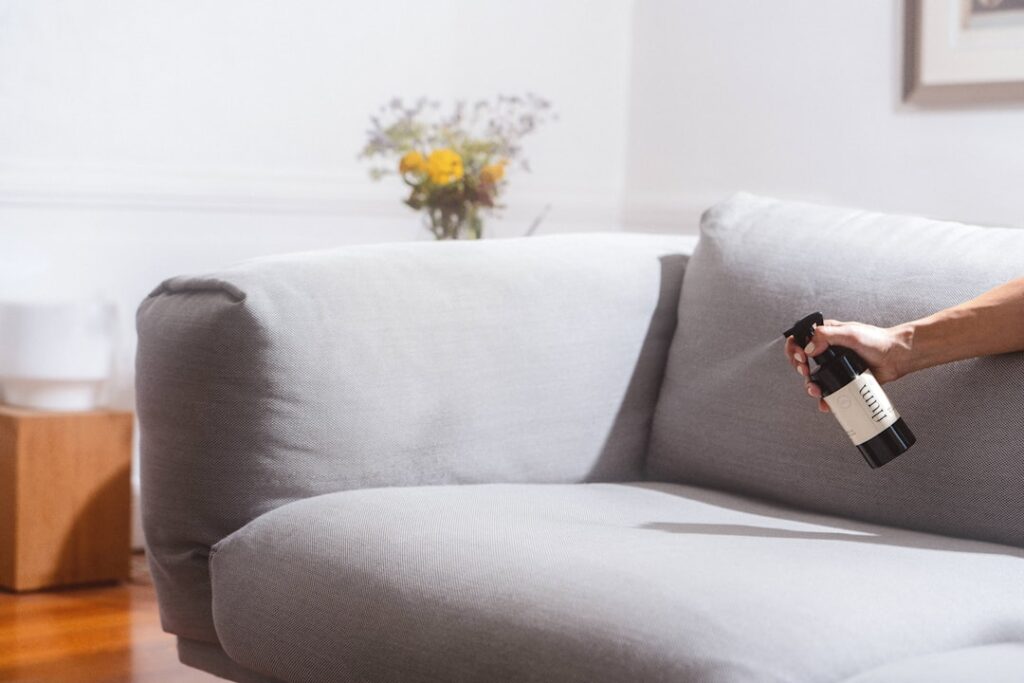
Whatever product you choose, application technique determines how well it works. Vacuum the carpet first to remove loose dirt and hair so the spray can reach the fibers, then shake the bottle and mist evenly across the affected area, holding the nozzle six to eight inches from the surface. For surface odors a light, even coat is enough; for odors that have soaked into the pad, such as pet urine, apply enough to penetrate to the same depth as the original spill.
Respect the dwell time on the label, because it is not optional. Encapsulating sprays usually need several minutes to bond with odor molecules, while enzymatic products need hours to fully digest organic matter. Let the treated area dry completely, ideally with a window open or a fan running to speed evaporation and carry odor away. Rushing the drying or walking on a damp treated area reduces the effectiveness and can grind the product deeper unevenly.
Safety Around Pets and Kids
Because carpet sits at floor level where children crawl and pets rest, safety matters. Choose sprays labeled non-toxic and pet-safe, and keep both kids and animals off the treated area until it has dried fully, which is typically a few hours. Enzyme-based products are generally among the safest because they rely on natural biological action rather than harsh chemicals, but you should still ventilate the room well during and after application.
Read labels carefully if anyone in the home has asthma or fragrance sensitivities, since even natural sprays can trigger reactions in sensitive individuals; fragrance-free enzymatic formulas are a good choice in those households. Store all products out of reach of children and pets, and never mix cleaning chemicals, especially anything containing bleach with an ammonia-based cleaner, as the combination produces dangerous fumes. When in doubt, an unscented, plant-based enzyme spray is the safest all-around option.
When to Call a Pro or Replace the Padding
Sprays have limits. If an odor keeps returning after repeated enzyme treatments, the smell has likely soaked through the carpet into the padding and possibly the subfloor beneath, which no surface spray can reach. This is common with severe or long-standing pet urine problems, where a cat or dog repeatedly used the same spot. At that point, professional carpet cleaning with a deep hot-water extraction may pull out contamination that home products cannot.
When even professional cleaning fails, replacing the padding, and sometimes sealing or treating the subfloor, is the only permanent fix, because that is where the odor is actually living. A professional can pull back the carpet, replace the affected pad, treat the subfloor with a specialized sealer, and re-lay the carpet, eliminating the source entirely. While that is more involved than a bottle of spray, it is far cheaper than replacing the whole carpet and finally ends an odor that has resisted every other approach. For everyday freshening, though, the right carpet odor eliminator spray handles the vast majority of household smells quickly and affordably.
Building an Odor-Free Routine
The most effective way to keep carpets smelling fresh is to stop odors from building up in the first place rather than fighting them after they take hold. Vacuum high-traffic rooms at least twice a week to pull out the hair, dander, and food particles that decompose and turn sour over time. A light monthly baking soda treatment, sprinkled on and vacuumed off, keeps ambient odors from accumulating and costs only pennies per application.
Combine that routine with prompt cleanup of any spill or accident, since a fresh mess is always easier to deodorize than one that has dried and soaked into the pad. Keep a bottle of enzyme spray on hand specifically for pet incidents, treat them immediately, and you will rarely need the heavier interventions. With consistent maintenance and the right spray matched to each type of odor, most homes can stay fresh without ever resorting to professional cleaning or padding replacement.