Spot cleaners and shampooers do a lot, but sometimes a stain needs the mechanical agitation only a good carpet scrubber brush can provide. Working cleaning solution deep into the fibers and breaking up ground-in dirt, the right brush lifts stains that would otherwise linger. From simple handheld brushes to drill-powered attachments and full electric scrubbers, there is a tool for every level of cleaning. This buying guide explains the main types, the bristle features that matter, and how to choose and use a carpet scrubber brush without damaging your carpet.
- Why a Carpet Scrubber Brush Makes a Difference
- Types of Carpet Scrubber Brushes
- Bristle Types and What They Mean
- Top Picks by Cleaning Need
- How to Use a Carpet Scrubber Brush Correctly
- Maintenance and Cleaning of Your Brush
- Mistakes to Avoid
- Pairing Your Brush With the Right Cleaner
- Final Thoughts on Choosing a Carpet Scrubber Brush
Why a Carpet Scrubber Brush Makes a Difference
Carpet fibers trap dirt, oils, and stains deep in the pile where surface wiping never reaches. Agitation is the key to loosening that embedded grime, and that is precisely what a scrubber brush provides. By physically working the fibers, the brush breaks the bond between dirt and carpet and helps cleaning solution penetrate to the base of the pile. This is why professional cleaners always agitate before extraction, and why a stain that resists blotting often surrenders to a few passes with a brush.
The catch is that carpet is delicate. Too stiff a brush or too aggressive a motion can fray or distort the fibers, especially on plush or looped carpet. Choosing the right brush and using proper technique gets you deep cleaning power without damage.
Types of Carpet Scrubber Brushes
Carpet scrubber brushes come in several forms, each suited to different jobs and effort levels:
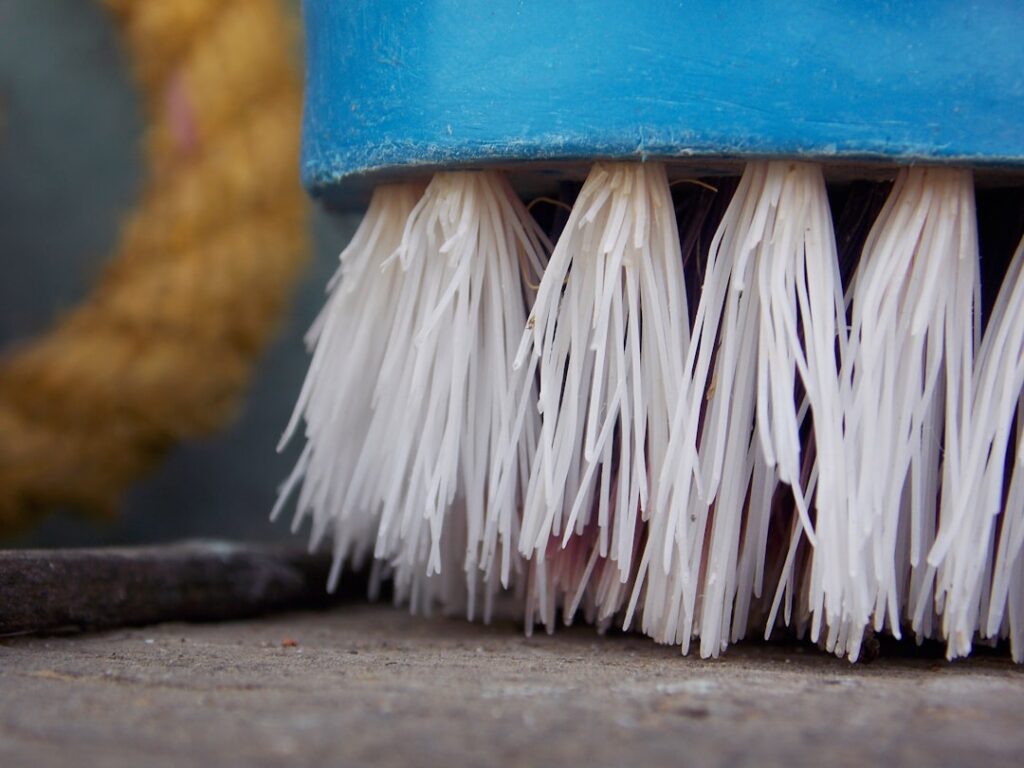
- Manual handheld brushes: Simple brushes you scrub by hand, ideal for spot-treating stains and small areas. Affordable and gentle when you control the pressure.
- Grout-and-tile style stiff brushes: Firmer brushes for tough, set-in stains on durable carpet, used carefully to avoid fiber damage.
- Drill brush attachments: Bristled discs or cups that snap into a cordless drill, delivering powered scrubbing with far less effort.
- Electric carpet scrubbers: Dedicated powered machines with rotating brushes for deep cleaning larger areas.
- Long-handled deck-style brushes: Let you scrub without kneeling, useful for larger floor areas and stairs.
For most homeowners, a quality manual brush plus a set of drill brush attachments covers nearly every situation, from quick spot fixes to serious deep cleaning, at a modest cost.
Bristle Types and What They Mean
The bristles are the heart of any carpet scrubber brush, and matching them to your carpet is crucial. Soft nylon bristles are gentle and safe for delicate, plush, and light-colored carpets, making them the safest all-around choice. Medium-stiffness bristles handle standard cut-pile carpet and moderate stains with more scrubbing power. Stiff bristles tackle tough, ground-in stains on durable, low-pile, or commercial carpet, but they can damage soft fibers if used too aggressively.
For drill brush attachments, bristles are often color-coded by stiffness, letting you match the right hardness to the task. When in doubt, start with a softer brush and increase stiffness only if the stain resists. It is always easier to scrub a little harder than to repair frayed carpet fibers.
Top Picks by Cleaning Need
The best brush depends on what you are trying to accomplish. Here is how to match tool to task:
- Best for occasional spot stains: A soft-to-medium manual handheld brush. Cheap, gentle, and always ready for spills.
- Best for effort-free deep scrubbing: A drill brush attachment kit with multiple stiffness levels, powered by a cordless drill.
- Best for large areas and whole rooms: An electric carpet scrubber that covers ground quickly with consistent agitation.
- Best for stairs and edges: A compact handheld or small drill brush that reaches tight spots.
- Best budget all-rounder: A dual-sided manual brush with soft and medium bristles for versatility.
Many people build a small kit over time, keeping a manual brush for emergencies and adding drill attachments when they want more scrubbing power without the workout.
How to Use a Carpet Scrubber Brush Correctly
Technique protects your carpet while getting it clean. Follow these steps:
- Vacuum first: Remove loose dirt so you are not grinding grit into the fibers while scrubbing.
- Apply cleaner and let it dwell: Spray a carpet-safe cleaning solution and give it a few minutes to break down the stain.
- Scrub gently in a pattern: Work the brush in small circles or back-and-forth strokes, using light to moderate pressure.
- Blot, do not soak: Blot up the loosened dirt and moisture with a clean towel rather than saturating the carpet.
- Rinse and dry: Wipe with clean water to remove cleaner residue, then dry thoroughly with fans or open windows.
Avoid over-scrubbing one spot, which can distort or fray the pile. For drill brushes, use a low speed and let the bristles do the work rather than pressing hard. Always test cleaning solutions on a hidden area first to check for colorfastness.
Maintenance and Cleaning of Your Brush
A carpet scrubber brush works better and lasts longer when kept clean. Rinse the bristles after each use to remove trapped dirt and cleaning solution, then let the brush dry fully to prevent mildew and odor. Pick out any lodged hair or debris so the bristles stay effective. For drill attachments, wipe the connection stem clean and check that the bristles have not splayed or worn down, replacing them when they lose their scrubbing shape. Store brushes bristle-side up or hanging so the bristles keep their form. Well-maintained brushes deliver consistent results for years.
Mistakes to Avoid
A few common errors can turn cleaning into damage. Using a stiff brush on soft or looped carpet frays and fuzzes the fibers, so match stiffness to the pile. Scrubbing too hard or too long in one spot distorts the texture and can leave a visible worn patch. Over-wetting the carpet leads to slow drying, mildew, and even browning. Skipping the vacuum step grinds abrasive grit into the fibers. And using harsh, non-carpet-safe cleaners can discolor or degrade the pile. Gentle, patient scrubbing with the right brush and cleaner beats aggressive force every time.
Pairing Your Brush With the Right Cleaner
A carpet scrubber brush is only half of the cleaning equation; the solution you pair it with matters just as much. For general dirt and traffic lanes, a diluted carpet-safe detergent or a dedicated carpet cleaning solution works well with gentle brushing. For pet stains and odors, an enzyme-based cleaner is far more effective because it digests the organic residue rather than just lifting the surface stain, and brushing helps drive it into the fibers where the odor lives. For greasy or oily spots, a solution formulated to cut grease will loosen the stain so the brush can lift it.
Always match the cleaner to both the stain and the carpet fiber. Some natural fibers like wool are sensitive to high-alkaline or harsh cleaners, so check that your solution is safe for your carpet type, and test any product on a hidden area first to confirm it will not discolor the pile. Avoid over-applying cleaner, since excess residue attracts dirt and leaves the carpet feeling stiff or sticky once dry. A light application of the right solution, worked in gently with an appropriately soft brush and then blotted and rinsed, delivers far better results than aggressive scrubbing with a harsh product. Getting this pairing right is what turns a stubborn stain into a clean, fresh patch of carpet.
Final Thoughts on Choosing a Carpet Scrubber Brush
A good carpet scrubber brush is an inexpensive tool that dramatically improves your ability to lift stains and deep-clean carpet, because agitation reaches the embedded dirt that surface cleaning cannot. Match the bristle stiffness to your carpet, choose a manual brush for spot fixes and drill attachments or an electric scrubber for bigger jobs, and always scrub gently after vacuuming and applying a carpet-safe cleaner. Keep the brush clean between uses, avoid over-wetting and over-scrubbing, and you will keep your carpets fresh, bright, and stain-free with minimal effort and expense.