Living with dogs and cats means accidents, shedding, muddy paws, and the occasional clawed loop, and ordinary carpet rarely survives it gracefully. Pet proof carpet is shorthand for carpet engineered to resist stains, odors, and wear from animals, combining the right fiber, construction, and protective treatments. No carpet is truly indestructible, but the right choice gets remarkably close and makes cleanup far easier.
What “Pet Proof” Really Means
The term describes a set of features rather than a single product. A genuinely pet-friendly carpet typically has a stain-resistant fiber, a moisture barrier to stop accidents from soaking into the pad, and a durable construction that hides and resists wear. Some products bundle all of this into a marketed system, while others let you assemble the pieces.
Understanding the components lets you judge marketing claims honestly. A carpet labeled pet-friendly without a moisture barrier still lets urine reach the subfloor, where odors live forever. The best options address the surface, the spill, and the structure together.
The Best Fibers for Pets
Fiber choice is the foundation, and a few perform far better than the rest.
- Solution-dyed nylon: Durable and resilient, with color locked into the fiber so it resists fading and aggressive cleaning.
- Polyester (PET): Naturally stain-resistant and soft, a strong value pick, though slightly less resilient under heavy traffic.
- Triexta (PTT): Engineered for inherent, permanent stain resistance that does not wash out, popular in pet-focused product lines.
- Olefin (polypropylene): Highly moisture- and stain-resistant, often used in loop styles, but less plush.
Wool, while beautiful, is generally a poor fit for homes with pets prone to accidents because it absorbs moisture and stains more readily.
Construction and Pile Matter
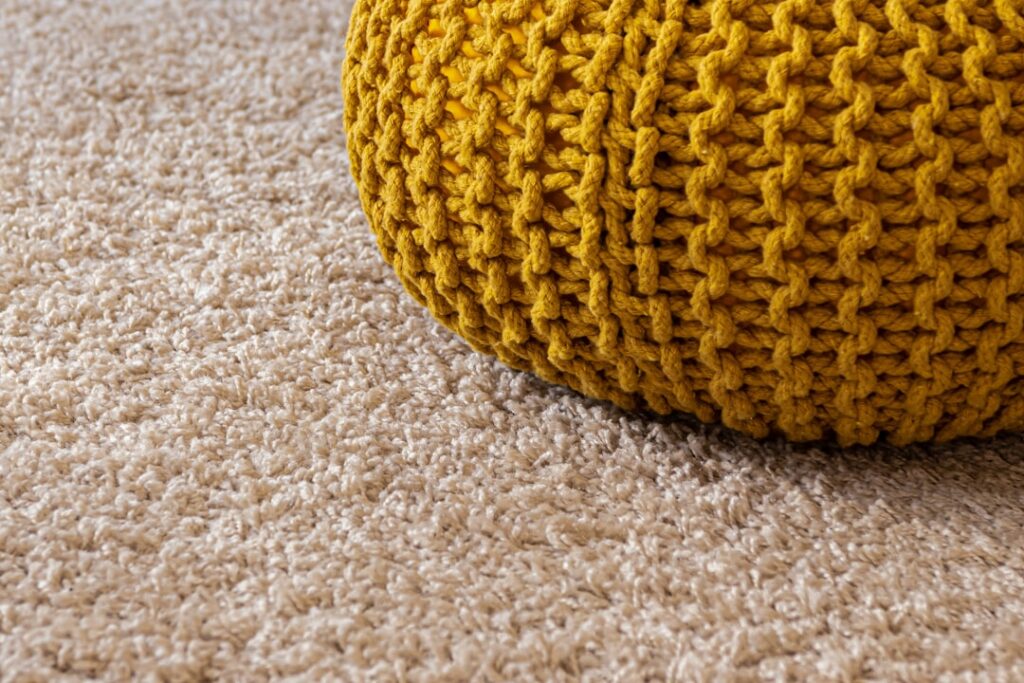
How the carpet is built affects how it holds up to claws and traffic. Cut-pile styles in a tight, dense construction resist matting and hide soil. Avoid high, looped Berber in cat households, because claws can snag and pull individual loops into long runs.
Density is your friend. A denser carpet has more fiber packed in, which means better durability and a surface that hides pet hair and footprints. When shopping, press your fingers into the pile; if you easily feel the backing, the carpet is sparse and will wear faster.
Stain Protection and Moisture Barriers
The real battle with pets is liquid. Two layers of defense make the difference:
- Topical or built-in stain treatment: Coats fibers so spills bead up and wipe away before setting.
- Integrated moisture or pet barrier backing: Blocks liquid from passing through to the pad and subfloor, where it would cause lingering odor.
Pairing a stain-resistant fiber with a moisture-barrier backing and a quality pad designed for pet households gives you the most complete protection. Some pads even include antimicrobial and moisture-resistant features specifically for this purpose.
Handling Accidents and Daily Cleaning
Even the best carpet needs prompt, correct cleaning. Speed is everything with pet accidents, since the longer urine sits, the deeper the odor sets.
- Blot fresh spills immediately with a clean cloth; never scrub, which spreads the stain.
- Use an enzymatic cleaner formulated for pet messes to break down odor-causing compounds.
- Rinse with water and blot dry to remove residue that attracts dirt.
- Vacuum two or more times a week to stay ahead of shedding and dander.
- Schedule a deep clean every 6 to 12 months depending on how many pets you have.
Avoid steam-cleaning a fresh urine spot before treating it with enzymes, because heat can set the odor permanently.
What Pet Proof Carpet Costs
Pet-focused carpet spans a broad price range. As a general estimate, quality stain-resistant carpet often runs from about $2 to $7 per square foot for materials, with premium triexta and integrated-barrier systems landing higher. Add installation and a good pad, and budget accordingly. These are rough figures, so gather local quotes and factor in the long-term savings from not replacing damaged carpet early.
Spending a bit more upfront on the right fiber and backing usually pays off, since you avoid the recurring cost and frustration of stains that never fully come out.
Reducing Shedding, Dander, and Odor
Stain resistance gets the headlines, but pet households deal with hair and smell every single day, and your carpet choice influences both. Low-pile, dense constructions trap less fur and release it more easily to the vacuum than deep, plush piles where hair works its way down to the backing. A carpet with a tight surface is simply easier to keep fur-free.
Odor is a function of what soaks in and what lingers on the surface. A moisture barrier stops liquids from reaching the pad, which is where deep odors take hold, while regular cleaning keeps surface dander from building into that distinctive pet smell. Layer these habits for the best results:
- Vacuum with a unit that has strong suction and good filtration to capture dander, not just hair.
- Use a quality entry mat to cut the dirt and moisture pets track in from outside.
- Sprinkle a carpet-safe deodorizer between deep cleans, then vacuum it up thoroughly.
- Keep humidity in check, since damp carpet holds odor longer.
Color and pattern help disguise the inevitable too. A mid-tone, multi-tone or flecked carpet hides stray fur and minor spots far better than a solid light or dark shade, buying you time between cleanings. Combine the right fiber, a moisture barrier, and consistent maintenance, and you control the two problems pet owners notice most.
Making the Right Choice
For a home with pets, the winning combination is a stain-resistant fiber like solution-dyed nylon, polyester, or triexta, built in a dense cut pile, paired with a moisture-barrier backing and a pet-rated pad. Add fast, enzyme-based cleanup habits and regular vacuuming, and your carpet will look good and smell fresh for years. Pet proof carpet will not make your floor invincible, but choose wisely and it will handle real life with four-legged family members far better than standard carpet ever could. When you shop, bring your specific situation to the conversation: the number and size of your pets, whether accidents are common, and how much traffic the room sees. Ask the retailer about the fiber, the backing, and the recommended pad as a system rather than buying any one piece in isolation. The right combination, matched to your household, is what turns carpet from a constant source of stress into a surface you can actually relax on.