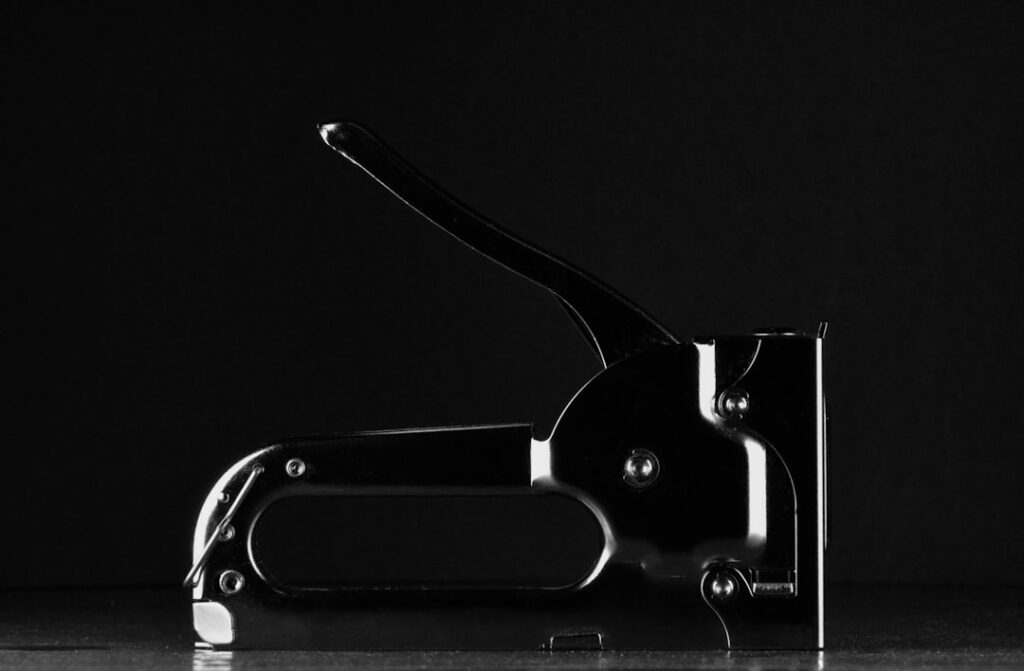
Stretching carpet gets all the attention, but the part that quietly determines whether a job looks clean is the fastening underneath. A good carpet staple gun is what locks the padding down flat and holds seam tape, tack strips, and pad edges in place so nothing shifts while you work. Grab the wrong gun or the wrong staple length, and you’ll either fail to bite the subfloor or punch staples clean through thin underlayment. This guide covers the staple gun types that actually work for carpet, how to size the staples, and the technique that keeps padding tight.
What a Staple Gun Does in a Carpet Job
Carpet itself usually isn’t stapled, it’s stretched and tucked into tack strips around the perimeter. The staple gun’s job is the layer underneath. It fastens the carpet pad to a wood subfloor so the pad lies flat and won’t bunch or slide. It also tacks down seam tape, secures pad seams to each other, and handles edge work around vents, closets, and transitions.
Get the padding right and the finished carpet feels even and supported. Skip stapling or do it badly, and the pad shifts under traffic, creating ripples and soft spots that telegraph straight through the carpet within months.
The Staple Gun Types Worth Considering
Manual Hand Stapler
The classic squeeze-handle staple gun. Cheap, no power needed, and fine for a small closet or a single room if you have the hand strength. The downside is fatigue. Stapling padding around a whole room means hundreds of squeezes, and a stiff manual gun will wear out your hand fast. Look for one rated for heavy-duty staples up to 9/16 inch.
Electric Staple Gun
Plug it in and pull a trigger. Far easier on your hands than manual, and plenty powerful for pad and seam tape. A solid middle ground for DIYers doing one or two rooms. Corded models keep going as long as you do, and they drive staples consistently without the squeeze.
Pneumatic Staple Gun
The pro choice. Powered by an air compressor, it drives staples instantly with a light trigger pull and never tires you out. If you’re carpeting a whole house or doing this regularly, a pneumatic narrow-crown stapler is worth the setup. The tradeoff is needing a compressor and hose dragging around the room.
Hammer Tacker
A swing-and-strike tool that fires a staple on impact, like a hammer. Carpet installers love these for padding because you can move fast, swinging down each strip in seconds. It takes a little practice to place staples accurately, but for speed on open floor it’s hard to beat.
Choosing the Right Staple Size
Staple length is where most mistakes happen. Too short and the staple won’t grip the subfloor; too long and you risk punching through thin plywood or hitting something below. For most carpet padding over a standard 3/4-inch wood subfloor, a crown staple in the 1/2-inch to 9/16-inch range is the sweet spot.
- Carpet pad to plywood subfloor: 1/2-inch to 9/16-inch crown staples
- Seam tape and lighter pad: 3/8-inch to 1/2-inch staples
- Thicker rebond pad: 9/16-inch staples for a confident bite
Crown width matters too. Most carpet work uses heavy-duty staples with a crown around 3/8 inch, which spreads the holding force without tearing the pad. Always match the staple type to your specific gun; a gun built for fine wire brad staples won’t accept the heavier crown staples carpet padding needs.
How to Staple Carpet Padding Correctly
Lay the pad with the right side up, usually the smoother, more finished face. Butt seams together without overlapping, because overlapped pad creates a ridge that shows through carpet. Then staple in a logical pattern:
- Staple along the perimeter first, just inside the tack strips, every 6 to 12 inches
- Run staples down the center of each pad seam to lock the edges together
- Add staples across the open field every 12 to 18 inches so the pad can’t shift
- Keep staples flush with the pad surface, not proud and not punched deep enough to tear it
The goal is a pad that lies dead flat with no movement when you tug it. Walk the floor afterward and feel for loose spots. Any area that shifts under your foot needs another staple before the carpet goes down.
Subfloor and Safety Cautions
Concrete subfloors change everything. You can’t staple into concrete, so pad over a slab gets glued or taped down instead, with a stapler used only where wood transitions exist. Don’t force a staple gun against masonry; it won’t penetrate and you’ll just bend staples.
Mind what’s under thin subfloors, too. In areas with radiant heat lines, plumbing, or wiring running close to the surface, a long staple can do real damage. When in doubt, use the shortest staple that still grips and avoid stapling directly over known utility runs.
Treat the tool with respect. Even a manual carpet staple gun drives with enough force to break skin, and electric and pneumatic models far more so. Keep your free hand clear of the nose, never point it at anyone, and disconnect air or unplug power when you clear a jam.
Buying Advice
Troubleshooting Common Stapling Problems
Even the right gun has off days, and most jams and misfires trace to a few causes. Staples that won’t drive flush usually mean you’ve chosen too long a staple for the subfloor, or the gun lacks the power for that staple in that material; drop down a size or switch to a more powerful gun. Staples bending or jamming often comes from mixing staple brands or using staples not made for your specific gun, so stick to the staple type the manufacturer specifies.
If the gun fires but the staple barely grips, the nose may not be pressed firmly flat against the pad and subfloor, which lets force escape. Keep the tool flat and apply downward pressure as you fire. For pneumatic guns, low air pressure causes weak drives; check that the compressor is set to the staple gun’s recommended PSI. Clearing a jam is simple but do it safely: unplug or disconnect air first, open the magazine, and remove the bent staple before reloading.
Renting Versus Buying
If this is a one-time carpet job, renting a pneumatic stapler and compressor from a home center can make more sense than buying, especially since pro-grade tools cost more than a single project justifies. For a small closet or one room, though, an inexpensive electric or manual gun you keep is the better play, since it earns its keep on upholstery, insulation, house wrap, and trim work down the road. Weigh how often you’ll realistically reach for it.
For a one-room project, an electric staple gun in the $25 to $50 range handles padding and seam tape comfortably and stays useful for upholstery and trim later. For whole-house carpeting or repeat work, invest in a pneumatic narrow-crown stapler or a hammer tacker that a pro would actually reach for. Whatever you buy, stock the correct staples in two lengths so you can adapt to thin and thick pad without stopping mid-job. The right carpet staple gun makes the padding step quick and clean, and clean padding is what makes the finished carpet look and feel right for years.