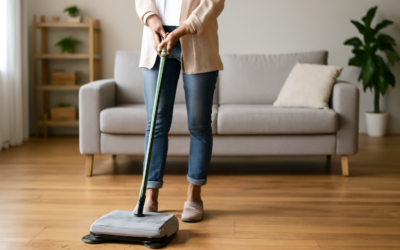
Long before cordless vacuums, the carpet sweeper kept floors tidy with nothing but a pair of rotating brushes and a little muscle. Far from obsolete, this simple manual tool has quietly stuck around because it does a handful of jobs better than a vacuum: quick cleanups, quiet operation, and zero cords or charging. If you have ever wished for a faster way to grab crumbs after dinner without dragging out a noisy machine, a carpet sweeper might be exactly what you need. Here is how they work and when they make sense.
How a Carpet Sweeper Works
The mechanism is elegantly simple. As you push the sweeper across the floor, the wheels turn an internal brush roller through a gear or friction drive. The spinning brushes flick dirt, crumbs, hair, and lint up off the surface and into one or more dust trays inside the body. There is no motor, no suction, and no electricity involved. When the trays fill, you pop them open, empty them into the trash, and you are done. The whole thing weighs just a few pounds and stands ready in a closet or behind a door.
The Real Advantages
A carpet sweeper earns its keep in specific situations where a vacuum is overkill.
- Silent operation: No motor means you can sweep while a baby naps or a movie plays.
- Instant and cordless: Grab it and go, with nothing to plug in or charge.
- Lightweight and compact: Easy to maneuver, store, and carry up stairs.
- Gentle on rugs: Works well on delicate and low-pile rugs without aggressive beating.
- Great for both surfaces: Many models handle low-pile carpet and hard floors equally well.
The Limitations to Know
A sweeper is a supplement, not a replacement for a vacuum. Because it relies on brushing rather than suction, it cannot pull embedded dirt, fine dust, or allergens deep out of carpet pile. It struggles on thick, high-pile carpet where the brushes cannot reach the base, and it will not deep clean. Think of it as the tool for surface debris between proper vacuumings, not the only cleaning your carpet ever gets. For dust-sensitive households, regular vacuuming with a filter still does the heavy lifting.
Best Uses Around the Home
Carpet sweepers excel at fast, frequent touch-ups. Use one in the dining room to whisk up crumbs after meals, in entryways for tracked-in debris, and in living rooms for pet hair and lint on rugs. They are popular in spaces where quiet matters, such as offices, libraries, and restaurants, and they are handy for renters and small apartments where storage is tight. Keep one near high-mess zones and you will reach for it constantly instead of hauling out the vacuum for every little spill.
Choosing a Carpet Sweeper
A few features separate a good sweeper from a frustrating one. Look for dual rotating brushes for better pickup, and a model with brushes designed for both carpet and hard floors if you have mixed flooring. Corner brushes help capture debris along edges and baseboards. A swivel head and a comfortable, sometimes folding handle improve maneuverability and storage. Larger or easy-empty dust trays mean fewer trips to the trash. Many quality sweepers are inexpensive, often in the $20 to $60 range, so it is an easy tool to add to your kit.
Keeping It Working Well
Maintenance is minimal but worth doing. Empty the dust trays before they overfill, since a packed tray reduces pickup. Periodically pull hair and string tangled around the brush roller, which is the most common cause of poor performance. Wipe the wheels and brushes clean so they grip and turn smoothly. Store the sweeper upright in a dry spot. With a few minutes of care now and then, a carpet sweeper will serve quietly for years.
Carpet Sweeper vs Robot Vacuum vs Stick Vacuum
It is fair to ask how a manual sweeper stacks up against modern alternatives. A robot vacuum runs automatically and handles routine whole-floor cleaning, but it is slow, needs charging, and cannot be grabbed for an instant spot cleanup. A cordless stick vacuum offers real suction and versatility, yet it still requires charging, makes noise, and costs far more. The carpet sweeper occupies a unique niche: it is instant, silent, free of batteries, and weighs almost nothing. Many homes use all three, letting a robot handle daily floors, a stick vacuum tackle deep cleaning, and a sweeper grab the quick crumbs in between. They complement rather than compete.
Tips for Better Sweeping Results
A few small techniques noticeably improve pickup. Sweep in multiple directions rather than just back and forth, since the brushes grab debris better when you cross your path. Slow down slightly on carpet so the brushes have time to flick debris into the tray. On hard floors, a steady, even pace works best. Empty the trays before they get more than about two-thirds full, because a packed tray loses efficiency fast. For stubborn lint and pet hair, a slower pass with light downward pressure helps the brushes engage. And keep the brush roller free of tangled hair, which is the single biggest factor in how well the sweeper performs.
Is a Carpet Sweeper Right for You?
If you want a quiet, grab-and-go tool for daily crumbs, pet hair, and surface debris, a carpet sweeper is a genuinely useful companion to your vacuum, not a gimmick. It will not deep clean carpet or replace a vacuum’s suction, but for fast cleanups, quiet operation, and effortless storage, this old-school device still earns its place in the closet.
For the right household, the value is obvious. Apartment dwellers, families with kids who drop crumbs constantly, pet owners battling shed hair on rugs, and anyone who hates the noise of a vacuum will get daily use out of a sweeper. It is also a thoughtful tool for older adults or anyone who finds a full vacuum heavy or cumbersome, since a sweeper is light and effortless to push. Keep your expectations matched to what it does best, surface debris and quick touch-ups, and pair it with a proper vacuum for deep cleaning. Used that way, an inexpensive carpet sweeper quietly saves you time every single day.