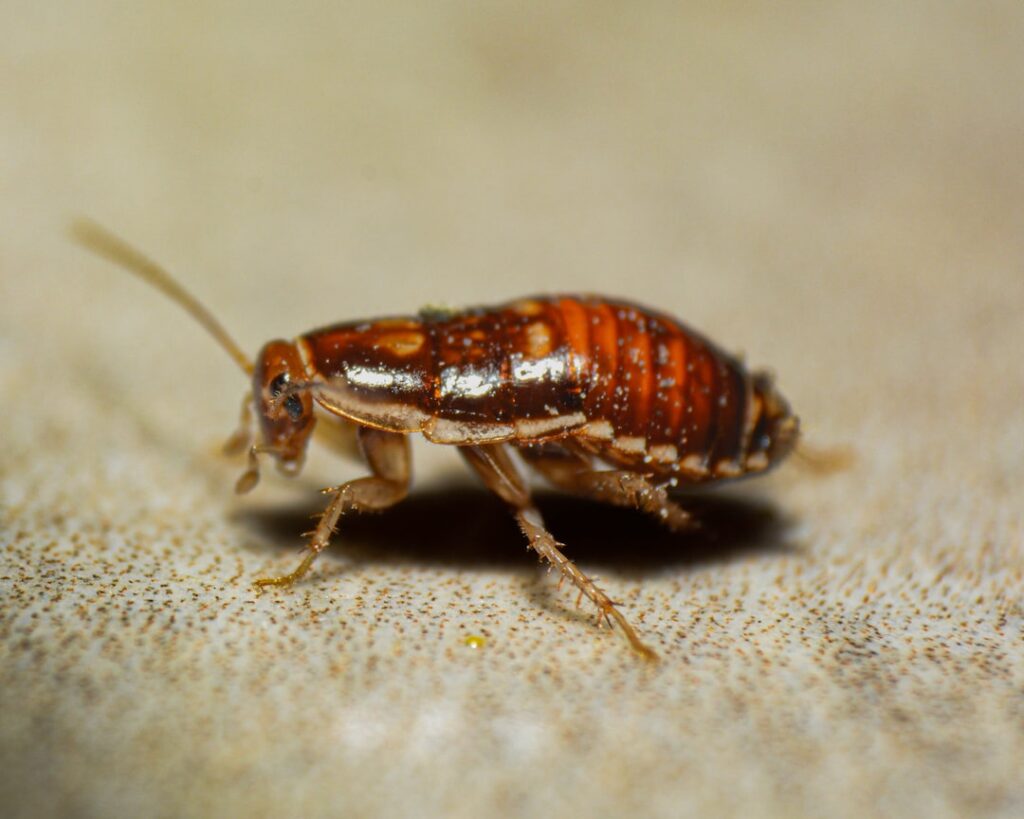
A German cockroach can squeeze through a gap of 1/16 of an inch — about the thickness of a nickel. That single fact explains why the right caulk for roaches does more long-term good than another round of spray from the hardware store aisle. Exterminators call the strategy exclusion, and it is the reason some kitchens stay clean for years while the neighbor two doors down battles the same infestation every summer. Bait kills the roaches you have; caulk cuts off the highway that keeps delivering new ones. I have sealed a lot of kitchens behind flooring and backsplash jobs, and the difference a $6 tube makes is honestly hard to overstate.
Part of our Paint & Walls guide — explore the full guide →
Which Caulk Actually Stops Roaches
Roaches do not chew through cured caulk the way rodents gnaw foam, so you have more latitude here than with mice. Still, the three main chemistries behave very differently over time, and the wrong pick fails in exactly the humid, greasy places roaches love.
100% silicone is the workhorse for kitchens and baths. It stays flexible for 20-plus years, shrugs off water and cleaning chemicals, and holds its seal around pipes that vibrate or shift. GE Advanced Silicone Kitchen & Bath runs about $9 a tube and is my default around sink plumbing and backsplash joints. The downside: you cannot paint it, and it needs a clean, dry surface to bond.
Acrylic latex (painter’s caulk) is fine for baseboards, door casings, and drywall cracks in living areas where you want to paint over the bead. DAP Alex Plus costs around $4 and tools with a wet finger. It shrinks and can crack within 5 to 10 years, so treat it as the cosmetic-area option, not the under-sink option.
Polyurethane is the heavy-duty pick for exterior work — sill plates, foundation cracks, gaps around hose bibs and conduit. Loctite PL S30 or Sikaflex 1a ($8 to $12) bond aggressively, cure tough enough to resist abrasion, and flex through freeze-thaw cycles. Wear gloves; uncured polyurethane sticks to skin like nothing else in the aisle.
Know Your Enemy’s Measurements
Sealing works because roaches are physically limited, and the limits are smaller than most homeowners guess. A German cockroach — the small tan one that dominates kitchen infestations — passes through 1/16-inch cracks. An American cockroach, the big reddish “palmetto bug” that comes up from sewers and crawl spaces, needs about 1/4 inch. Oriental roaches fall in between. That means a gap you can slide a credit card into is an open door for German roaches, and anything you can fit a pencil into admits every species in North America.
Walk your kitchen at night with a flashlight held at a low angle to the wall and you will start seeing the house the way a roach does: the shadow line where the backsplash meets the counter, the dark crescent around the drain pipe under the sink, the gap where the baseboard never quite met the vinyl floor. Each one is a protected runway between the wall void — where roaches nest, breed, and hide from sprays — and your food and water.
The Priority Sealing Map
You will not seal an entire house in a weekend, and you do not need to. Roaches need water daily, so start where the plumbing is and work outward. Here is the order I use:
- Under the kitchen sink. Seal the annular gaps where supply lines and the drain pipe pass through the cabinet back into the wall. This is the single highest-traffic roach entry in most homes.
- Bathroom pipe penetrations. Same story: vanity plumbing, toilet supply line, and the tub access panel edges.
- Backsplash-to-counter and counter-to-wall joints. Crumbs fall in, roaches live an eighth of an inch from dinner.
- Behind and beside appliances. Pull the stove and refrigerator and seal wall gaps, gas line penetrations, and the void where cabinets meet the wall. Warm motor compartments are prime harborage.
- Baseboards and floor transitions. Especially in kitchens and baths, seal the top edge of the baseboard and any gap at the floor.
- Wall voids access points. Outlet and switch plates on shared or exterior walls leak roaches; foam gasket kits ($5 for a 12-pack) handle these better than caulk.
One caution on the exterior: do not caulk brick weep holes. Those small vertical gaps in the mortar every few feet drain water out of the wall cavity, and sealing them traps moisture that rots sheathing and invites worse problems than roaches. Cover weep holes with stainless steel weep-hole inserts or a pinch of copper mesh instead — they block pests while letting water and air pass.
Big Gaps Need More Than Caulk
Caulk is engineered for joints up to about 1/4 inch wide and 1/2 inch deep. Push it past those limits and it slumps out of the joint, skins over a hollow core, and cracks loose within a season — leaving a gap that looks sealed from three feet away but is not. For wider openings, build a backbone first. Stuff copper mesh (about $10 for a 20-foot roll) or stainless wool into the gap around larger pipe penetrations, then cap it with silicone so it cannot be pulled out. Skip regular steel wool in damp spots — it rusts, bleeds stains, and disintegrates in a couple of years.
Gaps wider than an inch — around tub drains, big conduit chases, cut-outs behind the dishwasher — call for a can of pest-block expanding foam such as Great Stuff Pestblock ($7). Understand the foam’s limits, though: roaches do not eat it, but rodents chew through it easily, so mesh-plus-foam is the durable combination anywhere mice are also in play. For the deep, continuous joint where a cabinet toe-kick meets the floor, foam backer rod ($3 for 20 feet) pressed into the gap gives your silicone bead the proper hourglass profile so it flexes instead of tearing.
Prep and Application That Holds
Most failed exclusion jobs fail at prep, not product. Vacuum the joint, scrape out any old cracked caulk with a 5-in-1 tool, and wipe greasy kitchen surfaces with rubbing alcohol — silicone will not bond through cooking-oil film, and the area behind a stove wears an invisible coat of it. Let everything dry completely.
Cut the nozzle at 45 degrees to a 1/8-inch opening, load a smooth-rod caulk gun (the $15 Newborn 930-GTD drips far less than a $4 ratchet gun), and run the bead in one continuous pass. Tool silicone within five minutes using a fingertip dipped in soapy water. Under sinks and behind appliances nobody grades your cosmetics, so prioritize full contact on both sides of the joint over a pretty line. Give silicone 24 hours to cure before wet-mopping nearby. A whole-kitchen exclusion job takes most homeowners one Saturday afternoon and $25 to $40 in materials.
When Caulk Alone Won’t Solve It
Be realistic about sequencing: if roaches are already established inside your walls, caulking every gap seals some of the population in with you and can briefly push them into rooms where you have never seen them. Knock the population down first. Gel bait — Advion or Maxforce FC Magnum, about $30 for a four-tube box — placed in pea-sized dots near activity does more than any fogger, and foggers actively scatter roaches deeper into voids. Give the bait two to three weeks to collapse the population, then start sealing while activity is low and the survivors have fewer places to regroup.
Exclusion also cannot outrun sanitation. A dripping trap under the sink or a dog bowl left out overnight feeds roaches no matter how tight the caulk lines are. And in apartments and duplexes, roaches commute through shared plumbing walls from neighboring units; there, sealing your penetrations is genuinely your best defense, but lasting control usually needs building-wide treatment. Used in the right order — sanitation, bait, then a tube of silicone in every gap a nickel fits — caulk turns a recurring infestation into a solved problem, which is more than any spray can promise.