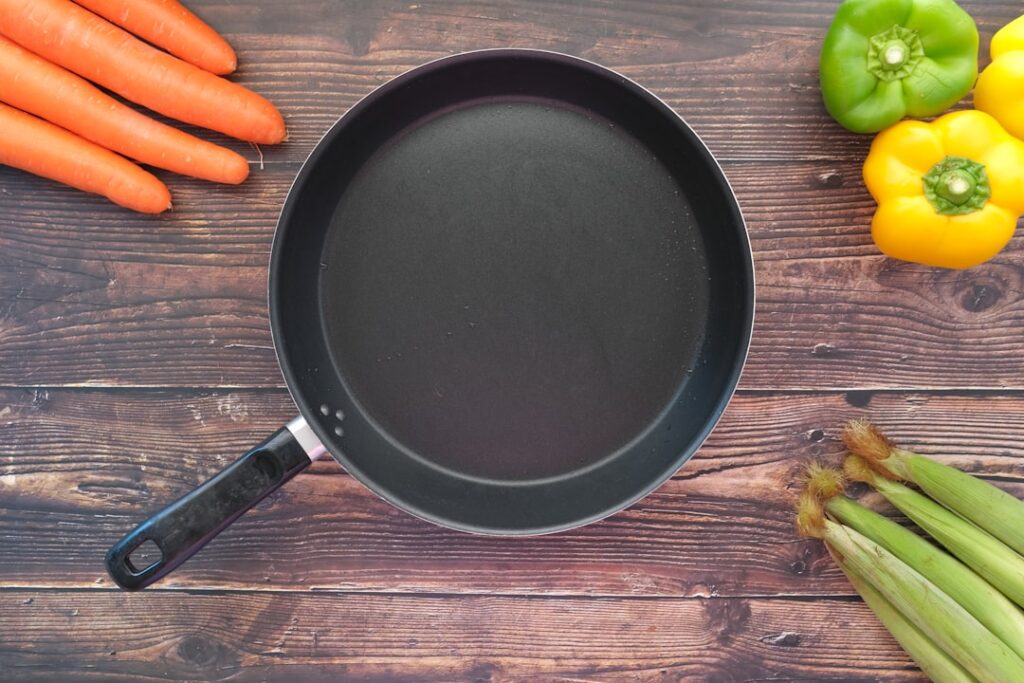
Ceramic frying pans have become a kitchen staple for cooks who want easy-release cooking without the traditional nonstick chemistry. Instead of a synthetic fluoropolymer coating, these pans use a mineral-based, sol-gel ceramic layer applied over an aluminum or stainless core. The result is a smooth, slick surface that lets eggs slide right out and makes cleanup nearly effortless.
If you have been shopping for new cookware, you have probably noticed how heavily ceramic is marketed. It pays to understand what these pans do well, where they fall short, and how to make them last, because a little knowledge goes a long way toward getting your money’s worth.
What Ceramic Nonstick Actually Is
Despite the name, a ceramic frying pan is not made of solid ceramic. The body is usually aluminum for fast, even heating, topped with a thin ceramic-based coating derived from silica, a sand-like mineral. This layer is what gives the pan its nonstick properties.
The key selling point is that the coating contains no PTFE (the material commonly known as Teflon) and no PFOA. For cooks who prefer to avoid those compounds, ceramic offers a slick surface with a different material profile. The trade-off, as you will see, is that ceramic coatings generally do not last as long as a well-made traditional nonstick pan.
Ceramic vs Teflon Nonstick
The two coatings behave differently, and knowing the contrast helps you set realistic expectations.
- Heat tolerance: Ceramic handles higher temperatures before degrading, often rated to around 500 degrees Fahrenheit or more, while traditional PTFE coatings can start breaking down near 500 degrees and should not be overheated.
- Longevity: A quality PTFE pan can keep its nonstick performance for years. Ceramic coatings tend to lose their slickness faster, often within one to three years of regular use.
- Release performance: Both release food well when new. Ceramic often starts slightly slicker but degrades sooner.
- Appearance: Ceramic pans come in attractive colors and a smooth matte or glossy finish, which many cooks find appealing.
Neither is universally better. Ceramic appeals to cooks who want a coating free of fluoropolymers and who do not mind replacing the pan more often.
Strengths and Weaknesses
The biggest strength of a ceramic pan is the clean, easy-release cooking experience right out of the box. Food slides freely, cleanup takes seconds, and you can cook with less oil. The pans also heat evenly thanks to the aluminum core, and the smooth surface looks great on the stove.
The main weakness is durability. Ceramic coatings are more brittle than PTFE and gradually lose their nonstick quality as the surface develops microscopic wear. High heat, metal utensils, and aggressive scrubbing all accelerate that decline. Think of a ceramic pan as a consumable tool that performs beautifully for a couple of years rather than a lifetime investment.
How to Use Them Correctly
Getting the most from ceramic cookware comes down to temperature discipline. Cook on low to medium heat for nearly everything. The coating does not need high heat to release food, and excessive temperature is the single fastest way to wear out the surface and reduce its lifespan.
- Preheat gently and add a small amount of oil or butter to protect the coating, even though the pan is nonstick.
- Use only wooden, silicone, or nylon utensils. Metal spatulas scratch the surface and ruin the release properties.
- Never use cooking spray, which leaves a sticky residue that bakes onto ceramic and is very hard to remove.
- Let the pan cool before washing. Plunging a hot pan into cold water can warp the metal and crack the coating.
Cleaning and Care
Hand washing is strongly recommended even when a pan is labeled dishwasher safe, because harsh detergents and high dishwasher heat shorten the coating’s life. Use warm water, a drop of dish soap, and a soft sponge. Skip the steel wool and abrasive powders entirely.
If food does stick, soak the pan in warm soapy water for a few minutes rather than scrubbing hard. For stubborn residue, a paste of baking soda and water lifts buildup without scratching. Dry the pan thoroughly and store it carefully; stacking pans directly on top of each other can scratch the surface, so place a cloth or paper towel between them.
Seasoning and Restoring Performance
Unlike cast iron, ceramic cookware cannot be permanently seasoned, but a light conditioning step when the pan is new helps the surface perform at its best. Wipe a thin film of cooking oil over the cool surface, heat it gently for a minute or two on low, then let it cool and wipe away the excess. Repeating this occasionally can refresh the release as the coating ages.
Be realistic, though. Conditioning only slows the inevitable decline; it does not reverse worn-out spots where the coating has thinned. Once food consistently grabs the surface despite proper oil and low heat, no amount of re-oiling will bring back the original slickness. At that point the pan has reached the end of its useful life, and replacement is the only fix.
How Long Ceramic Pans Last
Realistic expectations matter here. With careful use, a ceramic frying pan typically holds its nonstick performance for one to three years. Heavy daily use, high heat, or careless cleaning can cut that down to a single year, while a gently used pan reserved for delicate foods may stretch longer.
When food starts sticking despite proper oil and heat, the coating has worn out and it is time to replace the pan. Unlike cast iron, a degraded ceramic surface cannot be restored at home. Pricing is generally moderate, with individual pans commonly running roughly $20 to $60 and sets ranging higher, so factor periodic replacement into your cookware budget.
Safety Notes
Ceramic coatings are considered stable when used as directed, but the same overheating cautions that apply to all nonstick cookware apply here. Avoid leaving an empty pan on a hot burner, never exceed the manufacturer’s recommended temperature, and keep good ventilation in the kitchen. Always follow the care and heat guidelines printed by the manufacturer, since formulations differ between brands.
Used thoughtfully on moderate heat with soft utensils and gentle cleaning, ceramic frying pans deliver a clean, easy cooking experience that many home cooks genuinely prefer. Treat them as the relatively short-lived but pleasant performers they are, and you will be happy with the results every time you reach for one.
Prefer to explore on your own?
See how new flooring looks in your actual room in seconds — free, no signup.
Try the free Floor Studio →