A fireplace is the natural focal point of a room, and the surface you wrap it in sets the entire tone. A porcelain tile fireplace has become one of the most popular ways to update that focal point, and for good reasons: porcelain is dense, heat-tolerant, available in stunning large-format slabs and realistic stone looks, and far easier to maintain than natural stone. Whether you’re modernizing a dated brick surround or building new, porcelain delivers high-end style at a fraction of slab marble’s cost. Here’s what you need to know to plan and execute it well.
Why Porcelain Works for Fireplaces
Porcelain is fired at extremely high temperatures, around 2,200 to 2,500°F, which makes it dense, hard, and stable. That same firing gives it excellent heat resistance, so it handles the warmth radiating from a fireplace surround without issue. Beyond durability, porcelain is non-porous, so it doesn’t absorb soot, smoke, or stains the way porous stone can, and it never needs sealing. Add in modern inkjet printing that convincingly mimics marble, concrete, travertine, and wood, and you get a surface that looks like premium stone but shrugs off the heat and cleans with a wipe.
An Important Heat Distinction
Before anything else, understand where porcelain belongs around a fireplace. Porcelain tile is ideal for the surround, the decorative face and the wall above and around the firebox. It is not a firebox liner. The interior of a wood-burning firebox, where flames make direct contact, must be lined with firebrick and refractory mortar rated for direct flame, not standard tile. Porcelain handles the radiant heat of a surround beautifully, but it is not designed to replace firebrick inside the combustion chamber. Always respect this distinction and the appliance manufacturer’s specs.
Design Options and Looks
This is where porcelain really shines. Your options include:
- Large-format slabs: Big porcelain panels (up to roughly 5×10 feet) create a dramatic, near-seamless stone-look feature wall with minimal grout lines.
- Marble-look porcelain: The high-end Calacatta and Carrara aesthetic without the etching and sealing of real marble.
- Concrete and stone looks: Matte, modern surfaces that suit contemporary and industrial rooms.
- Wood-look planks: For a warm, rustic surround that resists the heat a real wood mantel cladding couldn’t.
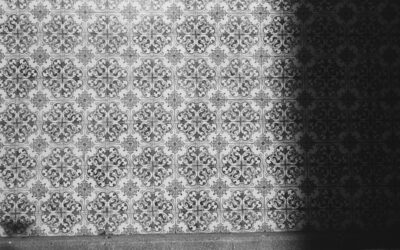
- Mosaic and hex accents: Smaller patterns for a more detailed, textured face.
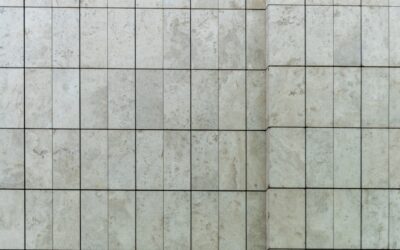
For a true wow factor, a single large-format slab running floor to ceiling behind a linear fireplace is hard to beat. For a more traditional look, stacked rectangular tiles or a marble-look field with a clean mantel works well.
Mind the Clearances
Heat planning is critical, especially around the mantel and any combustible trim. Different fireplaces, gas, electric, and wood-burning, have different clearance requirements, and you must follow the appliance manufacturer’s specifications and local building code for distances to mantels, surrounds, and combustible materials. Tile-rated, heat-resistant thinset and proper substrate matter here too. When in doubt, particularly with a wood-burning unit, consult a professional installer or your local code authority before you start. Getting clearances right is a safety issue, not just an aesthetic one.
Installation Basics
A porcelain tile fireplace surround follows the same fundamentals as any quality tile job, with a few extras:
- Solid, flat substrate: Use cement board or another approved, non-combustible backer over the surround. Large-format tile demands an exceptionally flat surface to avoid lippage.
- The right mortar: Use a heat-tolerant, large-format mortar appropriate to the tile size, and back-butter big tiles for full coverage.
- Leveling clips for large format: These keep big panels flush and lippage-free as they cure.
- Careful cuts: Cutting dense porcelain, especially around the firebox opening, requires a wet saw and patience.
Large-format and slab installations in particular are best left to an experienced tile setter, since the panels are heavy and unforgiving of a poorly prepped wall.
What It Costs
Porcelain offers a lot of style per dollar. Expect quality porcelain tile to run roughly $5 to $20 per square foot for the material, with large-format and premium slab collections higher. Installation typically adds $10 to $25 per square foot, more for large-format slabs, intricate patterns, and the careful work around a firebox. Even at the top of that range, a porcelain surround usually costs well below a comparable natural marble slab installation, while delivering similar looks and better heat and stain performance.
Care and Maintenance
This is where porcelain pays you back daily. Because it’s non-porous, a porcelain fireplace surround never needs sealing and won’t absorb soot or smoke stains. Routine care is simply wiping it down with a damp cloth and a pH-neutral cleaner; even smoke film comes off easily. The grout is the only part that needs attention, so seal cementitious grout or specify epoxy grout to keep it clean. Compared to brick, which collects soot, or marble, which etches and stains, porcelain is dramatically lower-maintenance over the life of the fireplace.
Porcelain vs. Other Fireplace Surrounds
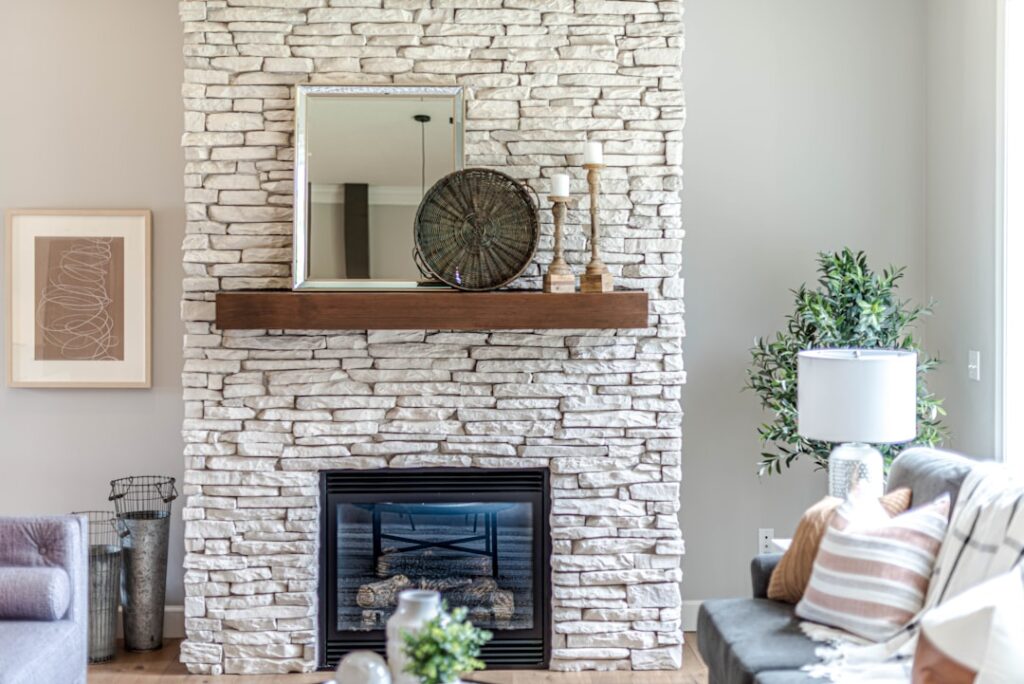
It’s worth seeing how porcelain stacks up against the alternatives. Natural marble and granite slabs look luxurious but cost more, and marble etches and stains and needs sealing. Brick is classic and handles heat well but collects soot and limits your style options without painting or refinishing. Natural stone veneer adds rustic texture but has more grout and surface to clean. Painted drywall is cheap but plain and not ideal close to a heat source. Porcelain threads the needle: it delivers the high-end look of marble or stone, tolerates radiant heat, resists soot and stains, never needs sealing, and costs less than slab stone. For most homeowners updating a focal fireplace, that combination is hard to beat.
Modern vs. Traditional Design Approaches
Your design direction shapes how you use the tile. For a modern look, run large-format slab or stacked rectangular porcelain floor to ceiling in a marble or concrete finish, keep grout lines minimal, and pair it with a simple floating mantel or no mantel at all for a clean, gallery-like wall. For a traditional approach, frame the firebox with a marble-look field, add a substantial wood or cast-stone mantel, and consider a herringbone or classic stacked layout. Transitional rooms often blend the two, a subtle stone-look porcelain with a streamlined mantel. Whatever the style, let the fireplace be the focal point and keep the surrounding wall and decor calm so the tile reads as the centerpiece it’s meant to be.
The Bottom Line
A porcelain tile fireplace gives you the look of premium stone, marble, concrete, or wood, with the heat tolerance, durability, and easy maintenance that make it ideal for a focal surround. Use it on the face and surround, never as a firebox liner, follow the manufacturer’s clearance requirements, and prep the substrate carefully, especially for large-format slabs. Done right, it transforms a room’s centerpiece into a striking, low-maintenance feature that looks high-end for decades and wipes clean in seconds.
Prefer to explore on your own?
See how new flooring looks in your actual room in seconds — free, no signup.
Try the free Floor Studio →